|
 |
 | | | | | | |||||||||||||||||||||||||||||||||||||||||||||||||||||||||||||||||||||||||||||||||||||||||||||||||||||||||||||||||||||||||||||||||||||||||||||||||||||||||||||||||||||||||
| | | You are in: Europe | |||||||||||||||||||||||||||||||||||||||||||||||||||||||||||||||||||||||||||||||||||||||||||||||||||||||||||||||||||||||||||||||||||||||||||||||||||||||||||||||||||||||||||
|
| | Friday, 13 December, 2002, 17:19 GMT Cyprus talks collapse 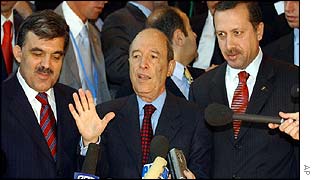 Greece's Costas Simitis (centre) was sceptical about the deal Talks to broker a deal on the reunification of Cyprus during a European Union summit in Copenhagen have ended in failure.
Turkish Cypriots had earlier rejected the latest version of a plan by the UN Secretary General, Kofi Annan, to end a quarter of a century of division on the Mediterranean island. The EU hoped the deal would allow Cyprus to join the bloc as a united nation, but the talks' failure may result in membership only for the internationally recognised, Greek-run part of the island. Deal 'impossible' The UN special envoy, Alvaro de Soto, had called in Turkish Cypriot and Greek Cypriot negotiators for the last-minute talks in an attempt to clinch the deal.
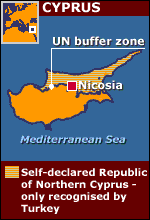
The hope was that at the same time as the EU invited Cyprus and nine other mainly eastern European states to become members, the UN could end 28 years of division on the island. But Greek Cypriot Attorney General Alecos Markides was later quoted by the Reuters news agency as saying Mr De Soto had told him the deal could not be reached on Friday. "[Alvaro] de Soto told me that after talking with Turkish Cypriots he concluded it was impossible to have a solution of this problem today," Mr Markides said. Earlier, the Greek Prime Minister, Costas Simitis, had said any deal appeared unlikely. He pointed out that the Turkish Cypriot leader, Rauf Denktash, was not in Copenhagen, and he doubted that anyone else would have the authority to sign an agreement. In response, Mr Denktash, who recently underwent heart surgery in the US and only left a hospital in Ankara on Friday, accused the EU of using its membership offer to force his side into a hasty deal. "No one can pressure us to sign this document with threats," Mr Denktash said. He also said the EU was trying to build a "Christian fortress" around Muslim Turkey. "The European Union's interest is to delay Turkey and to take Cyprus, to possess Cyprus," Mr Denktash said. The latest Cyprus talks involved the Greek and Turkish Cypriot communities, Greece and Turkey, the UN and the EU. Cyprus was divided since the Turkish invasion in 1974, which followed a brief Greek-inspired coup in Nicosia. Turkish Cypriots make up about 18% of the island's population. | |
Internet links:  The BBC is not responsible for the content of external internet sites Top Europe stories now: Links to more Europe stories are at the foot of the page. | |||||||||||||||||||||||||||||||||||||||||||||||||||||||||||||||||||||||||||||||||||||||||||||||||||||||||||||||||||||||||||||||||||||||||||||||||||||||||||||||||||||||||
| |
|  E-mail this story to a friend E-mail this story to a friend |
| |
| Links to more Europe stories |
| | | ||
 | ||||
 | | Back to top
| ||
| ---------------------------------------------------------------------------------- To BBC Sport>> | To BBC Weather>> | To BBC World Service>> ---------------------------------------------------------------------------------- © MMIII | News Sources | Privacy |