|
 |
 | | | | | | ||||||||||||||||||||||||||||||||||||||||||||||||||||||||||||||||||||||||||||||||||||||||||||||||||||||||||||||||||||||||||||||||||||||||||||||||||||||||||||||||||||||||||||||||||||||||||||||||||||||||||||||||||||||||||||||||||||
| | | You are in: Business | ||||||||||||||||||||||||||||||||||||||||||||||||||||||||||||||||||||||||||||||||||||||||||||||||||||||||||||||||||||||||||||||||||||||||||||||||||||||||||||||||||||||||||||||||||||||||||||||||||||||||||||||||||||||||||||||||||||||
|
| | Monday, 9 December, 2002, 09:21 GMT Czech business gets into gear 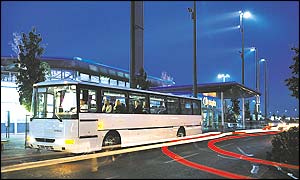 Karosa is steeped in Czech commercial tradition

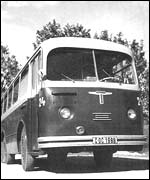
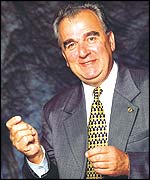
Those that survived did so through a mixture of foresight and good luck and are well equipped to thrive now, reckons Rudolf Cerny, the boss of Karosa, the Czech Republic's biggest bus producer. He should know. Karosa has not just lived through communism: it prospered through Habsburg domination, Czech independence, two world wars and endless economic booms and busts. On the buses For almost three decades, ever since he left school, Mr Cerny has been at Karosa, working his way up from trainee engineer to chairman of the board. 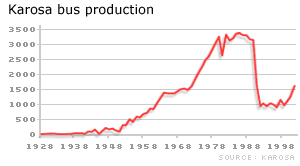 "The last time the company was working this hard was in the early 1970s, when we were rebuilding the plant to prepare for a huge increase in production. "Whatever you may say about business in the communist period, it left us with some of the most skilled workers in the world." In the red What communism really taught Karosa, however, was how to bend the law creatively.
Communist central planners forbade the move, insisting that only Ikarus - a much larger and more rickety Hungarian bus producer - was allowed to make that sort of model. "But we went ahead regardless, and no one stopped us," Mr Cerny recalls. "That's the way business worked in those days." Crash When communism was snuffed out in 1989, Karosa felt itself to be a bit ahead of the game.
Production, which had recently peaked at more than 3,400 buses a year, fell below 1,000, and Karosa laid off almost half its more than 3,000 workers. With 500 buses sitting unsold in Karosa's yards, the company was close to capsizing. But then the old Soviet spirit of improvisation kicked in: Mr Cerny offloaded the firm's entire surplus to Russia, bartering buses in return for rubber, oil and other raw materials.
"It sounds hard to believe, but Russia saved us," says Mr Cerny. Private lives Karosa - unlike many other Czech firms - also escaped a mauling in the privatisation process. It was not part of the rapid but misconceived "voucher privatisation" scheme, under which shares in large state firms were handed out free to Czech citizens, only to be hoovered up by unscrupulous investment funds. 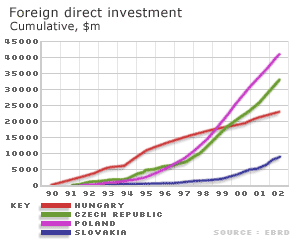 Renault had already sniffed at, and rejected, two big Czech sell-offs, and was reckoned ripe for a deal. But unlike traditional privatisations, Mr Cerny insisted that the French firm did not pay the Czech Treasury for Karosa shares, but instead ploughed the money into the firm's working capital. "If the government had got its hands on the money, it would just have spent it. We create jobs, increase exports, make profits and pay our taxes." Parent power Since 1993, when the two firms linked arms, Renault has kept a benevolent distance. Far from flooding the place with Western experts, intent on imposing their own ideas, the French have been happy to set targets and let Mr Cerny get on with it.
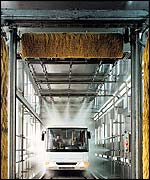
The factory, Mr Cerny reckons, is now the most efficient of its kind in the world - a necessary competitive edge at a time when global demand for buses is sluggish. A new production line, inaugurated in August, allows Karosa far greater flexibility in the models it produces; under the previous system, all its buses were variations on the same basic model. From the trough of the mid-1990s, output has bounced by 60%, and more than two-thirds of its buses are now exported. Political pressure In many ways, Karosa is a model for how privatisation can preserve jobs and boost output. Curious, then, that more than a decade after the end of communism, privatisation is once again becoming a controversial issue in Eastern Europe. 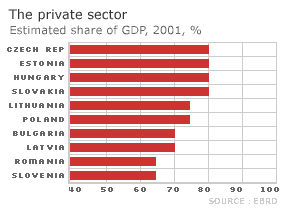 But shifting the last few big chunks of state property is proving worryingly difficult. A deal to sell a majority stake in Cesky Telecom to a consortium led by Deutsche Bank collapsed in November, amid a dispute over price and conditions. And Polish politicians have vetoed a plan to sell Stoen, Warsaw's power utility, to Germany's RWE. Overall, opinion polls consistently show huge popular opposition to privatisation around Eastern Europe, with feelings running highest in Poland. Enthusiasts like Mr Cerny, it seems, are in the minority. | |
See also:  27 Nov 02 | Business 13 Aug 02 | Business 07 Aug 02 | Europe 12 Jul 02 | Europe 14 May 02 | Business 21 Aug 01 | Europe Internet links: The BBC is not responsible for the content of external internet sites Top Business stories now: Links to more Business stories are at the foot of the page. | ||||||||||||||||||||||||||||||||||||||||||||||||||||||||||||||||||||||||||||||||||||||||||||||||||||||||||||||||||||||||||||||||||||||||||||||||||||||||||||||||||||||||||||||||||||||||||||||||||||||||||||||||||||||||||||||||||||
| |
|  E-mail this story to a friend E-mail this story to a friend |
| |
| Links to more Business stories |
| | | ||
 | ||||
 | | Back to top
| ||
| ---------------------------------------------------------------------------------- To BBC Sport>> | To BBC Weather>> | To BBC World Service>> ---------------------------------------------------------------------------------- © MMIII | News Sources | Privacy |