|
 |
 | | | | | | |||||||||||||||||||||||||||||||||||||||||||||||||||||||||||||||||||||||||||||||||||||||||||||||||||||||||||||||||||||||||||||||||||||||||||||||||||||||||||||||||||||||||||||||||||||||||||||||||||||||||||||||||||||||||||
| | | You are in: Asia-Pacific | |||||||||||||||||||||||||||||||||||||||||||||||||||||||||||||||||||||||||||||||||||||||||||||||||||||||||||||||||||||||||||||||||||||||||||||||||||||||||||||||||||||||||||||||||||||||||||||||||||||||||||||||||||||||||||||
|
| | Thursday, 17 October, 2002, 20:01 GMT 21:01 UK US says N Korea has nuclear arms 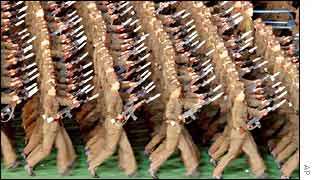 Pyongyang initially denied it had nuclear weapons The United States believes North Korea already has a "small number" of nuclear weapons, Defence Secretary Donald Rumsfeld has said.
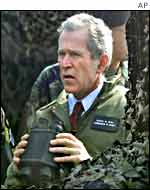
President Bush described as the admission as "troubling" - but said he was seeking a diplomatic solution to the problem, which he stressed was different from the crisis over Iraq. The US State Department on Wednesday said North Korea confessed to the programme earlier this month, after Assistant Secretary of State James Kelly produced "evidence" that it possesses enriched uranium - a key ingredient of nuclear weapons. Differences In a news briefing on Thursday, Mr Rumsfeld went beyond this, saying he believes the North Koreans have built a small number of nuclear weapons. An official later added that the US thought Pyongyang had two nuclear bombs. The BBC's Justin Webb in Washington says this second stunning revelation about North Korea in 24 hours will send shockwaves around Asia and around the world.
However, he went on, Washington viewed the problem in a different light from Iraq - which President Bush has threatened with military action over its weapons programme. "These are different regions, different problems," Mr McClellan said. "We are seeking a peaceful solution," he added. "This is best addressed through diplomatic channels at this point." Mr McClellan described Iraqi leader Saddam Hussein as a "homicidal dictator who is addicted to weapons of mass destruction". "Iraq is an aggressive invader that has launched military attacks on neighbouring nations recently," he said. South Korea and Japan, for their part, have said North Korea's reported admission would not alter their plans to improve ties with Pyongyang. Normalisation South Korean officials - while describing the report as "very serious" - said Seoul would continue to pursue its "sunshine" policy of engagement with the North.
North Korea is one of three states that make up the "axis of evil" according to President Bush - along with Iran and Iraq. However, in recent months there has been a thaw in Pyongyang's dealings with the outside world. This was one of the reasons for Mr Kelly's visit to Pyongyang on 3 October. At first the North Koreans tried to deny the evidence of a nuclear programme, one US official said, but eventually "they acknowledged they had a secret nuclear weapons programme involving enriched uranium". North Korea is also suspected of harbouring or pursuing chemical and biological weapons programmes. US officials said the Bush administration is now consulting with its allies and Congress before deciding what to do in light of the revelation. Mr Kelly is currently in Beijing, where he will discuss, among other issues, North Korea's admission. | |
See also:  17 Oct 02 | Asia-Pacific 17 Oct 02 | Asia-Pacific 17 Oct 02 | Asia-Pacific 19 Sep 02 | Asia-Pacific 07 Aug 02 | Asia-Pacific 07 Aug 02 | Asia-Pacific 09 May 02 | Americas Internet links: The BBC is not responsible for the content of external internet sites Top Asia-Pacific stories now: Links to more Asia-Pacific stories are at the foot of the page. | |||||||||||||||||||||||||||||||||||||||||||||||||||||||||||||||||||||||||||||||||||||||||||||||||||||||||||||||||||||||||||||||||||||||||||||||||||||||||||||||||||||||||||||||||||||||||||||||||||||||||||||||||||||||||||
| |
|  E-mail this story to a friend E-mail this story to a friend |
| |
| Links to more Asia-Pacific stories |
| | | ||
 | ||||
 | | Back to top
| ||
| ---------------------------------------------------------------------------------- To BBC Sport>> | To BBC Weather>> | To BBC World Service>> ---------------------------------------------------------------------------------- © MMIII | News Sources | Privacy |