|
 |
 | | | | | | ||||||||||||||||||||||||||||||||||||||||||||||||||||||||||||||||||||||||||||||||||||||||||||||||||||||||||||||||||||||||||||||||||||||||||||||||||||||||||||||||||||||||||||
| | | You are in: Asia-Pacific | ||||||||||||||||||||||||||||||||||||||||||||||||||||||||||||||||||||||||||||||||||||||||||||||||||||||||||||||||||||||||||||||||||||||||||||||||||||||||||||||||||||||||||||||
|
| | Thursday, 12 December, 2002, 11:24 GMT Analysis: N Korea's nuclear deal  Pyongyang frequently threatens to pull out of the deal At the heart of the row over North Korea's nuclear ambitions is an agreement it signed in 1994, the so-called Agreed Framework.
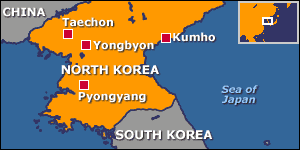
But it has been dogged by arguments between Kedo - the international consortium responsible for the construction of the plant - and North Korea over wages and costs, and is now seriously behind schedule. The international community believes the delays are a small price to pay, so long as the project keeps North Korea's own nuclear programme at bay. Pulling back from the brink The Agreed Framework was signed after the Korean peninsula came dangerously close to war over North Korea's consistent refusal to allow inspections of two facilities suspected of being used to produce nuclear material for a weapons programme. A visit in June 1994 by former US President Carter paved the way for renewed North Korean talks with South Korea and the US, and the Agreed Framework was signed between the US and North Korea in October 1994. Under the agreement, North Korea was to receive the light water reactors and 500,000 metric tonnes of fuel oil each year while the reactors were being built in exchange for a freeze on activities at its own nuclear reactors. In return, North Korea is required to allow inspectors from the International Atomic Energy Agency (IAEA) to ensure it has not hidden away any weapons-grade plutonium from the original reactors. Further delays? Under the terms of the Agreed Framework, the light water reactors being constructed at Kumho, on North Korea's east coast, cannot take delivery of key nuclear components until the inspections are completed. But North Korea has dragged its feet over the inspections, justifying its refusals by pointing out that the reactors are way behind schedule. Given that they are currently expected to be completed by mid 2005, and the IAEA says the inspections will take three years to complete, it is likely that further stone-walling from North Korea will result in yet more delay. Another fragile aspect of the Agreed Framework has been the heavy fuel oil component. Every year the US has put certain conditions regarding North Korea's behaviour - such as allowing inspections - on budgeting for the fuel aid. This fiscal year it agreed to waive those conditions. But in October, the US announced that one of its officials, James Kelly, had been told by the North Koreans that they were developing a separate uranium enrichment programme, which could also be used to develop nuclear weapons. North Korea has denied owning nuclear weapons, but has consistently stated its "right" to have them. The row over this alleged confession to Mr Kelly has escalated as North Korea has appeared to try and force a reluctant Washington to negotiate. In November, a US-led decision saw Kedo announcing a suspension of the heavy fuel oil shipments, prompting some humanitarian worries about the impact inside North Korea of electricity cuts. In apparent retaliation for the suspension, North Korea has now said it is to reactivate its mothballed facility at Yongbyon, though it is not clear if this is another negotiating ploy. The head of the Non-proliferation Policy Education Centre in Washington, a vocal critic of the Agreed Framework, has warned that even when the new reactors are completed they may not be tamper-proof. "These reactors are like all reactors, they have the potential to make weapons. So you might end up supplying the worst nuclear violator with the means to acquire the very weapons we're trying to prevent it acquiring," Henry Sokolski has said. But a Kedo official told BBC News Online: "It would be far more difficult to make illegal use of a light water reactor than of the other that North Korea used or had under construction."
| |
See also:  07 Aug 02 | Asia-Pacific 03 Apr 02 | Asia-Pacific 22 Mar 02 | Asia-Pacific 06 Feb 02 | Americas Internet links: The BBC is not responsible for the content of external internet sites Top Asia-Pacific stories now: Links to more Asia-Pacific stories are at the foot of the page. | ||||||||||||||||||||||||||||||||||||||||||||||||||||||||||||||||||||||||||||||||||||||||||||||||||||||||||||||||||||||||||||||||||||||||||||||||||||||||||||||||||||||||||||
 | |
|  E-mail this story to a friend E-mail this story to a friend |
| |
| Links to more Asia-Pacific stories |
| | | ||
 | ||||
 | | Back to top
| ||
| ---------------------------------------------------------------------------------- To BBC Sport>> | To BBC Weather>> | To BBC World Service>> ---------------------------------------------------------------------------------- © MMIII | News Sources | Privacy |