|
 |
 | | | | | | |||||||||||||||||||||||||||||||||||||||||||||||||||||||||||||||||||||||||||||||||||||||||||||||||||||||||||||||||||||||||||||||||||||||||||||||||||||||||||||||||||||||||||||||||||||||||||||||||||||||||||
| | | You are in: Asia-Pacific | |||||||||||||||||||||||||||||||||||||||||||||||||||||||||||||||||||||||||||||||||||||||||||||||||||||||||||||||||||||||||||||||||||||||||||||||||||||||||||||||||||||||||||||||||||||||||||||||||||||||||||||
|
| | Monday, 6 January, 2003, 14:06 GMT Spy's escape from North Korean 'hell'  A Japanese Korean who survived nearly 40 years in North Korea gives Yo Takatsuki of the BBC's East Asia Today a rare insight into life inside the secretive state. Kenki Aoyama spent four decades in North Korea and lived to tell the tale of a place he now calls hell. Born to Korean parents in Japan, he was one of about 100,000 people who left voluntarily in the early 1960s in the hope of starting a new life in North Korea.
Now aged 63, Mr Aoyama is one of the lucky few that survived successive purges in the 1960s and '70s and a famine in the 1990s. In 1998, while serving the Pyongyang regime as a spy, he finally managed to escape, travelling to Japan via China with the aid of Japanese Foreign Ministry officials in Beijing, who were interested in his inside knowledge of North Korea. Reality strikes Mr Aoyama still conceals his true identity for fear of reprisals, refusing to be photographed. But he did agree to a telephone interview from his Tokyo home. "In the late 1950s there was a propaganda movement that proclaimed North Korea as heaven on earth," Mr Aoyama said.
On arrival, however, what he found was a poor, undeveloped country still reeling from the devastation of the 1950-53 Korean War. "It didn't take long for the reality of North Korea to sink in. It wasn't heaven, it was hell," he said. But worse was to follow. "It wasn't long before those of us who had come from Japan became homesick and wanted to return," Mr Aoyama said. "Some of them ran a petition pleading with (then-North Korean leader) Kim Il-sung for permission to go back. They were all sent to prisons, concentration camps. "In 1964 a close friend of mine was caught listening to Japanese radio. "That night he was taken to a camp. The next day, the police returned for his family and hauled them and a few family possessions into the back of a truck. "That was the last we saw or heard of them," Mr Aoyama said. According to Japanese research about 10,000 Japanese Koreans disappeared in this way. Mr Aoyama says he personally knew of so many people that suffered this fate that he lost count. Crippling famine In retrospect, the 1960s were easier times for Mr Aoyama than the 1990s when much of the country was on the brink of starvation.
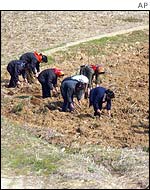
Life increasingly became a daily battle for survival, and North Koreans turned to desperate measures to feed themselves. "We had barely enough to buy the minimum, just rice, poor quality Chinese rice at flea markets," Mr Aoyama said. "Those who didn't were left to starve to death. "In winter during the peak of the famine in 1994, I remember seeing heaps of bodies being thrown off at a station. They had died on the journey. "There were dead bodies everywhere that winter, children, women and especially the old. "The bodies would be left over the winter. The police would come in a truck to collect them from petrol depots only when the snow started melting in the spring." During this time, Mr Aoyama was in the Chinese capital Beijing, working as an industrial spy for Pyongyang stealing hi-tech secrets from the Chinese and Japanese. In the summer of 1997, 28 of his colleagues in the secret service were purged after falling into a trap set up by South Korean agents. "I was lucky to survive that," Mr Aoyama says.
Fearing for his life he took the decision to leave North Korea behind him and return to Japan, four decades after he had left. "I knew my time was up. I had waited 40 years to leave North Korea. I knew the consequences of being caught were dire but if I hadn't left then I may have not got another chance," he says. Mr Aoyama has found himself in the public spotlight in Japan because of the controversy over Japanese nationals kidnapped by North Korean agents in the 1970s and 1980s. All he hopes for now is to be able to lead a normal life in Japan and to see the end of the Communist regime in North Korea. | |
See also:  19 Dec 02 | Asia-Pacific 25 Nov 02 | Asia-Pacific 15 Nov 02 | Asia-Pacific 06 Dec 02 | Asia-Pacific Internet links: The BBC is not responsible for the content of external internet sites Top Asia-Pacific stories now: Links to more Asia-Pacific stories are at the foot of the page. | |||||||||||||||||||||||||||||||||||||||||||||||||||||||||||||||||||||||||||||||||||||||||||||||||||||||||||||||||||||||||||||||||||||||||||||||||||||||||||||||||||||||||||||||||||||||||||||||||||||||||||
 | |
|  E-mail this story to a friend E-mail this story to a friend |
| |
| Links to more Asia-Pacific stories |
| | | ||
 | ||||
 | | Back to top
| ||
| ---------------------------------------------------------------------------------- To BBC Sport>> | To BBC Weather>> | To BBC World Service>> ---------------------------------------------------------------------------------- © MMIII | News Sources | Privacy |





 A close friend of mine was caught listening to Japanese radio - that night he was taken to a camp