|
 |
 | | | | | | ||||||||||||||||||||||||||||||||||||||||||||||||||||||||||||||||||||||||||||||||||||||||||||||||||||||||||||||||||||||||||||||||||||||||||||||||||||||||||||||||||||||||||||||||||
| | | You are in: Asia-Pacific | ||||||||||||||||||||||||||||||||||||||||||||||||||||||||||||||||||||||||||||||||||||||||||||||||||||||||||||||||||||||||||||||||||||||||||||||||||||||||||||||||||||||||||||||||||||
|
| | Saturday, 29 June, 2002, 15:52 GMT 16:52 UK Analysis: Korea's unresolved conflict 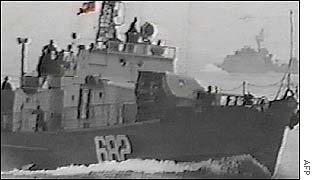 Thirty North Koreans were killed in 1999
The two rival states on the Korean peninsula have to this day never signed a peace treaty. The armistice itself took some 18 months to hammer out after the war had reached a stalemate, and much of the argument concerned the coastal area bordering the ceasefire line to the West - part of the Yellow Sea.
North Koreans say that the islands protect Kaesong, but South Koreans know they sit squarely in the channel ships must take to reach the mouth of the Han River - the river that runs through the capital, Seoul. The South effectively won, establishing a "Northern Limit Line" that left the territory patrolled by the southern navy. Response tested Today, South Korean fishermen are still escorted by navy vessels when operating within the area. North Korean fishermen routinely drop anchor right on the boundary of the area, testing the response. In June 1999, northern fishermen entered the territory and were pushed back by the southern navy. Tensions rose when the northern navy arrived, and shots were fired. Within a matter of minutes two northern vessels were destroyed and at least 30 northern troops were killed. This was marked down as the worst naval engagement between the two sides since the war.
In those incursions, North Korean "spies" had come ashore, and there had been skirmishes leaving several dozen dead. In June 2002, another naval clash left five South Korean soldiers dead and an unknown number of casualties on the North Korean side. North Korean fishermen had entered the disputed territory four times in the previous six months, and the South accused the North of 12 incursions within the last year. Wake-up call Political commentators wondered whether the June 2002 incident was part of a ploy to undermine the South Korean president, Kim Dae-jung. The 1999 incursion came shortly before mid-term National Assembly elections. And presidential elections are due at the end of 2002. Kim's party, already trailing in the polls, has vested much in its Sunshine Policy - aimed at promoting South-North reconciliation through trade, aid, and family reunions. In 1999, the policy survived relatively unscathed, and a year later Kim met his northern counterpart for the first ever peacetime summit. This time? Time will tell, but it may be best to treat each new incident as a wake-up call - a decade after the collapse of the Soviet Union, and with President Bush claiming North Korea as part of an "Axis of Evil", South Korea and North Korea still have not signed a peace treaty. Keith Howard is a senior lecturer in the School of Oriental and African Studies at the University of London | |
See also:  29 Jun 02 | Asia-Pacific Internet links: The BBC is not responsible for the content of external internet sites Top Asia-Pacific stories now: Links to more Asia-Pacific stories are at the foot of the page. | ||||||||||||||||||||||||||||||||||||||||||||||||||||||||||||||||||||||||||||||||||||||||||||||||||||||||||||||||||||||||||||||||||||||||||||||||||||||||||||||||||||||||||||||||||
| |
|  E-mail this story to a friend E-mail this story to a friend |
| |
| Links to more Asia-Pacific stories |
| | | ||
 | ||||
 | | Back to top
| ||
| ---------------------------------------------------------------------------------- To BBC Sport>> | To BBC Weather>> | To BBC World Service>> ---------------------------------------------------------------------------------- © MMIII | News Sources | Privacy |