|
 |
 | | | | | | |||||||||||||||||||||||||||||||||||||||||||||||||||||||||||||||||||||||||||||||||||||||||||||||||||||||||||||||||||||||||||||||||||||||||||||||||||||||||||||||||||||||||||||||
| | | You are in: Asia-Pacific | |||||||||||||||||||||||||||||||||||||||||||||||||||||||||||||||||||||||||||||||||||||||||||||||||||||||||||||||||||||||||||||||||||||||||||||||||||||||||||||||||||||||||||||||||
|
| | Thursday, 19 September, 2002, 09:11 GMT 10:11 UK N Korea 'agrees' to nuclear inspections 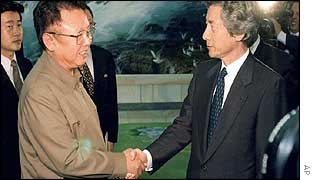 Kim Jong-il (L) has made several concessions this week The Japanese Prime Minister, Junichiro Koizumi, says North Korea's Kim Jong-il agreed to allow international inspections of his country's nuclear facilities when the two men met earlier this week. It was announced at the time that Mr Kim had only agreed to abide by international agreements on Pyongyang's nuclear programme. But Mr Koizumi said on Thursday that the North Korean leader went further - agreeing to allow the International Atomic Energy Agency to check the country's nuclear sites.
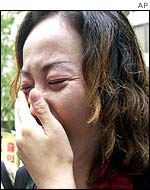
North Korea agreed with the United States in 1994 to dismantle its nuclear programme, in return for the building of two proliferation-proof nuclear power stations. But it has refused, until now, to allow international inspectors to check whether it already had enough nuclear material to build a bomb. North Korea did not mention its willingness to allow the inspections in a joint statement released after the summit with Mr Koizumi. The BBC's correspondent in Tokyo, Charles Scanlon, says that if North Korea does let in the inspectors, that could help resolve growing tensions with Washington. Pyongyang also agreed at the summit to extend a moratorium on missile tests beyond 2003. But the Bush administration has other demands as well, including an end to the North's export of ballistic missiles. Anger at home Japan has now agreed to begin negotiations for establishing diplomatic relations with North Korea, but that decision has come under attack from the relatives of the abductees.
Mr Kim admitted his agents kidnapped at least 12 Japanese citizens in the 1970s and 80s and that eight have since died. Japanese foreign ministry officials initially concealed the dates of their deaths from the families waiting at home. But it emerged on Thursday that two of them - Keiko Arimoto and Toru Ishioka - died on the same day in November 1988, two months after one of them smuggled a letter home. According to Japan's Asahi Shimbun, of the four women who died, three were in their 20s and one was in their 30s at the time of death. Mr Kim says the Japanese died from natural causes or natural disasters. Their apparently untimely deaths will fuel questions amongst relatives. Despite the unexpected shock regarding the kidnapped people, polls show that the popularity of Mr Koizumi has risen since the summit. A poll by Asahi Shimbun showed support for the prime minister has jumped 10 points to 61% and that 81% of those polled approved of his handling of the meeting. | |
See also:  07 Aug 02 | Asia-Pacific 18 Sep 02 | Media reports 17 Sep 02 | Asia-Pacific 17 Sep 02 | Asia-Pacific 17 Sep 02 | Asia-Pacific 29 Aug 02 | Asia-Pacific Internet links: The BBC is not responsible for the content of external internet sites Top Asia-Pacific stories now: Links to more Asia-Pacific stories are at the foot of the page. | |||||||||||||||||||||||||||||||||||||||||||||||||||||||||||||||||||||||||||||||||||||||||||||||||||||||||||||||||||||||||||||||||||||||||||||||||||||||||||||||||||||||||||||||
| |
|  E-mail this story to a friend E-mail this story to a friend |
| |
| Links to more Asia-Pacific stories |
| | | ||
 | ||||
 | | Back to top
| ||
| ---------------------------------------------------------------------------------- To BBC Sport>> | To BBC Weather>> | To BBC World Service>> ---------------------------------------------------------------------------------- © MMIII | News Sources | Privacy |