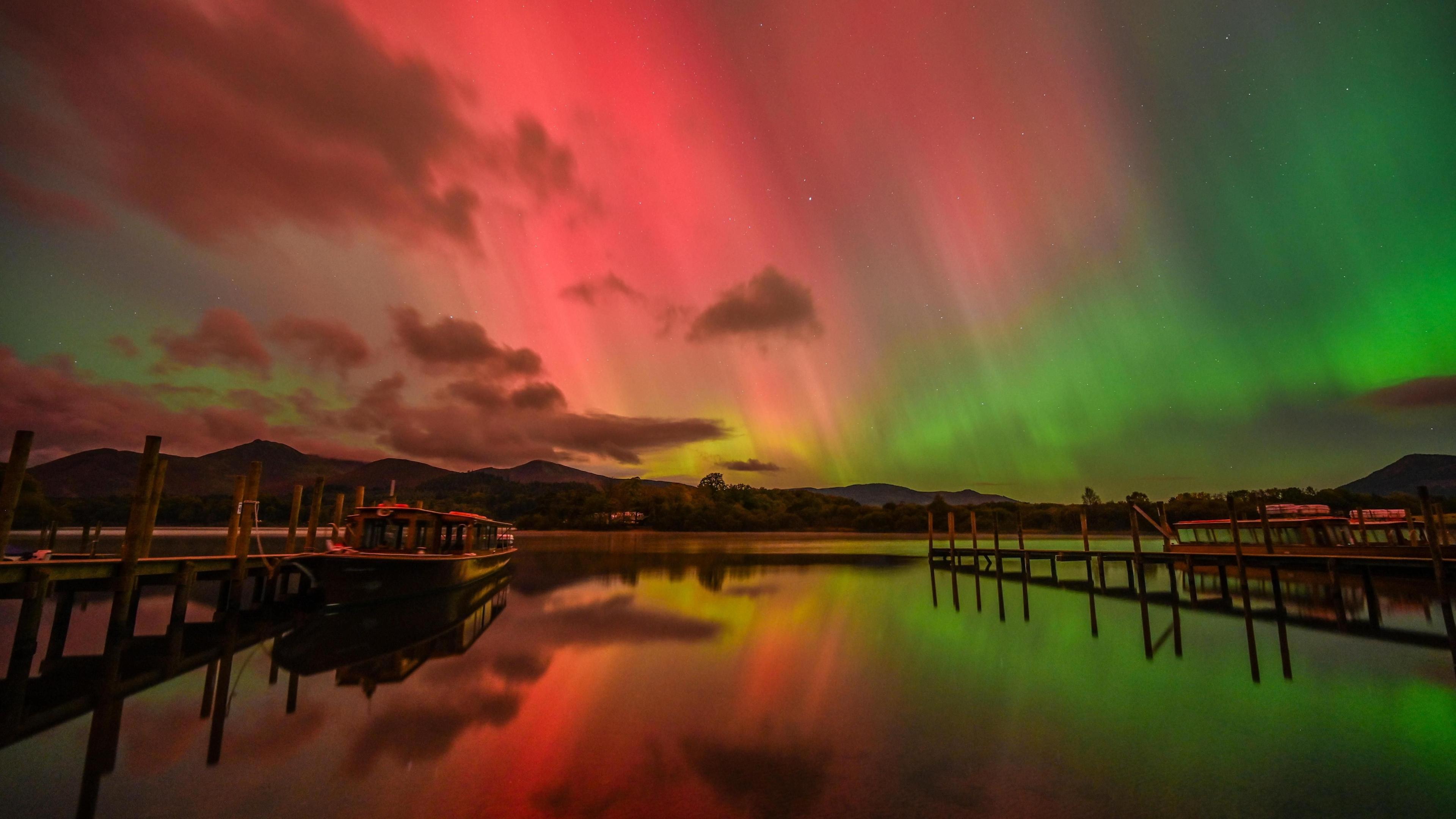
Northern Lights set to dazzle UK once again tonight

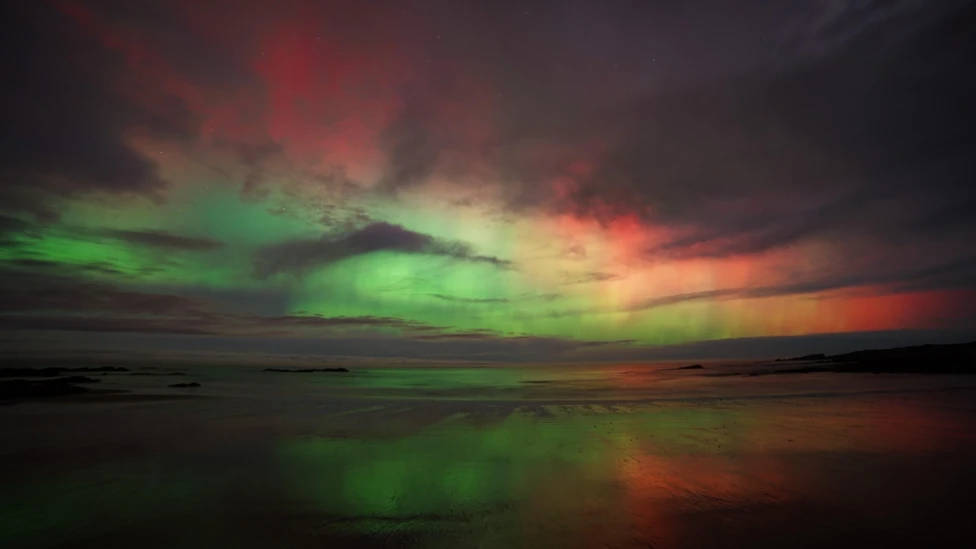
Clear skies meant the Northern Lights were visible in Amble, Northumberland early on Wednesday morning
- Published
Skygazers were treated to a rare display of Northern Lights overnight and there is a good chance of seeing them again on Wednesday evening and night.
That is because the Sun is going through an active phase experiencing a number of eruptions, called Coronal Mass Ejections. These send solar particles towards the Earth.
It is the interaction of these particles with the Earth's atmosphere that create the stunning light displays we see in the night sky.
According to the UK Met Office Space Weather forecast, the best chance of seeing the Northern Lights or aurora will be across the northern half of the UK. But there is also a chance in clear skies further south.
How you can see and photograph the Northern Lights
- Published13 September 2025
What are the Northern Lights?
- Published2 January 2025
What is a geomagnetic storm?
- Image source, BBC WEATHERWATCHERS/Colin Conti
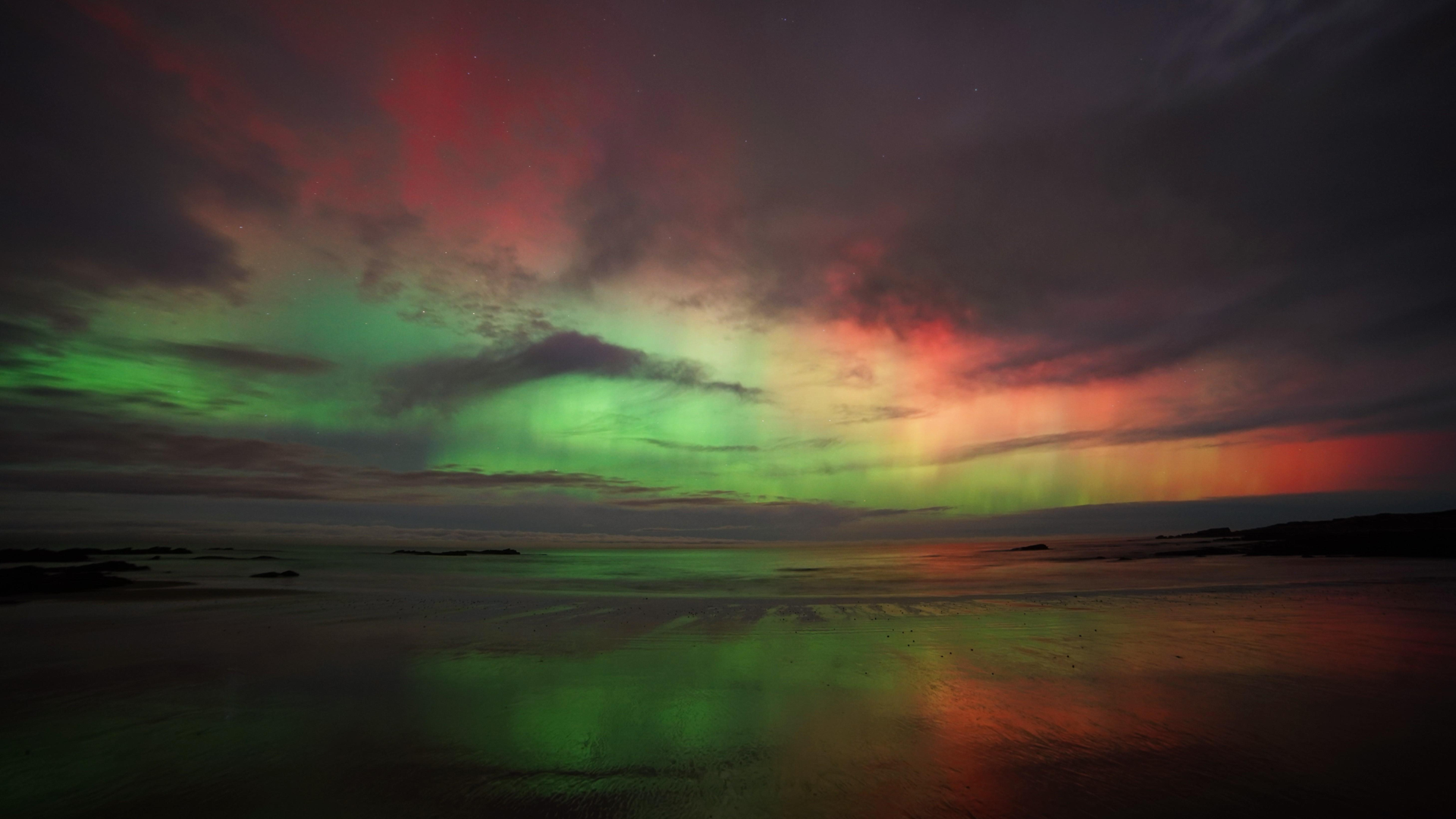
Image caption, Stunning photo capturing the Northern lights in north-east Scotland overnight


1 of 5
Geomagnetic storms are disturbances in the Earth's magnetic field that last minutes or hours and are caused by Coronal Mass Ejections (CMEs) and solar flares.
It has been reported that there are three CMEs heading towards Earth from the Sun.
The National Oceanographic Atmospheric Administration (NOAA), who measure the strength of these storms, say that there is chance of a Strong G3 or even Severe G4 geomagnetic storm being triggered especially on Wednesday into Thursday.
Although dangerous for astronauts, geomagnetic storms are not harmful to humans as Earth's atmosphere protects us from the radiation.
However, these storms can sometimes disrupt satellites and also different forms of electronic devices, such as phones.
For example, in 2017 two massive solar flares fired out from the surface of the Sun disrupted devices such as GPS navigation systems on Earth.
And the Victorians also struggled with the effect of space weather in 1859 when a huge solar eruption caused a geomagnetic storm that interfered with railway signalling and telegraph lines. This was known as the Carrington Event.
The KP index is an alternative measure of geomagnetic activity extending from KP1 to KP9. It can be be used to denote the southern extent of the aurora. This storm is classed as a rare KP8. This means the aurora could be visible across many parts of the UK including the south in the nights to come.
There may be effects on power grids and satellite navigation.
What time will the aurora be visible tonight?
The Northern Lights should be visible all night and again right across the UK, although always more vibrant in the north.
Currently it looks like the strongest aurora will happen before midnight. However, as it has been such a strong geomagnetic storm and timings are always tricky given the vast distances travelled, it is worth a look.
As ever the chance to see this spectacular event will depend on favourable weather conditions.
Will there be clear skies for the aurora?

With another display of the aurora possible on Wednesday night, will the weather be on your side?
To see the aurora find a dark spot with minimal light pollution and a good view of the northern horizon. The vibrant aurora colours are often more clearly viewed through a camera lens.
You will also need clear skies. So what is in the forecast?
With three weather fronts around the UK, viewing opportunities will be hit and miss.
On Wednesday evening the largest cloud breaks are likely to be across south-east England, the Midlands and East Anglia. However cloud is then likely to increase again in these areas later in the night. The cloud may also break across Wales and south-west England through the night along with northern Scotland as one of those weather fronts clears southwards.
Much of northern England, Northern Ireland and southern Scotland, having had clear skies to see the Aurora last night, might be sat under a weather front through Wednesday night.
If you are not lucky enough to catch the Aurora Borealis this time, keep an eye out for further alerts here at BBC Weather.
- Published1 February 2025
- Published7 January 2025