Must-see night sky events this June

A meteor shower is one of the highlights of the June sky
- Published
Skygazers are in for a treat this June as a number of potentially dazzling celestial events grace our skies including the Summer Triangle and the solstice.
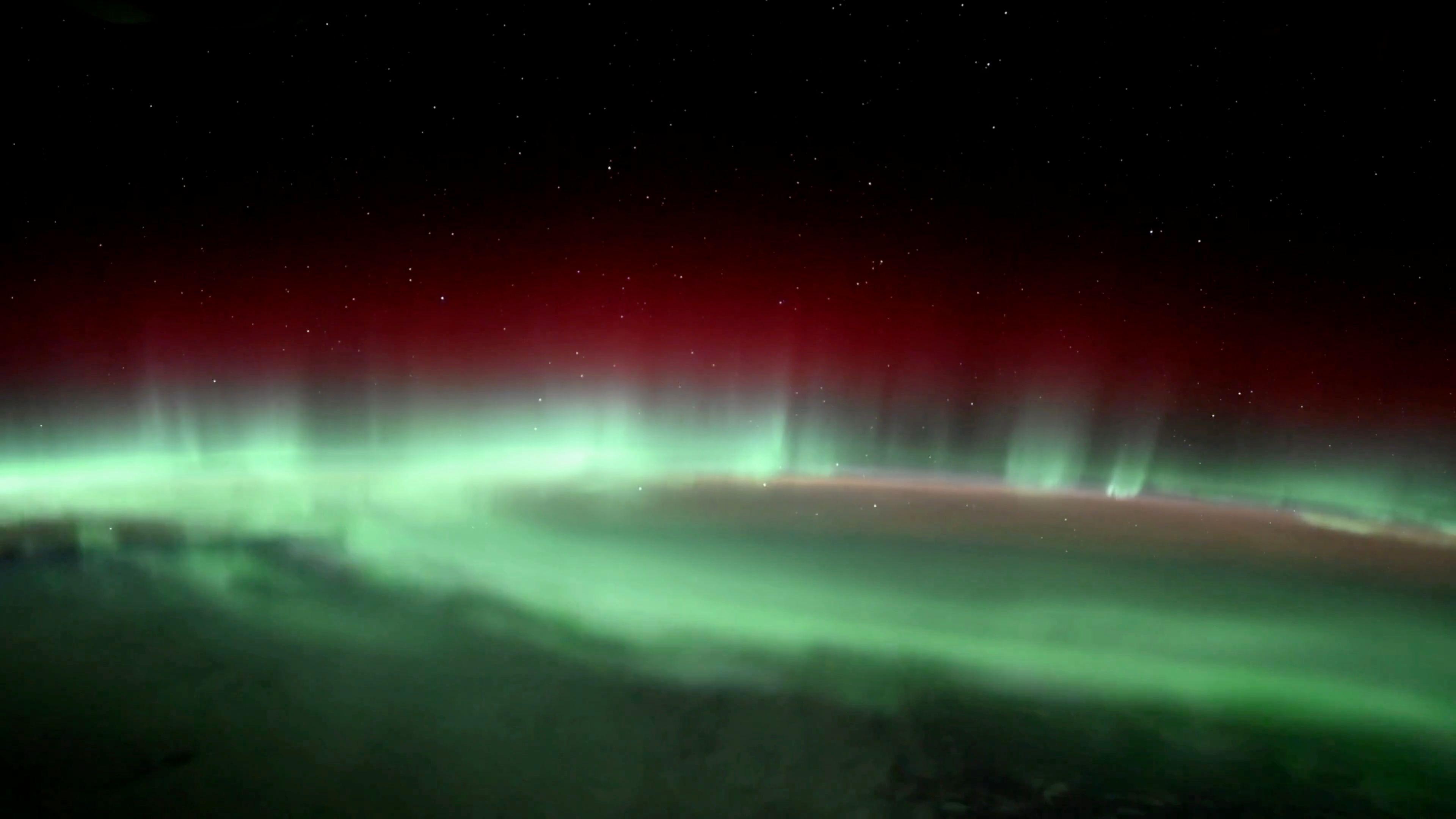
The north of Scotland has already been treated to displays of stunning aurora this month with the potential for more to come, thanks to a number of geomagnetic storms taking place on the Sun.
June's full Moon, known as the Strawberry Moon, external, also put on an impressive show this week looming large and low, as it appeared unusually close to the horizon.
As ever the chances of seeing these sights is dependent on the capricious nature of the UK's weather which is definitely expected to be more changeable throughout June than it was in the spring.
Summer Triangle

The Summer Triangle and meteors photographed in Germany
Events began with the Summer Triangle, external, a bright three-cornered pattern of stars, called Vega, Deneb, and Altair.
The trio gets higher in the sky during the summer months and becomes more and more prominent, so there's plenty of time to look for it.
They form what is known as an asterism or noticeable pattern of stars, created from three different constellations - Vega in the constellation Lyra the Harp, Deneb in Cygnus the Swan and Altair in the constellation Aquila the Eagle.
The best time to spot them is as they rise in the east after sunset, forming a huge triangle overhead.
The Summer Solstice

Stonehenge in Wiltshire is always a magnet for people who want to watch the summer solstice
The summer solstice on 21 June is the day this year in the northern hemisphere with most daylight.
How much you get will vary depending on where you are in the UK and the higher your latitude the more you will have.
At this point, the northern hemisphere is most tilted towards the Sun. In the southern hemisphere, however, the Earth will be tilted away from the Sun and experiencing a winter solstice or shortest period of daylight of the year.
It's an astronomical event that carries a lot of spiritual significance for some people.
It also marks the start of astronomical summer - a time some people associate with the beginning of the season, although for meteorologists summer starts on 1 June.
The word solstice comes from the fact the Sun appears to stand still - from the Latin words sol (Sun) and sistere (to stand still).
The date of the solstice shifts between 20 to 22 June because the calendar year doesn't match with the time it takes Earth to orbit the Sun.
It actually takes the Earth 365 full days and one quarter to orbit the Sun, which is why we have a leap year every four years to bring our calendar and Earth's movements back into alignment.

June's strawberry full Moon was the lowest in UK skies since 2006 - seen here over Bempton, East Yorkshire
Peak of the Bootid meteor shower
The June Bootid meteor shower will be active from 22 June until 2 July, peaking on the 27 June. Normally the shower is weak, but occasional outbursts can produce a hundred or more meteors in an hour.
There will be a chance of seeing the showers whenever the radiant point in the constellation Boötes is above the horizon.
The best time is likely to be before dawn or soon after dusk but check the weather where you are before venturing out - either by downloading the BBC Weather app or via the BBC Weather website.

BBC Weather Watchers always dazzle with the images they capture like this one of the strawberry full Moon over Lancashire
The full Moon seen over the UK on the 10 and 11 June is widely known as the Strawberry Moon - named by Native American and European cultures to signal the time of year that wild strawberries were harvested, according to the Old Farmer's Almanac, external.
In the northern hemisphere, it was the lowest full Moon until 2043 and stayed unusually close to the horizon.
Its position may mean it takes on an apt reddish tinge because of the way the thicker, lower layer of atmosphere diffracts the light.
The photos we've been sent by BBC Weather Watchers have been quite magical and if you would like get involved and to share your pictures with us you can create an account quite easily.
- Published29 July 2024
- Published4 June 2025