You’ve probably heard that working out can have some great benefits during pregnancy.
Staying fit and active will help you adapt to your changing shape and maintain a healthy weight. And exercising in pregnancy can help you cope during labour, too. The NHS recommends being active for around 150 minutes a week.
But when you’re responsible for a growing baby, you may feel slightly cautious. It’s only natural to worry whether what you’re doing is safe. And you’ve probably got questions about the best workouts to do and how long you can keep working out for, too.
Is it okay to exercise during pregnancy?
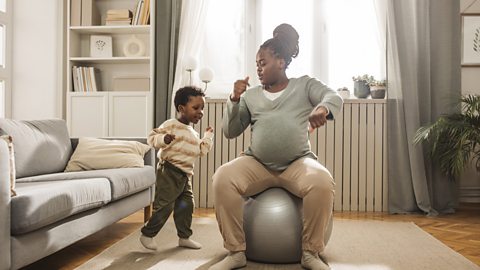
"Unless you've been advised not to exercise by your healthcare practitioner, then it’s not only safe to exercise in pregnancy, it’s beneficial," says Pip Davies, a practising midwife who is Pre and Postnatal Exercise-qualified.
"I often say births are a marathon and pregnancies are training periods. And you wouldn’t sign up for a marathon without training."
"The reality is that labour, birth and motherhood are hard work. And so we need to be as physically and psychologically strong as possible to get through it."
And as long as you feel able, and haven’t been advised not to, she says you can work out right up until your due date.
How staying active benefits you and your baby
Staying active during your pregnancy not only has physical benefits, it can benefit your mental health, too.
Physical benefits
"Exercise and pregnancy can help reduce the risk of lots of pregnancy complications including high blood pressure and gestational diabetes," says Pip.
It can also help prevent back pain as your bump grows.
And Pip says that having strong muscles on the back of your body, including your legs, glutes and back muscles can help during labour.
"Exercise can mean your posterior chain muscles are strong enough to adopt nice, upright birth positions," she says. These are positions like standing, squatting, kneeling and sitting, which can help get your baby in the best position for birth.
"This has such a huge impact on having a straightforward physiological birth outcome," adds Pip.
Mental benefits
Being active is also a great mental health tool and can help boost your mood and your confidence.
"I often say 'pregnant and powerful'," says Pip.
"Let's get rid of this idea that when you're pregnant, you're suddenly this weaker, less capable version of yourself. Actually, you can be the most strong, the most powerful version of yourself. And the more you believe that from a mental health perspective, then the better you’ll feel."
Benefits for your baby
While the evidence base is low as to the benefits of exercise during pregnancy for your baby, Pip says that it could be beneficial during their first 1,000 days of life.
A baby’s first 1,000 days – from conception to their second birthday – is a crucial time as it’s when a child’s brain begins to grow and develop. And the foundations for their lifelong health and physical development are laid down.
During this period, Pip says your gut health and psychological wellbeing can have a big impact on your baby. And exercise could help.
"We know that exercise supports our gut health, which has a massive impact on our babies,’ says Pip.
"We also know that when we're psychologically well and present, that has a big impact on their health and development, too and that’s also something exercise can help with.’
How to train safely in pregnancy
The NHS advises not exhausting yourself during exercise. Work out at a level where you could hold a conversation and if you don’t think you could speak, ease off slightly.
Make sure you prepare your body for exercise by warming up beforehand, drink plenty of fluids during your workout and cool down after.
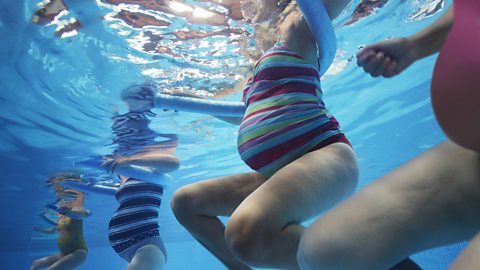
Walking, swimming, prenatal yoga, exercise classes and strength training are all great ways to keep fit during pregnancy. And it’s important to listen to your body.
"There may be days where you feel like you can’t exercise in pregnancy," says Pip. "Sleep can impact how you feel, hormones can impact things."
"Take every day as it comes and meet your body and its energy needs where they're at that day."
Are there any exercises I can’t do in pregnancy?
There are a few forms of exercise to avoid, according to the NHS. These are:
exercising strenuously in hot weather – as it’s easier to overheat when you’re pregnant
lying flat on your back for long periods, particularly when you’re over 16 weeks pregnant – the weight of your bump can press on the blood vessel that brings blood back to your heart, making you feel dizzy or faint
contact sports such as kickboxing and squash – as there’s a risk of being hit
scuba diving – your baby has no protection against decompression syndrome and gas bubbles in the bloodstream
exercising at heights over 2,500m above sea level – as you and your baby are at risk of altitude sickness
Pip also says, if you notice any of the following signs during a workout, you should stop and seek support from your midwife.
exercises that cause any kind of pelvic floor symptoms like leaking of urine, wind or faeces or severe pelvic pain
pain that isn't muscle fatigue pain
Is it safe to start exercising if I haven’t before?
The idea that you shouldn’t start exercising in pregnancy is a myth, according to Pip, just make sure you build up gradually.
"Pregnancy can be a great time to create a healthy lifestyle change."
"Just start slowly and gradually," Pip explains.
However Pip does advise against running if your body isn’t used to it, "If you haven't run before, then running in pregnancy is high impact on your pelvic floor," she says. "So it might not be the time to start."
Instead she suggests going for a brisk walk and building up the time or distance as you get fitter, or trying low-impact exercises like cycling or swimming.
Should I tell fitness instructors I’m pregnant?
If you’re going to an exercise class while pregnant, the NHS advises that you let your instructor know. That way they can suggest any modifications you may need to make to the exercises.
If you really don’t want to tell others about your pregnancy, Pip suggests taking it easy instead.
"In the first trimester, there aren't really any adaptations you need to make when you’re exercising,’ she says.
She also suggests looking for instructors who are pre- and postnatally trained for specific guidance during pregnancy.
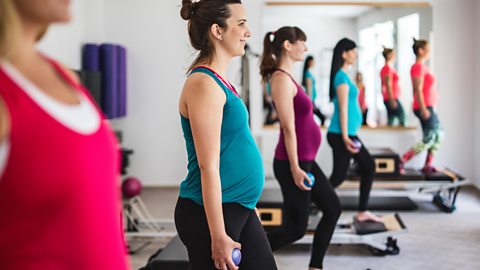
Core and pelvic floor exercises
Adding core and pelvic floor exercises to your daily routine will help you cope with some of the side effects of pregnancy. They can strengthen your muscles to help you support the extra weight of your bump, ease backache, improve circulation and make your joints stronger.
Core exercises
"Often people think, I’m pregnant so I mustn't touch my core," says Pip. "But actually, our deep core muscles can really help with things like back pain."
She suggests trying plank exercises, where you hold a push up like position, with your body in a straight line from your head to your feet. If you find this difficult, try modifying by keeping your knees on the floor.
Pelvic floor exercises
Strengthening your pelvic floor is key in pregnancy as your pelvic floor muscles will come under strain in pregnancy and during childbirth.
And strengthening your pelvic floor can also help reduce stress incontinence – letting out wee when you cough or sneeze.
The NHS suggests sitting or lying down with your legs bent. Then squeezing and tightening your pelvic floor muscles as though you were trying to stop peeing or passing wind. Hold the squeeze for a few seconds before you relax. Try to do three sets of eight a day.
How does being pregnant affect my heart rate?
Many women will find their heart rate naturally increases during pregnancy. That’s because your body is working hard to support a pregnancy and nourish a growing baby.
However, Pip says an increased heart rate is usually nothing to worry about and shouldn’t stop you working out.
"I don't advise women monitoring their heart rate during exercise in pregnancy," Pip says.
"What I recommend instead is just thinking about how you feel. Can you maintain a bit of a conversation while you’re exercising? Do you feel comfortable? Do you need to scale it back, or can you push a little bit?"
"Listening to your body is much better than worrying about heart rate, because that will vary so drastically."
Workouts for the first trimester
Hormonal changes in the first trimester of pregnancy may mean you feel tired or nauseous. So if you don’t feel like you can exercise at this stage, don’t worry.
"There are going to be some days when you just need to survive and that's okay," says Pip.
"Even if the first trimester for you is a complete write off, it’s not too late. When things do get easier, because for most women, they will, you can pick exercise up then."
If you do feel up to exercising in the first 12 weeks of your pregnancy, she suggests working on strength.
"I think the nice thing about the first trimester is that you don't have the limitation of a bump," she says.
"You can build your core strength, which in turn supports your pelvic floor function, so that as you get a bump, hopefully you're less likely to get back, hip and pelvic pain."
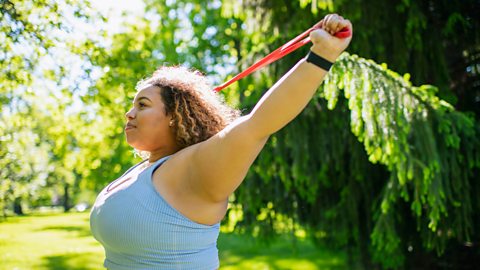
If you’re new to exercising she also says the first trimester is a good time to explore bodyweight training or using resistance bands, gradually building up to weights.
"You might find that you don't have the energy for cardiovascular exercise," she says. "But a bodyweight circuit at home may feel okay."
Workouts for the second trimester
Typically people have more energy in the second trimester, says Pip. So she suggests adding in some cardiovascular exercise alongside strength work to help prepare for labour.
"This can be a really great time to start thinking about your physical fitness, because you've hopefully got a little bit more energy behind you," she says.
"If you’re a runner, this can be a good time to keep running. You might want to explore swimming or cycling, something that gets your heart rate up – because labour is a big old endurance event."
"Your uterus is a muscle and during labour it’s working really hard, contracting and relaxing, so it’s important to build stamina as well as strength."
Workouts for the third trimester
In the third trimester, Pip advises working on maintaining your fitness and strength but also doing workouts that prepare you for birth.
"We know that a typical when your womb tightens and then relaxes during labour lasts for 60 seconds," says Pip.
"So one of the things I like doing with expectant mums is doing some high-intensity work for 60 seconds. And then we relax for about 90 seconds and try to mirror how that's going to feel in labour."
During the relaxation, she suggests exploring breathing exercises, tuning into a piece of music, saying an affirmation or hydrating or refuelling so you can reset for the work ahead.
"Then when labour happens for real, if you get a bit panicked or out of breath, you’ve got things in your toolbox that you know will help."
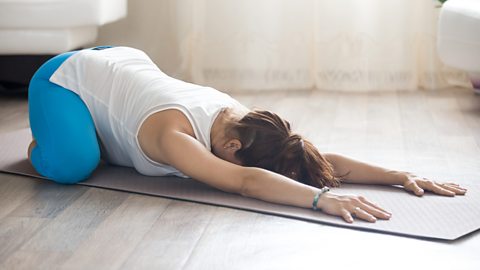
She also suggests stretching to help relax your pelvic floor. "If our pelvis is balanced, our uterus sits balanced, which means our babies can be in a more optimal position for birth."
"Try stretches like 'happy baby' or 'child’s pose', and while doing that stretch, really think about that exhale breath and relaxing your muscles."
'Happy baby' is a yoga pose. Lie on your back with your knees bent and gently pull your knees towards your chest, feet towards the ceiling, keeping your legs wider than your torso. Keeping your tailbone and shoulders on the floor hold your feet – or ankles or shins if you can’t reach.
For 'child's pose', kneel on the floor and bend forwards, stretching your arms in front of you. To accommodate your bump, Pip suggests opening your knees wider and placing your hands on a sofa or pillow if you can’t reach the floor.
When can I exercise after birth?
The NHS says, if you had a straightforward birth, you can start gentle exercise as soon as you feel up to it. But it advises leaving high-impact exercise like running until after your six-week postnatal check.
However, Pip thinks most women should leave it longer before taking part in high-impact workouts.
"Don’t rush to get back to exercise," she says. "At six weeks, regardless of how you've birthed, regardless of whether you have exercised until the very moment you went into labour, your pelvic floor and your abdominal wall are not ready for impact exercise."
Instead she suggests starting gentle movement as soon as you feel ready after birth. Things like walking to boost your mood and health and rehab exercises for your abdominal wall and pelvic floor.
"If you’re thinking of returning to running or high-impact exercise, 16 weeks postpartum is much more realistic than six."
Head to Best Start in Life for advice on exercising in pregnancy.