I’m a pattern designer and I design prints for interiors, kitchen textiles, stationery, fashion print, anything that has a pattern on it basically.
I call myself someone that does art with a function because everything I create, every design I create ends up as a product in someone’s house.
Today I’m going to design a new pattern for a trade show. I’m going to take some photos outside and zoom in on those photos and find shapes and things that I find interesting. And then I’ll start painting those shapes and put them together to make a new pattern.
I wouldn’t call myself a photographer. By that I mean I’m not trained as a photographer… I take the photos to gather as resources rather than saying I’m a photographer that takes beautiful imagery. Yeah I take a good photo but for my work it’s more of a resource.
When I’m looking at my photos after I’ve taken them outside, I will look for ones that have nice silhouettes so I can pick out the shapes to paint from or ones that have a nice composition in the photograph because I use that for layout of my different drawings.
I love the contrast of the black silhouettes and the shape of the lines of the twigs in the background. I think some people think that to have a job in the arts, you have to be an artist that does big giant paintings in galleries. But there are other ways of being creative and doing artwork like what I do that isn’t necessarily that path and different ways of having a career. Especially with pattern and print because print and patterns are on everything so there are a lot of jobs out there.
I don’t let it bother me when things don’t go 100% how I want them to because everything’s not going to be correct all the time. I’ve learnt to be good at taking a step back and I criticise myself so I can move on and get stuff to finished products because you have to when you’re doing your own collections and working by yourself.
I learnt how to use Photoshop at university and there was a lot of people when I started that were already like really good on Photoshop, so it was a bit daunting but I learnt when I was there.
When I’m designing for a trade show I’ll create loads and loads of prints. I’ll have a stand like a market and then sell different designs to different companies. In this type of job you obviously get money in kind of lots of different ways. I’ll do some freelance work which means to create designs for different companies and then they pay you for each day that you are creating the designs. And also I get money from selling my own products. And that is all from me designing different prints but they just end up going to lots of different places.
I like this colour pallet. So I’m going to use that in the design. I like that it’s got all the monochrome tones. And it’ll have greys and black and white in it. But I like that it’s got a couple of bold colours in it as well to make it a bit more lively. I feel like, if people have my colourful textiles in their house it makes me happy, because it’s there to make them happier and improve their moods and improve their lives.
Each layer I build up I’ll bring in a different colour from the colour pallet that I chose. A big part of my work has become like colour theory and psychological aspects of colour and how it creates positive environments for people.
I’m not just designing and painting all day. I have to do other 'businessy' things as well or travel a bit for meetings. And painting and drawing for me is still a novelty even though it’s my career because I don’t get to do it all the time. It’s only a part of it now when you have your own business.
I’ve finished with this design now and I’m pretty happy. I will add it to my design catalogue of all my big list of designs that are available. And then hopefully sell it to somebody that can make it in to a product and put it in somebody’s house.
Video summary
Norfolk based designer Charlotte Beevor uses nature to inspire her print design via photography and digital design.
She talks about the career options available within design and her process, which includes a recognition that making mistakes is part of the creative process.
Charlotte explains the nature of working for herself and how she goes about creating work for sale.
Teacher Notes
This clip clearly outlines the process of creating a design, beginning with photographing nature and then showing how a photograph is developed into a realised design for a pattern to be used on objects for domestic interiors.
This could be used to inspire the pupils to create their own fabric and wallpaper designs.
The pupils could be asked to use digital cameras to record plants and natural forms in the environment of the school, or the teacher could supply them with a selection of house plants, flowers etc to draw or photograph as a starting point.
The pupils could then use tracing paper to simplify their ideas, creating more refined pattern designs which they could then realise in a number of ways as a final design using either painting or printmaking.
This clip will be relevant for teaching Art and Design at KS3 in England and Northern Ireland, KS3 and GCSE in Wales and 2nd, 3rd and 4th Level in Scotland.
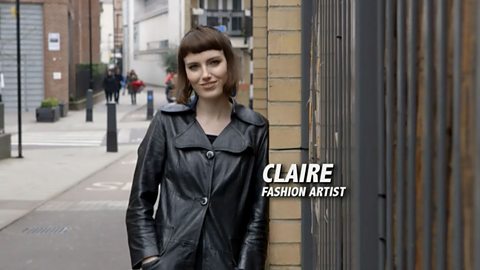
A career as a fashion artist. video
What's it like to work in fashion? Clare Barrow is an artist who now works in the industry.
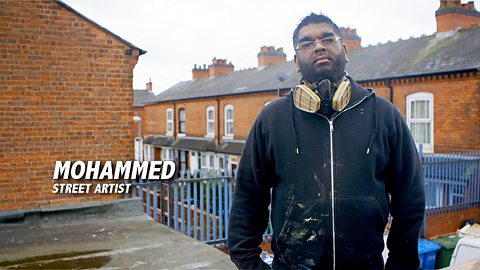
A career in street art
Mohammed Ali tells us about his work designing murals and street art
A career in woodwork
Ruairi McGuigan explains his career in illustration and woodcutting

A career in games design
Sean Barron describes his career in computer games design

A career in animation
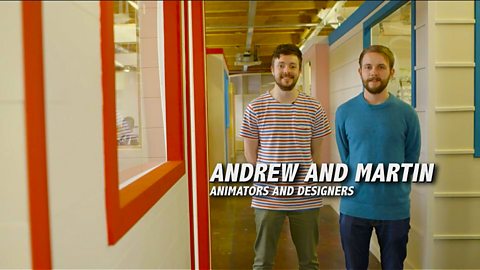
Andrew and Martin tell us how they built their careers as animators and designers
A career in ceramics
Anna Barlow tells us about her successful career in ceramics and sculpture design