I’m a fashion artist. I make clothes and art.
I’m getting ready for the London Fashion Week Show. So we’ve got like nine days to go, eight days, something like that. Yeah, it’s pretty scary.
It’s about putting on a good show and getting the right people there to see the collection, to get Press which means get different magazines or Internet websites or celebrities writing about you and then also about getting the buyers there that actually buy the collection.
It’s good to have people around to like work with. It just makes everything run more smoothly.
People just come and see the collection from all over the world. And they say we want that for our shop and then pay me to make it for their shop.
This is one of the pieces from the last collection. This is on to silk. It’s a really soft fabric. And like my artwork’s been printed on to the garments. So today I’m going to be painting directly on to some fabric which will then get made in to a final garment which will be on display next week in the shop.
So once I paint on to the fabric, it will also be like a piece of art as well as a garment that you can wear because of the painting directly on to it. It’s a complete one off.
My first like big break was some editor from Vogue magazine seeing one of my jackets on someone and asking who made it and then she then commissioned me for Vogue to make pieces for Vogue. And then from that I got a commission with this really big designer store called Joseph, who commissioned me like 100 pieces, to go in to their flagship store.
So I’m going to paint directly on to the fabric to make this top. And I have to concentrate because I don’t want to do it wrong. It’s the actual final one. It’s very risky. It could go wrong, but hopefully not.
My style wasn’t me or traditional. It was never photo realistic. I’ve always just embraced it. It’s not perfect.
The first time I got paid was at school when I came in for non-uniform day wearing a pair of jeans that I’d customised myself with bleach and stencils and safety pins. And then someone else in my class asked me to make them a pair as well. So they gave me £5 to do that. I did like a few pairs for a few people across the school year. Stuff like that early on gave me confidence to just go straight on to garments with paint and go for it.
If you have that confidence, great, but it takes a while to get it. Like honestly at school I was so quiet, I didn’t really like, express myself or even speak that much.
I did art at GCSE and really liked it. I was always like in the painting room, just doing different things. It was never usually perfect, but I would just try different things. So it gave me the confidence to go on and do like an art career really.
I’ve made a top today. So that’s how easy it could be. Things don’t need to be as complicated as you may be see in the magazines, on the fashion shows. You can just try and do something yourself that’s as simple as like customising a piece of fabric. It’s really good when everything’s in a box and ready to go. It feels like something’s over and then it’s going out in to the world.
There’s so much that goes in to putting on a show. First of all getting a venue, getting the models that are going to wear it, paying for everything… It’s such a huge job. Thankfully, I have people helping me out.
I like the pressure. I like the stress. I like the excitement of it. I like seeing everything come together…
It can be really difficult. You’ve got to have a lot of commitment to want to work in this job and this industry. I mean you’ve got to have that drive and ambition there to continue.
You know, you’ve got to like be strong and try and keep going!
Video summary
Meet London based fashion artist Claire Barrow, who is preparing for a show at London Fashion Week.
She talks about what it takes to put on a good show, along with describing the process of placing her own artwork on to her clothes.
Each garment she makes is a ‘one off’.
She describes her style as ‘not ‘perfect’, which she embraces.
She reveals how she first got started and her own experiences at school, along with her first big break in the industry.
Teacher Notes
This would prove a useful resource for a fashion design project.
The pupils could be organised into small teams and set a brief to create their own fashion design houses.
The teacher could outline a number of garments that they are going to create designs for.
These could be existing garments with the emphasis on customisation, taking the queue from Claire’s anecdote about customising jeans when she was at school.
Each group could be given the same set of basic garments, such as t-shirts.
The project could culminate with the class having a fashion show and sharing their work.
This clip will be relevant for teaching Art and Design at KS3 in England and Northern Ireland, KS3 and GCSE in Wales and 2nd, 3rd and 4th Level in Scotland.
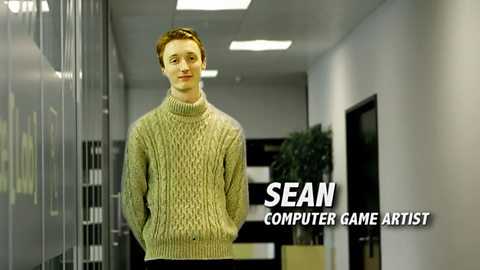
A career in games design
Sean Barron describes his career in computer games design
A career in ceramics
Anna Barlow tells us about her successful career in ceramics and sculpture design

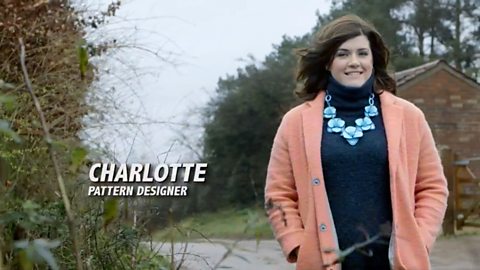
A career in print design
Artist Charlotte Beevor takes inspiration from nature in her work creating prints
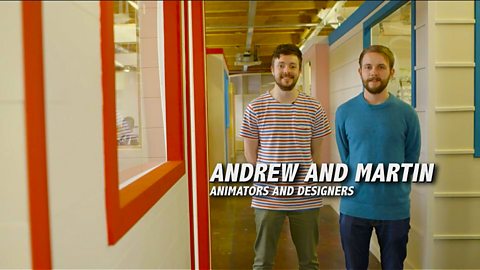
A career in animation
Andrew and Martin tell us how they built their careers as animators and designers
A career in street art
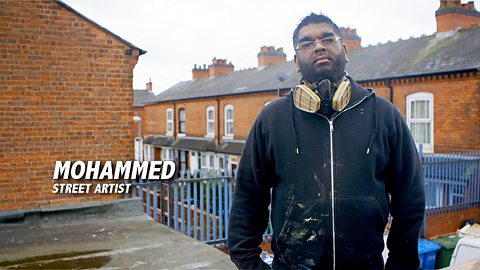
Mohammed Ali tells us about his work designing murals and street art
A career in woodwork
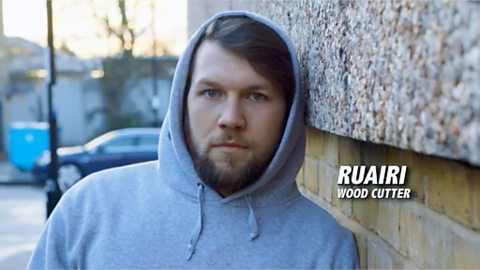
Ruairi McGuigan explains his career in illustration and woodcutting