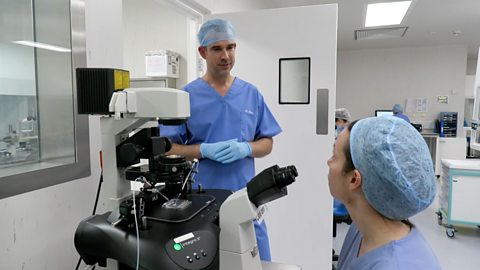
In 2020 in the UK exactly 613,936 babies were born.
That’s a lot of nappies that need changing!
Now when a baby is born, that’s an incredibly exciting moment for everyone in a family. Families come in all shapes and sizes. They’re all incredibly important, and families are made in lots of different ways, as we’ve been finding out.
Hi, my name’s Esme. I live with my mummy, my daddy and my little brother Rufus.
My mum and dad split up, meaning they’re not married anymore and they live in different houses.
My mummy adopted me.
And how old were you when you came into the family?
I was just turning four.
Okay. And obviously that was a bit nerve-racking for you, but how do you feel now as you’re growing up? It’s been about seven years.
Yeah, happy, and it’s nice to have like family time and stuff.
This is my mum and we live together, just the two of us, and a lot of pets.
In my family I have a mummy, a daddy and a sister and a chocolate lab!
We have a mum and dad.
I have two daddies!
You say it!
I have two daddies!
I love living with my two mums. We’re such a special family because we get to share clothes, they give me great advice and life skills. They also inspire me when it comes to working and my future career because they’re strong women.
Ah.
Aww.
This is Xand and me when we were three years old. We grew up with a mum and a dad and our little brother Jay.
I grew up with a foster family and with my biological parents.
Here I am when I was five.
And my family now is made up of my friends Sara and Louise and their kid Kiki who’s also my godchild.
There I am with my son Julian. Julian has two dads, a mum, and a younger brother Harrison.
Video summary
This short film is about combinations of humans that can make up a family: mothers and fathers, sisters, brothers, dogs, two fathers, two mothers, foster families. It introduces the concept of biological parents, adoptive parents, foster parents, and divorced parents.
This film is relevant to relationships education, which includes pupils learning ‘that others’ families, either in school or in the wider world, sometimes look different from their family, but that they should respect those differences and know that other children’s families are also characterised by love and care.
Before watching the clip
Use baseline assessment to establish current knowledge. Discuss with other teachers and link to their curriculum.Consider:
- What is a relationship?
- What is friendship?
- What does family mean?
Safeguarding
Teaching about families requires sensitive and well-judged teaching based on knowledge of pupils and their circumstances.
Creating a safe space for RSHE lessons is important, including encouraging pupils to respect others through listening and being mindful of other’s feelings.
- Give some thought to what is happening before and after the lesson for those pupils and how to provide opportunities for them to ask questions, anonymously or face-to-face.
- Remind pupils where to go for good answers to their questions.
- The whole school community needs to be aware of when these lessons are taking place, to enable all staff to respond to questions in a supportive and informative way.
- With your RSHE lead, discuss ways of responding to common questions that reflect your school’s ethos and RSHE policy.
- Be aware of your school safeguarding policy and procedures for safeguarding disclosures and concerns.
SEND
Refer to the ‘preparing for adulthood’ outcomes as set out in the SEND code of practice – schools should support children in developing friendships.
Topics that are addressed in other clips
- Can children have babies?
- When is the right time to have a family?
- How do two fathers have a child?
- How did the two women get a daughter?
- Why do two men or women choose to have a relationship?
Further information for teachers
NSPCC: What is sexuality and sexual orientation?
Signposting for pupils
Links to guidance
DfE RSHE statutory guidancePlease refer to paragraph 62 ‘Families & People who care for me’
Keeping Children Safe in Education 2021Please refer to paragraph 120 ‘Opportunities to teach Safeguarding’
DfE SEND code of practice 0-25yearsPlease refer to Chapter 8, ‘Supporting pupils with SEND to develop friendships and recognise when a relationship is unhealthy’
Keywords
Family, adoptive parent, foster parent, biological parent
Discussion
- Why are some families different from mine?
- Is there such a thing as a ‘normal’ family?
- What are the most important relationships in your life right now?
- How do we show that we care about the people in our family?
- If a couple or a family split up or separates, what sort of emotions and feelings might different people in the family have?
- What do babies and young children need from those that care for them?
- What is a healthy relationship?Draw attention to the features of relationships that provide happiness and security, and encourage them to recognise the characteristics of unhealthy relationships too.
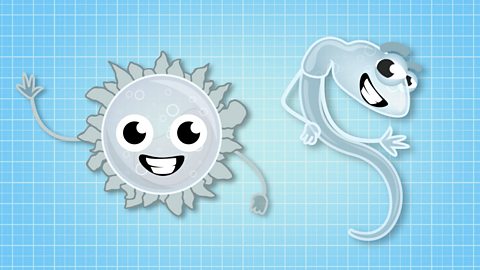
Sperm, egg and reproductive organs. video
This short film introduces the topic of reproduction and that babies start from an egg and sperm. Correct terminology is given for genitals and reproductive body parts in male and female bodies.
Puberty. video
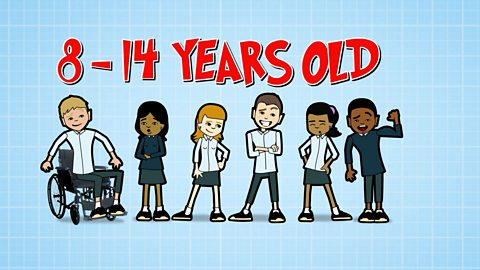
This short film looks at puberty and why it happens, defining it as changing from a child to a reproductive adult. There is a description of the changes that happen in most bodies, what that may mean for female bodies and male bodies, when it might happen and that it is normal.
What is attraction? video
This short film is about feelings of attraction that can begin to happen during puberty. They can feel warm, exciting, and sometimes confusing.

Sex and sexual intercourse. video
This short film talks about genitals, arousal, sexual intercourse, and fertilisation. It sets out that this is something that can happen when a man and woman decide to have sex to make a baby, and that this is the most common way of fertilisation.
In vitro fertilisation (IVF) video
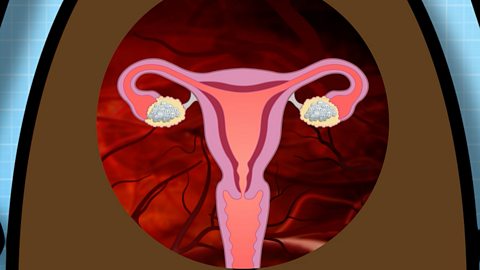
This short film explains IVF - a procedure used to help people who cannot conceive via sexual intercourse. It is used to help people to get their eggs and sperm to meet, fertilise and hopefully make a baby.