What is attraction?
Mini Xand, are you on a date? Who are you with?
Snowperson! Green really is your colour!
Well I love your snowIt’s really snowy
When you’re attracted to somebody, it can feel a bit like they’ve got a superpower to make you feel lots of different emotions, and some of those can be quite confusing.
Err, attraction feels like where I can’t be away from the person. I feel like at every minute I want to be near them.
It’s confusing is the main thing, umm. Sometimes it makes me feel a bit sick, umm, I can’t sleep and it makes me really like panicky and I can’t talk and I find myself going ten to the dozen when I speak.
I think when I first met my partner it was like oh, these are feelings that I’ve not had.
Being attracted to someone just makes people really happy and just makes people really calm and cool, and just very positive.
I stumble on words, umm… Sometimes you try to avoid eye contact as well because you don’t know where to look.
Warm, soft and nice and cosy, do you know what I mean?
I actually have a boyfriend right now and umm, I…I know that like it sounds silly but I still get really excited after we talk or like he calls me or like we go on a date.
And we are all attracted to different people.
Err personally I’m attracted to funny err girls. I think sense of humour’s really important.
I’m attracted to males
I’m err normally attracted to men, so yeah, I’m a gay man.
I’m attracted to people in general. I don’t think I’m only attracted to women or only attracted to men.
I am attracted to men, umm. I like people who are funny and smart and who like the same things as me.
It’s like nice…nice girls. I don’t know, just personality, like nice to be around.
If you feel warm and you can feel open and just be yourself around them, then that’s someone for me really.
Whoever you’re attracted to, the one thing everyone has in common is how your body reacts.
When I’m happy, I don’t usually lose my appetite, feel flustered or not be able to sleep, but when you fancy someone, all those things can happen.
When you’re very strongly attracted to someone, all kinds of hormones change inside your body, so your dopamine and your noradrenaline go up.:These hormones make us giddy and energetic, which can make it really hard to eat and sleep.
They also play an important role in the fight or flight response.
So you may feel tense and flustered, you can start sweating, you may become tongue tied and your heart can start racing.
Don’t worry though, it won’t last long and you’ll get back to eating and sleeping just as you always have
Fancying someone can make you feel really happy, and it’s all thanks to the reward centre in your brain.
Scientists in America found that brain scans of the people that loved each other showed the reward centres lighting up like bonfire night or Diwali when they were shown a photo of someone they were attracted to.
I wonder if that’s where the expression “feeling fireworks” comes from when you’re attracted to somebody.
I had a lovely time
I love you tooI mean, I had a lovely time too
The brilliant thing about attraction is that if the other person feels the same way, it can lead to exciting things like kissing and if you’re a grown up, it might also lead to sex. Now sex is how babies are made but it can also be for fun. Either way it’s something that grown-ups do together.
Video summary
This film is about feelings of attraction that can begin to happen during puberty.
They can feel warm, exciting, and sometimes confusing. People can be attracted to someone of the opposite sex or the same sex.
If both people feel the same level of attraction, their body reacts in an interesting way. It can lead to a physical response. And sometimes (if both people agree) these feelings can lead to a relationship. This may include physical acts kissing, holding hands and, for adults, may lead to sex.
It is important that teaching of this topic includes the role of maturity and consent when choosing the time to start a physical relationship.
The content covered in this film could be used in a lesson about ‘changing adolescent body’ (Health Education) because this should cover ‘key facts about puberty and the changing adolescent body… including physical and emotional changes’. Attraction spans both physical and emotional factors. Alternatively, this clip could be used as part of sex education.
This film is relevant to sex education, as well as health education. Remember that schools need to be able to draw a line between their curricula for relationships education and sex education in order to implement the parental right to request their child is excused from sex education.
Please ensure you watch the film prior to using it in class, to ensure it is suitable for your pupils and in line with your school's policy for RSHE. Further guidance is given below.
Before watching the clip
Use baseline assessment to establish current knowledge. Discuss with other teachers and link to their curriculum.
Your teaching of this topic must meet the needs of all pupils. Some will be more aware of these concepts than others. There will be different levels of understanding when it comes to LGBTQ+ relationships and sex for pleasure.
What learning has happened in previous lessons about different types of relationships?
Do pupils understand the different types of relationships, and are they clear about what a healthy relationship looks like, including with friends, family, or in romantic relationships?
Relate back to previous discussions about relationships:
- Do pupils understand chemicals, reward systems and hormones?
- What conversations have happened around love, intimacy, or sex for pleasure?
Safeguarding
Teaching about attraction and love requires sensitive and well-judged teaching based on knowledge of pupils and their circumstances.
Creating a safe space for RSHE lessons is important, including encouraging pupils to respect others through listening and being mindful of other’s feelings.
- Give some thought to what is happening before and after the lesson for those pupils and how to provide opportunities for them to ask questions, anonymously or face-to-face.
- Remind pupils where to go for good answers to their questions.
- The whole school community needs to be aware of when these lessons are taking place, to enable all staff to respond to questions in a supportive and informative way.
- With your RSHE lead, discuss ways of responding to common questions that reflect your school’s ethos and RSHE policy.
- Be aware of your school safeguarding policy and procedures for safeguarding disclosures and concerns.
You should pay particular attention to students who may be witnessing, or have witnessed, unhealthy relationships. These discussions of love and connection can be triggering for students who live in the context of unhappy separation, difficult divorce or other adverse circumstances.
See also ‘Domestic Abuse Act 2021’ and content in Annex B of KCSIE:
‘Types of domestic abuse include intimate partner violence, abuse by family members, teenage relationship abuse and child/adolescent to parent violence and abuse. Anyone can be a victim of domestic abuse, regardless of sexual identity, age, ethnicity, socioeconomic status, sexuality or background and domestic abuse can take place inside or outside of the home. The government will issue statutory guidance to provide further information for those working with domestic abuse victims and perpetrators, including the impact on children. All children can witness and be adversely affected by domestic abuse in the context of their home life where domestic abuse occurs between family members. Experiencing domestic abuse and/or violence can have a serious, long lasting emotional and psychological impact on children. In some cases, a child may blame themselves for the abuse or may have had to leave the family home as a result’
SEND
Refer to the ‘preparing for adulthood’ outcomes as set out in the SEND code of practice – schools should support children in developing friendships.
Topics that are addressed in other clips
- Do different types of attraction make different types of families?
- If you are attracted to someone does that mean you should have a baby with them?
- How do two fathers have a baby?
- How do two mothers have a baby?
Further information for teachers
NSPCC: Sexuality and sexual identity
Healthier Together: Sexuality/sexual orientation
Signposting for pupils
Childline: Friends, relationships and sex
Childline: Sexuality definitions
Links to guidance
- Para 67, the curriculum ‘should ensure that both boys and girls are prepared for the changes that adolescence brings, how a baby is conceived and born.’
Keywords
Attraction, emotions, relationship, consent, gender, boyfriend, girlfriend, hormones, dopamine, noradrenaline, reward-centre, love, sex.
Discussion
- How will I know if I’m attracted to someone, or they’re attracted to me?
- What if I am attracted to someone but they aren’t attracted to me?
- LGBTQ+ identities
- What is consent, and why is it so important in relationships? Consent can be described as: ‘When both people want the same thing and agree’.
- Talk about everyday examples of consent, like sharing a water bottle, hairbrush or other equipment. What sorts of words could we use to talk about consent? (Examples are trust, respect, communication, listening)
- How to say no – what does that feel like?
- How to accept a ‘no’ – what does that feel like?
- Age of consent: in the UK 16 to have a sexual relationship with another person.
Draw attention to the fact that there are many different types of relationships and many different types of feelings. Attraction is different from friendship. To fancy someone, to be attracted to someone, or to love someone are all very different types of feelings. The feelings you have for a friend are very different from the feelings you have for family members, and they’re also different from the feelings you have for someone who you are romantically or sexually attracted to.
Relationships and families. video
This short film is about combinations of humans that can make up a family: mothers and fathers, sisters, brothers, dogs, two fathers, two mothers, foster families. It introduces the concept of biological parents, adoptive parents, foster parents, and divorced parents.
Sperm, egg and reproductive organs. video
This short film introduces the topic of reproduction and that babies start from an egg and sperm. Correct terminology is given for genitals and reproductive body parts in male and female bodies.
Puberty. video
This short film looks at puberty and why it happens, defining it as changing from a child to a reproductive adult. There is a description of the changes that happen in most bodies, what that may mean for female bodies and male bodies, when it might happen and that it is normal.
Sex and sexual intercourse. video
This short film talks about genitals, arousal, sexual intercourse, and fertilisation. It sets out that this is something that can happen when a man and woman decide to have sex to make a baby, and that this is the most common way of fertilisation.
In vitro fertilisation (IVF) video
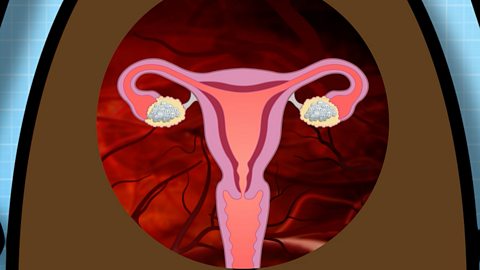
This short film explains IVF - a procedure used to help people who cannot conceive via sexual intercourse. It is used to help people to get their eggs and sperm to meet, fertilise and hopefully make a baby.