Puberty is the process of body chances which turn you from a child into a grown-up.
It’s then that reproductive organs can be used to make a baby.
Hormones give you a growth spurt, telling you to get taller. Males get broader and females develop breasts, and it can all be a bit annoying if you grow out of your favourite outfit too quickly.
Get ready to get hairy too.
Okay, not that hairy.
Many boys will get facial hair and everyone gets hair on their legs, armpits and between their legs – that’s called pubic hair. But don’t panic – it’s exciting too. You also get stronger…
Not that strong
But remember, it’s all completely normal.
It could be worse. If you were a baboon, puberty would suddenly give you a giant red bottom.
The average age of puberty starts around 12 years old in boys and at 11 in girls, but it can happen any time between eight and 14.
So if you’re a bit early or later than your mates – don’t worry. Puberty is also where males start to produce sperm.
Hormones produced in the brain stimulate the production of a different hormone called testosterone, which tells cells in the testicles to transform into sperm cells.
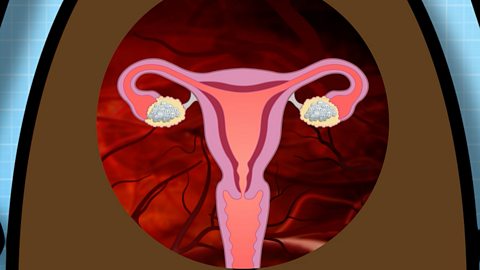
Females are born with 1-2 million egg cells already made.But when puberty starts, hormones in the brain send messages to the ovaries to start producing another hormone called oestrogen, this tells the ovaries to start releasing eggs once a month.
Now puberty might sound a bit scary, but don’t worry, it’s just the next stage of development, helping you develop from being a kid to a grown-up.
Video summary
This clip looks at puberty and why it happens, defining it as changing from a child to a reproductive adult.
There is a description of the changes that happen in most bodies, what that may mean for female bodies and male bodies, when it might happen and that it is normal.
Changes shown are growth spurts, body hair, strength, sperm production, egg release and hormones.
The Let's Talk About Periods: Newsround Special explains menstruation.
This film is relevant to ‘Changing adolescent body’, in Health Education. Remember that schools need to be able to draw a line between their curricula for relationships education and sex education in order to implement the parental right to request their child is excused from sex education.
Please ensure you watch the film prior to using it in class, to ensure it is suitable for your pupils and in line with your school's policy for RSHE. Further guidance is given below.
What is a period? This clip from Newsround's 'Let's Talk About Periods' programme explains menstruation.
Teacher notes
Before watching the clip
Use baseline assessment to establish current knowledge. Discuss with other teachers and link to their curriculum.Consider:
- How your teaching can meet the needs of all pupils. Some will be more developed, and some will be less developed.
- What learning has happened in previous puberty lessons?
- Do pupils understand why puberty happens?
- Do pupils understand the menstrual cycle?
Safeguarding
Teaching about bodies requires sensitive and well-judged teaching based on knowledge of pupils and their circumstances.
Creating a safe space for RSHE lessons is important, including encouraging pupils to respect others through listening and being mindful of other’s feelings.
- Give some thought to what is happening before and after the lesson for those pupils and how to provide opportunities for them to ask questions, anonymously or face-to-face.
- Remind pupils where to go for good answers to their questions.
- The whole school community needs to be aware of when these lessons are taking place, to enable all staff to respond to questions in a supportive and informative way.
- With your RSHE lead, discuss ways of responding to common questions that reflect your school’s ethos and RSHE policy.
- Be aware of your school safeguarding policy and procedures for safeguarding disclosures and concerns.
SEND
Refer to the ‘preparing for adulthood’ outcomes as set out in the SEND code of practice – schools should support children in developing friendships.
Topics that are addressed in other clips
- Do babies happen as soon as you finish puberty or have a period?
- What happens when an egg is not fertilised?
- Can you choose when to have a baby?
- Can everyone make a baby with their body?
- What about adoption and fostering?
Further information for teachers
Signposting for pupils
Links to guidance
- Para 67, the curriculum ‘should ensure that both boys and girls are prepared for the changes that adolescence brings, how a baby is conceived and born.’
- Refer to paragraph 88 and 89 about menstrual wellbeing, including the key facts about the menstrual cycle.
- Refer to paragraph 106 ‘changes to the human body as it grows from birth to old age’
Sex education is not compulsory in primary schools, but schools should determine their content based on the needs of their pupils and this may include additional sex education content.
DfE National Curriculum sciencemain external body parts, puberty, and reproduction in plants and animals, how a baby is conceived and born.
Keywords
Puberty, reproductive organs, hormone, breasts, facial hair, pubic hair, sperm, testosterone, testicles, egg cells, ovaries, oestrogen.
Discussion
- What other things happen during puberty? This may include discussion of the beginning of sexual feelings, changing emotions.
- Everybody has different emotions. How are feelings affected by puberty?
- How to look after your body during puberty: hygiene.
- Periods are a key topic and pupils may have questions such as ‘what happens if I get my period at school’ and ‘how will I know it is coming.
Draw attention to the fact that there are many different elements to puberty. As well as the changing adolescent body, (particularly from age 9 through to age 11), it is important to include emotional changes.
Relationships and families. video
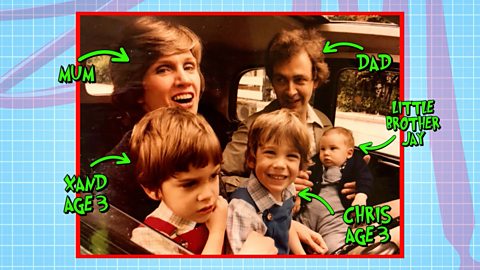
This short film is about combinations of humans that can make up a family: mothers and fathers, sisters, brothers, dogs, two fathers, two mothers, foster families. It introduces the concept of biological parents, adoptive parents, foster parents, and divorced parents.
Sperm, egg and reproductive organs. video
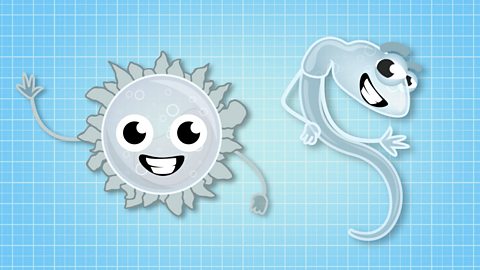
This short film introduces the topic of reproduction and that babies start from an egg and sperm. Correct terminology is given for genitals and reproductive body parts in male and female bodies.
What is attraction? video
This short film is about feelings of attraction that can begin to happen during puberty. They can feel warm, exciting, and sometimes confusing.

Sex and sexual intercourse. video
This short film talks about genitals, arousal, sexual intercourse, and fertilisation. It sets out that this is something that can happen when a man and woman decide to have sex to make a baby, and that this is the most common way of fertilisation.
In vitro fertilisation (IVF) video
This short film explains IVF - a procedure used to help people who cannot conceive via sexual intercourse. It is used to help people to get their eggs and sperm to meet, fertilise and hopefully make a baby.