For your body, this world is a dangerous place. Threats lurk around every corner. And it's not just the obvious dangers that threaten you. Even now, as you watch this film, there are pathogens waiting to get inside you. A pathogen is a foreign invader that causes disease. They spread in all sorts of ways, commonly through sneezing.
A simple sneeze is often all it takes for viruses to jump from one person to another. Sneezing is one of the most powerful forces your body produces. You expel air at 100 miles an hour, ejecting anything that isn't bolted down. Once a pathogen invader, like the flu virus, gets inside your body, you have to respond quickly. Time to turn on your immune system to destroy them.
Your first response to infection is fever. Raising your temperature by just a few degrees is enough to slow them down. Meanwhile, deep within your tissues, an internal army is on the march. On the frontline are phagocytes, a form of white blood cell. They flood the infection site to fight the viruses. But in this case, the viruses are too strong. Instead, the soldiers themselves become infected. Now the only way these cells can kill the viruses is to self-destruct. As their bodies pile up, they form the sticky basis of your snot.
But your immune system hasn't given up. A second wave of attack is released as another kind of white blood cell is unleashed… the Killer T-cells. Instead of attacking the viruses directly, they take aim at your own infected cells. They give a kiss of death, they make the infected cell implode, then self-destruct, destroying the viruses inside. It's one of the reasons you'll get a sore throat.
Despite these two assaults, the viruses haven't yet been defeated. But your immune system has another trick. Yet more white blood cells, this time called B-cells, are able to recognise the specific invading pathogen and produce a specialised weapon. The Y-shaped antibody. These can be produced at a rate of 2,000 per cell per second. They coat the viruses, slowing them down and making them stick together. Now the viruses are easily swept up. And you begin to feel better, the fever drops, and your energy starts to return. The cells of your immune system have won the day.
Video summary
Using CGI, this short film gives students a look at the inner workings of the immune system, focusing particularly on how the body fights off viruses.
It explains how diseases spread as well as the function of antibodies.
The footage features key vocabulary and concepts from the science curriculum.
This short film is from the BBC series, Inside the Human Body.
Teacher Notes
This short film gives students an idea of the workings of the immune system.
The footage of microbes and immune cells is visually engaging and could lead to students making their own models of 'key players' in the immune system story.
For younger ages, the footage of sneezing and snot provide good discussion topics on the spread of disease and could inspire public health style posters of the style 'coughs and sneezes spread diseases'.
This short film will be relevant for teaching biology at KS3 and KS4/GCSE in England, Wales and Northern Ireland and National 4/5 in Scotland. Appears in AQA, OCR, EDEXCEL, CCEA, WJEC, SQA
How humans see. video
This short film looks at how humans perceive the world and how our brain creates an image of what is around us. A real-life example of a blind climber who uses his tongue to see is shown.

Human circulation. video
This short film takes us on a journey around the circulatory system using the example of a baby's first breath.

Human circulatory and digestive system. video
This short film offers a look at respiration and a tour around the circulatory system and digestive system in the human body, through blood vessels and into mitochondria.
Human fertilisation. video
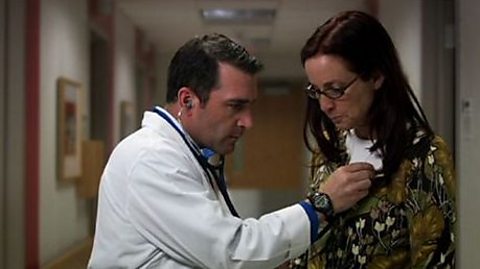
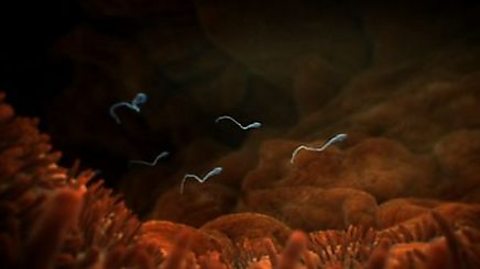
This short film uses CGI footage to help give a visual description of the process of human fertilisation, following the journey of both sperm and egg.
Pregnancy and multiple births. video
From a single fertilised cell to a fully grown baby, this short film mixes CGI with real-life images to paint a picture of how we develop inside the womb.

Skin - defend and protect. video
This short film provides a close-up look under your skin, focusing on two key functions of the skin - protecting the body from pathogens, and stopping the body from drying out.

Skin and sweating. video
This short film combines CGI images with a real life story about a fire-fighter to show how the body manages to control temperature by sweating.

The human ear. video
This short film provides a journey into the ear, looking at hearing and balance, plus a real-life example of how the ear helps us to walk.

The human eye. video
This short film offers a depiction of the inner workings of the human eye by combining CGI with a real life story of divers who can see clearly underwater.
The human heart. video
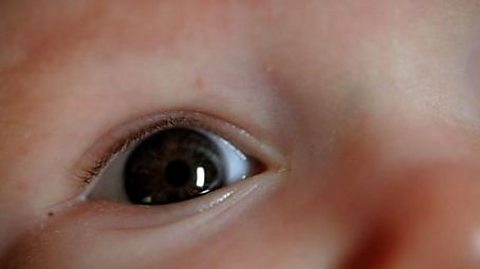
This short film uses 3D CGI images to show the movement of blood through the chambers of the heart and also the pacemaker cells.
How humans heal themselves. video
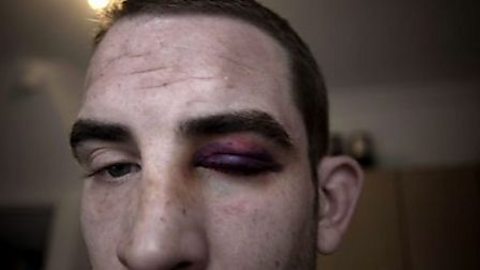
This short film offers a look at how the body heals itself. Combining CGI scenes with real life action in the boxing ring, it follows the progress of a boxer's black eye.