We're made up of around a hundred trillion cells, all coming from just one single fertilised egg. Within hours of fertilisation, this new cell, called a zygote, divided into two identical cells. Then into four… then eight… 16, and so on… before implanting in the lining of the womb and becoming an embryo.
In some cases, on rare occasions, a single embryo creates two bodies. One in 250 early embryos split. If they do, they must divide completely within the first two weeks, or they probably never will. Once split, the embryos create near-replicas of themselves. Identical twins. This quirk of nature has given synchronised divers Helen and Carol Galashan a distinct advantage.
"Being an identical twin definitely helps with synchronised diving. We don't really have to try with the synchronised part, that part comes quite naturally to us."
"We actually think we're mirror-image twins. We fold our arms opposite ways. Our hair parts the opposite way."
"Even when we're diving, the first foot I put on is my right foot, Carol's is her left foot."
"Identical twins actually come from one egg… That splits into two, and non-identical twins come from two eggs."
"So the way we see it is that we were one person that split in two… One person in two bodies."
"Right…"
"Ooh."
This woman's pregnancy is even more unlikely than identical twins. She's beaten odds of 4,500 to 1. Diane is carrying non-identical triplets. Remarkably, Diane's body naturally produced not one, but three eggs in a single go. It's an incredibly rare type of pregnancy. Not only did Diane produce multiple eggs, but all of them were fertilised. Entirely independently of each other.
"Apparently, I released three eggs, and Mike, he had three separate sperm that fertilised all three eggs. They've all got their own placentas and they're all in separate sacks. So they've all got their own little bedroom."
Effectively, Diane got pregnant three times in one go. But there's a downside to having triplets. At 31 weeks - nine weeks early - Diane has gone into labour. She is going to need an emergency caesarean.
"I'm just going to bring him round to show you, quickly. Here we go, you two. Here he is. He's beautiful. So he's a little breach baby. There he is."
"Hello!"
"Isn't he lovely? This is the skinny Minnie."
All the babies have now been delivered.
"She's beautiful."
"Last but not least."
And against the odds, they are all alive and well.
Video summary
From a single fertilised cell to a fully grown baby, this short film mixes CGI with real-life images to paint a picture of how we develop inside the womb.
The examples focus on real life caesarean multiple births as extreme examples of normal development.
Footage includes synchronised divers and a caesarean section.
It gives an example of both identical and non-identical multiple births.
This short film is from the BBC series, Inside the Human Body.
This short film contains some graphic images involving a caesarean section. Teacher review recommended prior to use in the classroom.
Teacher Notes
You could use this short film as part of a lesson in human reproduction, as an example of how a woman's biology sometimes leads to more unusual reproductive outcomes.
Identical twins could be used to explore ideas of variation and inheritance.
This short film will be relevant for teaching biology at KS3 and KS4/GCSE in England, Wales and Northern Ireland and National 4/5 in Scotland. Appears in AQA, OCR, EDEXCEL, CCEA, WJEC, SQA
How humans see. video
This short film looks at how humans perceive the world and how our brain creates an image of what is around us. A real-life example of a blind climber who uses his tongue to see is shown.

Human circulation. video
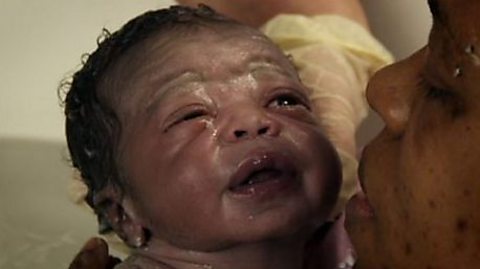
This short film takes us on a journey around the circulatory system using the example of a baby's first breath.
Human circulatory and digestive system. video
This short film offers a look at respiration and a tour around the circulatory system and digestive system in the human body, through blood vessels and into mitochondria.
Human fertilisation. video
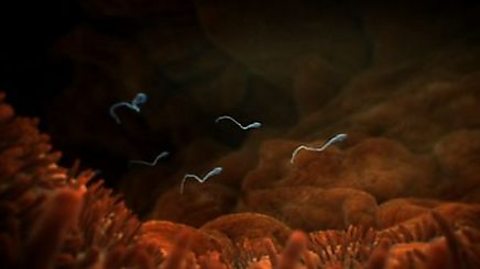
This short film uses CGI footage to help give a visual description of the process of human fertilisation, following the journey of both sperm and egg.
Human immunity and defence. video
Using CGI, this short film gives students a look at the inner workings of the immune system, focusing particularly on how the body fights off viruses.
Skin - defend and protect. video
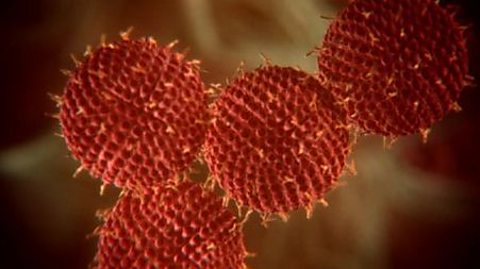
This short film provides a close-up look under your skin, focusing on two key functions of the skin - protecting the body from pathogens, and stopping the body from drying out.

Skin and sweating. video
This short film combines CGI images with a real life story about a fire-fighter to show how the body manages to control temperature by sweating.

The human ear. video
This short film provides a journey into the ear, looking at hearing and balance, plus a real-life example of how the ear helps us to walk.
The human eye. video
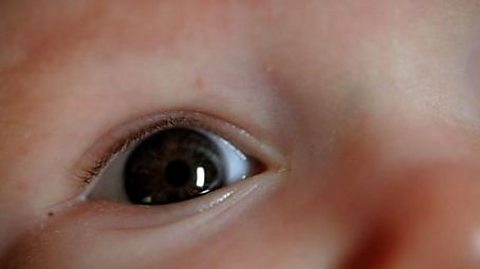
This short film offers a depiction of the inner workings of the human eye by combining CGI with a real life story of divers who can see clearly underwater.
The human heart. video
This short film uses 3D CGI images to show the movement of blood through the chambers of the heart and also the pacemaker cells.
How humans heal themselves. video
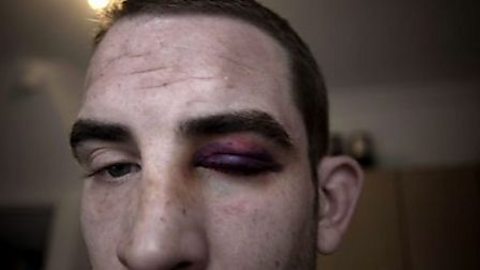
This short film offers a look at how the body heals itself. Combining CGI scenes with real life action in the boxing ring, it follows the progress of a boxer's black eye.