Every minute of your life, your body is silently performing a host of small miracles to keep you alive. But all of them would stop, and you with them, if one crucial factor in your body were to change dramatically. And that's your temperature.
Your body is designed to function at 37 degrees centigrade. When your body overheats, it stimulates sweat glands deep within your skin. They produce beads of sweat, which work their way out of your body and onto your skin's surface. And it's here that sweat does its work. It cools your body by evaporating into the air, keeping you alive when things hot up.
Extreme heat can be deadly. For these elite firefighters in Texas, their body's ability to keep their temperature constant is a matter of life and death. Their triple-lined fire suits do much to protect them from the flames. But there's something else - their ability to sweat.
Firefighter Mario Rodriguez is getting weighed to see how much sweat he loses when fighting a fire. To measure any temperature change inside his body, Rodriguez takes an electronic pill. To keep his heart and brain safe, his core temperature must remain close to 37 degrees centigrade. Before he goes in, his core temperature is just over 37 degrees. If his core temperature rises by just four degrees, he will become confused and fall unconscious. A rise of six degrees could cause death.
After 45 seconds in the 1,200 degree fire, he's poaching in his own juices.
"'It was real hot, my bones and all my joints were burning. The heat… Just got to get out of there and get some cool air."
His core temperature has risen by a very minimal one degree centigrade.
"You're at 207 now. So that looks like you lost three pounds of body weight."
Three pounds equals over a litre of sweat lost in just one minute's exposure to the fire. Rodriguez walked into a 1,200 degree fire and walked out with his body temperature almost exactly the same.
Video summary
This short film combines CGI images with a real life story about a fire-fighter to show how the body manages to control temperature by sweating.
The video focuses on an experiment looking at how much sweat is lost by a fire-fighter after one minute in a 1002 degree Celsius fire.
This short film is from the BBC series, Inside the Human Body.
Teacher Notes
Using the experiment featured in this short film, students could be asked to evaluate the experiment - are the findings valid?
Could anything else explain the weight loss?
They could also come up with their own ideas for experiments that could be done on TV or in school relating to sweat and temperature control.
This short film will be relevant for teaching biology at KS3 and KS4/GCSE in England, Wales and Northern Ireland and National 4/5 in Scotland. Appears in AQA, OCR, EDEXCEL, CCEA, WJEC, SQA
How humans see. video
This short film looks at how humans perceive the world and how our brain creates an image of what is around us. A real-life example of a blind climber who uses his tongue to see is shown.

Human circulation. video
This short film takes us on a journey around the circulatory system using the example of a baby's first breath.

Human circulatory and digestive system. video
This short film offers a look at respiration and a tour around the circulatory system and digestive system in the human body, through blood vessels and into mitochondria.
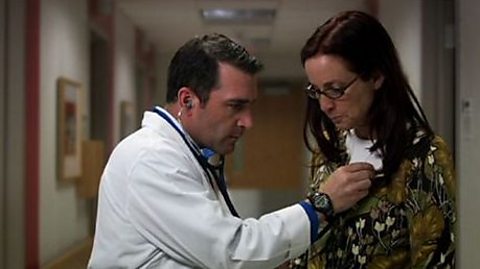
Human fertilisation. video
This short film uses CGI footage to help give a visual description of the process of human fertilisation, following the journey of both sperm and egg.
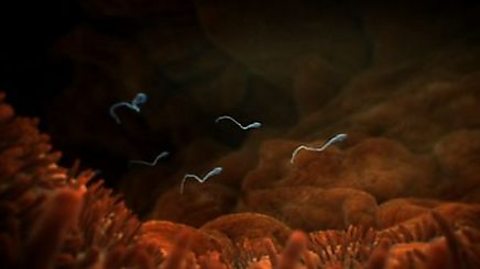
Human immunity and defence. video
Using CGI, this short film gives students a look at the inner workings of the immune system, focusing particularly on how the body fights off viruses.
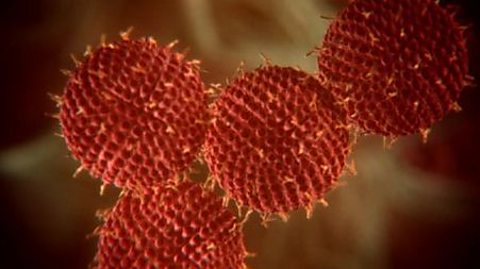
Pregnancy and multiple births. video
From a single fertilised cell to a fully grown baby, this short film mixes CGI with real-life images to paint a picture of how we develop inside the womb.

Skin - defend and protect. video
This short film provides a close-up look under your skin, focusing on two key functions of the skin - protecting the body from pathogens, and stopping the body from drying out.

The human ear. video
This short film provides a journey into the ear, looking at hearing and balance, plus a real-life example of how the ear helps us to walk.

The human eye. video
This short film offers a depiction of the inner workings of the human eye by combining CGI with a real life story of divers who can see clearly underwater.
The human heart. video
This short film uses 3D CGI images to show the movement of blood through the chambers of the heart and also the pacemaker cells.
How humans heal themselves. video
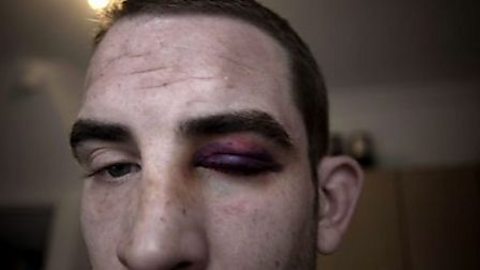
This short film offers a look at how the body heals itself. Combining CGI scenes with real life action in the boxing ring, it follows the progress of a boxer's black eye.