One of the most remarkable defence mechanisms your body has is its ability to repair itself. Johnny Greaves is 33 years old. He is a professional boxer.
For Johnny, boxing isn't just a sport, it's a livelihood.
"I'm here to pay my bills and keep my kids OK, so obviously, that's the first thought in my mind, bringing home the bacon and paying the kids' bills."
Johnny is in a dangerous game. If he picks up the slightest injury, boxing regulations mean he'll have to cancel his next fight. If he shows up with a bruise, he'll be disqualified. His body is going to do everything in its power to avoid this. All of Johnny's biological defence mechanisms are clicking into action. He ducks and dives to avoid the punches. But as Johnny tires, his defences begin to fail. The full extent of Johnny's injuries have yet to be revealed. A black eye is about to form. His next fight is in two weeks. If he is to collect that pay cheque he has to heal. Now it's time for Johnny's body to really earn his living.
The delicate blood vessels in the tissue under Johnny's eye were destroyed by a single punch. As the vessels burst, blood cells rush out. But despite the catastrophic damage, a repair crew is on the way. Flowing out with the blood are cell fragments. Called platelets, they are built to stop bleeding. They gradually form a lattice that catches the leaking blood cells like a net. Extra support comes from a stringy protein - fibrin. Together, they form the clot which plugs the hole, and the bleeding stops.
Five hours after the fight, the effects of the punch are beginning to show on Johnny's face. His eye is beginning to swell. Fluid is flowing into the tissue around the eye. It's coming from tiny holes in the walls of the blood vessel. It is a form of defence. The force of the flow stops any infection in the wound from traveling into the bloodstream, trapping it in the tissue instead. The results of this inflammation are dramatic. Johnny's eye has now turned a striking shade of purple. The colour is the product of decaying blood cells trapped outside the circulatory system, where they can't survive.
Now Johnny's body starts to clear up the mess. Macrophages, giant white blood cells, sweep through the tissue and absorb the dying cells. Inside the macrophage, haemoglobin, the chemical that gives red blood cells their unique redness, breaks down. It's this that gives the bruise its familiar cocktail of colours. As it breaks apart, haemoglobin transforms into different-coloured chemicals. Over time, the colour shifts from green to yellow and finally to brown. As the macrophages leave, they draw the coloured chemicals away from the skin. Healing is now complete. Johnny's body has repaired the damage just in time for another fight.
Video summary
This short film offers a look at how the body heals itself. Combining CGI scenes with real life action in the boxing ring, it follows the progress of a boxer's black eye.
Featuring ruptured blood cells, platelets and fibrin, this video covers all of the essential elements of clotting.
The wider immune system, and the role of macrophages in the bruise colour change, is also described.
This short film is from the BBC series, Inside the Human Body.
Teacher Notes
After viewing, students could investigate why not all body tissues are able to repair themselves like this, and thus the importance of stem cell research to enable body parts to heal themselves.
Their investigation could include a look into the ethical debate surrounding stem cell research, and case studies of how stem cell research has already helped patients.
This short film will be relevant for teaching biology at KS3 and KS4/GCSE in England, Wales and Northern Ireland and National 4/5 in Scotland. Appears in AQA, OCR, EDEXCEL, CCEA, WJEC, SQA
How humans see. video
This short film looks at how humans perceive the world and how our brain creates an image of what is around us. A real-life example of a blind climber who uses his tongue to see is shown.

Human circulation. video
This short film takes us on a journey around the circulatory system using the example of a baby's first breath.
Human circulatory and digestive system. video
This short film offers a look at respiration and a tour around the circulatory system and digestive system in the human body, through blood vessels and into mitochondria.
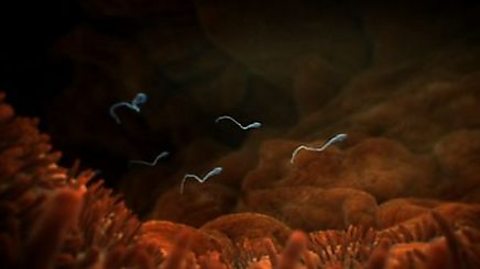
Human fertilisation. video
This short film uses CGI footage to help give a visual description of the process of human fertilisation, following the journey of both sperm and egg.
Human immunity and defence. video
Using CGI, this short film gives students a look at the inner workings of the immune system, focusing particularly on how the body fights off viruses.
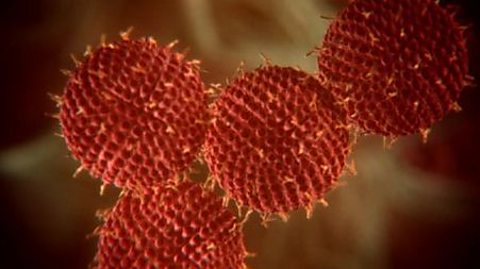
Pregnancy and multiple births. video
From a single fertilised cell to a fully grown baby, this short film mixes CGI with real-life images to paint a picture of how we develop inside the womb.
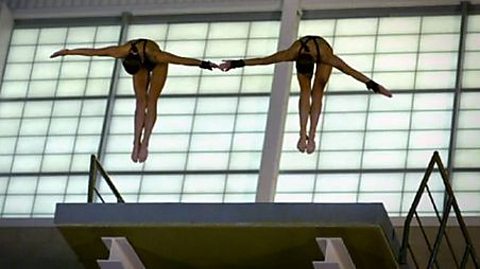
Skin - defend and protect. video
This short film provides a close-up look under your skin, focusing on two key functions of the skin - protecting the body from pathogens, and stopping the body from drying out.
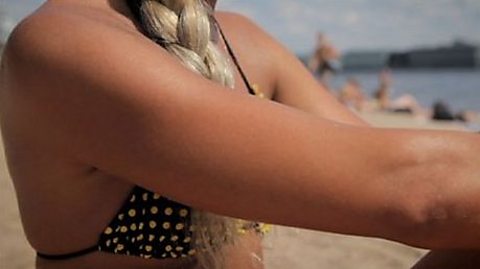
Skin and sweating. video
This short film combines CGI images with a real life story about a fire-fighter to show how the body manages to control temperature by sweating.
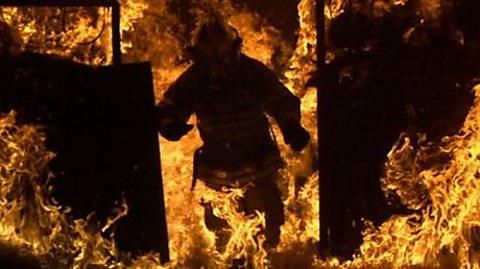
The human ear. video
This short film provides a journey into the ear, looking at hearing and balance, plus a real-life example of how the ear helps us to walk.
The human eye. video
This short film offers a depiction of the inner workings of the human eye by combining CGI with a real life story of divers who can see clearly underwater.
The human heart. video
This short film uses 3D CGI images to show the movement of blood through the chambers of the heart and also the pacemaker cells.