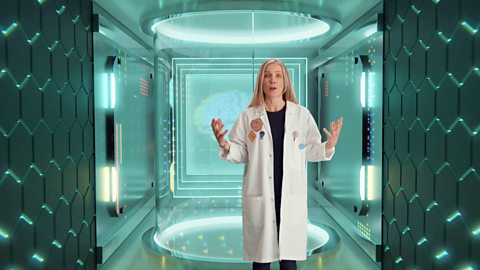
Dr Hazel:
Children and young people know quite a lot about how to look after their physical bodies, what to eat, getting plenty of exercise and sleep.
But what I really want to do is to share some of the things we can do to take care of our mental health too.
So a mindset is really a group of beliefs that we hold that influence how we live our lives, the sorts of decisions that we make.
Natalie:
Having a fixed mindset is having that perception that our abilities and our traits are sort of stuck or fixed and they can’t be changed.
Dr Hazel:
Whereas a growth mindset tends to be ideas of how we can get better at things with effort, hard work, feedback from other people and lots of practice.
Having a growth mindset, we’re starting to understand, can be really important in influencing what we’re able to achieve.
We’ve seen in some of the videos that we’ve been making with young people, that those young people that have found this growth mindset have really enabled them to try lots of new things and to keep improving their skills and abilities.
Natalie:
So often young people might think that certain things are impossible and that it’s not going to be a possibility that they’re able to achieve it.
So having a growth mindset helps them to recognise that those things that initially might seem impossible, now become a possibility.
So language is really important to consider when we are wanting to support pupils to develop a growth mindset.
One of the first tips really is about that little word ‘yet’ - using this and encouraging children to use this will make a big difference.
So instead of, you know, perhaps children might say things like “I can’t solve my fractions” so “I can’t solve my fractions yet.”
Dr Hazel:
And when we start adding this word, what it helps us to do is to see that learning is a real journey and that actually, even if we haven’t got to where we want to be, it’s not that we won’t ever get there, we can if we keep working hard and putting in the effort.
There can also be ways that maybe we can push young people and children into feeling a bit more like they’ve got a fixed mindsetby using words like “you’re so smart” or “you’re so clever” and these sort of fixed phrases, actually don’t tend to help children.
Natalie:
A few other little shifts that we can make is also starting to change the perception when it comes to particular words like ‘mistakes’, ‘failure’, and ‘hard work’ or ‘difficult work’. So perhaps looking at the word ‘mistake’, and shifting that to a ‘learning pod’ or a ‘learning step’.
Dr Hazel:
We’re starting to learn a lot more about the things we can do to take care of our wellbeing and in this series of films we’ve been looking at the five things we can do to keep our brains and bodies healthy.
In terms of our thinking, our feelings and our behaviours. So we’ve been looking at: Connect, Take Notice of the World Around You,Keep Learning, Be Active, and Give To Others - and these five things, we think, are really important for taking care of our wellbeing; looking after ourselves.
Natalie:
Ultimately, this supports children in their mental and their emotional wellbeing.
I think in all of these five steps highlighted, we see really phenomenal examples of young people, doing what might be seen initially as impossible that becomes a possibility where they don’t just simply give up at the first hurdle or the first obstacle, we see really great examples of grit and resilience which demonstrates again what we are capable of doing when we’ve got the right mindset for that.
Dr Hazel:
So the young people who have taken part in these films have often had quite tricky obstacles to overcome and have developed their growth mindset outside of school working on things that they’re really passionate about.
So we hope that these films will be used to spark some really exciting conversations in the classroom.
We also really hope that teachers will use the films to help educate young people about the growth and fixed mindset ideas.
To teach children about the ideas in relation to neuro-plasticity and this idea that we can grow our brains and our brains can change based on the experiences that we have everyday.
So we really want the films to be a springboard for those conversations too. If you want to help the children in your school to develop a growth mindset, one way you can do it is by actually starting to look at your own mindsets.
Natalie:
First of all, obviously notice your own self talk and your… the words that you use in your own mindsets.
Dr Hazel:
Just start exploring how you feel about learning new things, trying new things, failing at them and share these stories with children and young people in your school so they start to understand that we all fail at things sometimes.
That learning is a process and actually, that we can all grow our skills and abilities.
Natalie:
So I think it’s also really important that schools also teach parents about growth mindset and helping parents also to become aware of their own mindset, because children obviously model what they see… so for parents to adopt a growth mindset themselves.
Dr Hazel:
Start to have these conversations together, to share ideas, to talk about the work that maybe you’re doing in schools so that parents also know some these useful tips like using ‘yet’ and talking about the things we failed at to help develop a growth mindset language at home and at school.
Video summary
This film provides teachers with information about mindsets and the importance and impact a growth mindset can have.
Children and young people know quite a lot about how to look after their physical bodies. For example, what to eat, and the importance of getting plenty of exercise and sleep.
In the series The Brain Lab, clinical psychologist Dr Hazel Harrison explains some of the things we can do to take care of our mental health, including developing a 'growth mindset'.
A mindset is a group of beliefs we hold that influence how we live our lives and the sorts of decisions that we make.
Having a fixed mindset leads us to believe that our abilities and traits are fixed and can’t be changed.
Developing a growth mindset leads to the belief that we can get better at things with effort, hard work, feedback from other people and lots of practice.
This film provides practical tips and advice on how to encourage pupils to develop a growth mindset through the language that we use.
It also introduces teachers to the series of films and provides tips on how they can be used within the classroom.
Overview
Dr Hazel Harrison, a clinical psychologist, and Natalie Costa, a children’s confidence coach, share their knowledge of the power of mindsets and explain how we can shape pupils' attitudes to learning by supporting them to develop a growth mindset.
They explain how the language we use can impact how our mindsets develop.
Using phrases such as ‘you are so clever’, or ‘you are great at that’ can actually push children into thinking more with a fixed mindset.
They suggest alternative phrases that can be used to encourage pupils, and discuss the importance of adding the word 'yet' when talking about learning and progress.
The film is intended to help teachers think about how to start discussion about growth mindsets in the classroom.
It is often helpful to share your own personal experience, talking honestly about situations you've approached with a fixed mindset and what has helped you to shift towards a growth mindset.
It can be beneficial for children to understand that we are often display a mix of both mindsets.
Teachers and schools can develop a strategy to involve parents in embracing the importance of a growth mindset, offering support for families to help pupils' development to continue within their home environment.
The series of films
This film is part of a series of films on mindset and mindfulness.
Five of the films introduce us to one of the five steps to wellbeing - ‘connect with others’, ‘be active’, 'give to others', ‘take notice’ and ‘keep learning’.
Each film includes some scientific facts, introduced by Dr Hazel, and a case study of a young person who has benefited from taking one of the steps.
The final film, The Brain House, uses animation to look at what is happening inside our brain when we feel strong emotions.
Dan - Connect with others. video
Dr Hazel Harrison and a young magician called Dan find out why it’s important to connect with other people. Dan has Asperger Syndrome, also known as Asperger's, and sometimes finds it difficult to connect with people. In this short film he shares his experiences of learning magic, using his growth mindset, and using magic tricks to help him connect with other people.
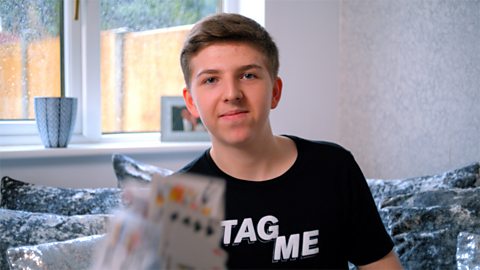
Kristana - Be active. video
Dr Hazel Harrison and a young weight-lifter called Kristana find out why it’s good for us to keep active. In this short film Kristana explains how weightlifting has helped her to feel better about herself, develop confidence in school and overcome challenges.
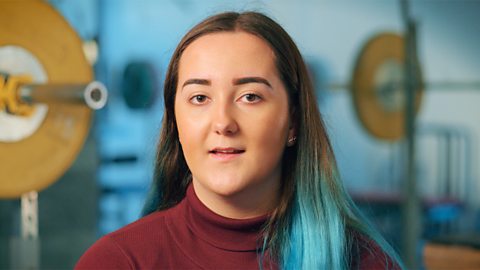
Mjd - Give to others. video
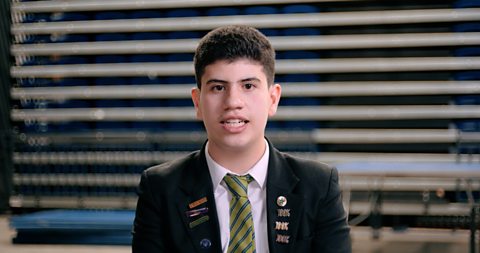
Dr Hazel Harrison and a student called Mjd explain why it’s important for us to give to others. In this short film Mjd explains how he used a growth mindset to learn English, and how he 'gives to others’ by translating for his classmates and helping them learn.
Rachel - Take notice. video
Dr Hazel Harrison and Rachel, a member of the Youth Parliament Committee, explore the concept of ‘taking notice’. In this short film Rachel shares how she takes notice of the issues that are happening around her and how she tries to make a positive change.
Ethan - Keep learning. video
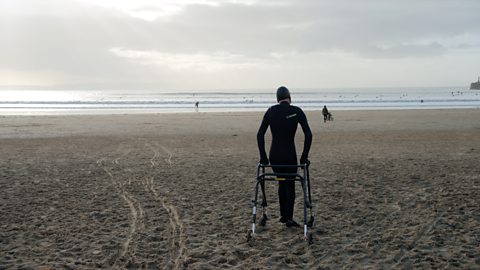
Dr Hazel Harrison and adaptive surfer, Ethan, explore why it’s important to keep learning new things. Ethan has cerebral palsy, a medical condition that affects his movement and coordination. He's also an adaptive surfer and is training to go to the world adaptive championships in California. In this short film Ethan shares his experiences of using a growth mindset to learn new things.
The Brain House. video
In this short film for primary schools Dr Hazel Harrison talks about what happens in our brains when we feel different emotions.