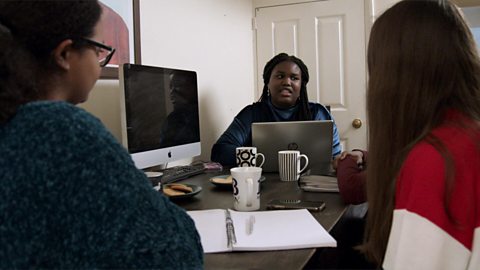
Hazel:
Welcome to the Brain Lab, I’m Dr. Hazel and I’m exploring the power of our brains.
Did you know that just like eating five portions of fruit and veg a day can help keep our bodies healthy.
There’s also five a day for your brain? - these five simple things you can do can have a big impact on how you feel.
Connect with other people, be active, take notice of the world around you, keep learning, and give to others.
Let’s look at the power of connecting with other people! Humans are social creatures,
We need to have moments in our day when we’re with other people. Here’s the cool science behind why!
When we’re feeling lonely or left out, it can make our brain cells, that are a bit like tiny telephones,
Send messages to say we’re in pain; just like if we stubbed our toe.
Sometimes, a chat with a friend can tell our brains to release chemicals that make us feel happy.
There are lots of ways we can connect with other people. It can be through talking, sign language, or even a smile.
Dan is a sixteen year old magician who has aspergers. This can make talking and communicating with other people feel moredifficult.
But Dan has used magic to not only interact with people, but also, entertain them.
Dan:
My name is Dan Rhodes and I’m a magician.
I got into magic when I were eight years old, I went on a cruise ship and there were a magician there.
And every night we watched his show and I was just amazed and absolutely baffled by the tricks he did and from that moment, my love for magic just started.
I’ve always loved using magic to interact with people because of my aspergers when I was younger/
I was quite shy, I found it hard to interact with people.
If it wasn’t for magic I probably wouldn’t be as good as I am now at like, interacting with people.
It’s always a great icebreaker, you know, you could walk up to literally anyone, pull out a pack of cards and do something amazing.
So, when I started magic, to be honest, I wasn’t good at all. It took me years to get how good I am now but,
I used to literally just drop the cards, I used to try and shuffle them, and they used to go everywhere.
But with repetition, and just doing it again and again, and not giving up, I finally got good at it.
And it’s just good to like, enjoy the journey because sometimes, people think of like, the end goal.
Like how good they want to be at something. But the journey to getting there, you’ll really enjoy that - and you’ll learn new things and it’s just fun to keep going with it
I think it’s very important with a growth mindset to want, whatever you’re doing, make sure you’re enjoying it.
And then because you’re enjoying it you can put all your mind-power and your growth mindset towards it.
I think it’s very important to like, have failures and make failure your best friend because the thing is,
Everytime you fail, it makes it even more better for the time you succeed.
Say everything you did was perfect the first time, it’d get boring, it’d get too repetitive.
If things go well for you then you’ve got nothing really to achieve, so if you fail again, again, and again,
The second you achieve something and actually succeed, it just makes it a million times better.
Don’t be scared of what other people think because in the end, it’s you that’s going out of your comfort zone to do something different.
Because if you really enjoy something, just keep going with it, nothing’s perfect at first so it takes you a while.
Just think about long term, what it’ll do for you if you go through with what you want to do. You don’t want to live thinking ‘what if?’
My goal is just to keep doing magic and get into a position where I can do live shows and perform for as many people as I can.
And really interact with people. I honestly think hard work will always beat talent.
And you just have to keep going, and if you’re passionate about something, you just have to keep putting in the work.
And you will have obstacles along the way, not everything is going to be perfect, you will have ups and downs.
Not everyday is going to be sunshine and rainbows but if you keep putting in the work, and take it day by day.
And you will achieve your goals, but it just doesn’t happen overnight.
Hazel:
Dan’s way of using magic to communicate is really inspiring, and his growth mindset is so important to keep him learning new magictricks.
It doesn’t always feel good when we fail, but there’s often lots we can learn from the times that don’t work out how we’d hoped.
Dan is right, we shouldn’t be afraid to try something new, we might not be great at it to start with.
But with hard work, determination and practice, we will be!
So why don’t you take those steps to help you connect with the people around you?
And who knows where it could take you!
Video summary
Clinical psychologist Dr Hazel Harrison and a young magician called Dan find out why it’s important to connect with other people.
Dan has Asperger Syndrome, also known as Asperger's, and sometimes finds it difficult to connect with people. In this short film he shares his experiences of learning magic, using his growth mindset, and using magic tricks to help him connect with other people.
Throughout this series Dr Hazel introduces us to the five steps to wellbeing. In this film she explains what happens in our brains when we connect with other people.
We learn about the positive effects that connecting with people can have on our wellbeing, and how having a growth mindset can help us to keep our knowledge and our brain growing.
Teacher notes
Social relationships are critical to our wellbeing and can protect us from mental health problems.
Our relationships can help us to feel like we belong, so it's important that we make the time and space to connect with our friends and family, but also to make new connections.
Before watching the film:
Watch the Teacher's guide with Dr Hazel Harrison and Natalie Costa for further support on wellbeing and growth mindset, as well as tips for using these resources.
This explains why the films were made and how they can be used, as well as offering guidance on growth mindset language and ways to integrate this into your daily teaching.
This film is produced with 7-12-year-olds in mind.
However, always make yourself familiar with the content and consider carefully whether it will be appropriate and of use for your class.
Once you are confident it is the right resource for your pupils, watch it through alone and consider how it would work best for you all.
Using the film:
This is one of five films about wellbeing and developing a growth mindset.
They can be shown in any order and are designed to encourage children to think about their own wellbeing, and how they canlearn to build good habits to support their mental health and develop a positive attitude.
Classroom ideas:
Use the film to start a class conversation about why it important to connect and communicate with people.
Discuss the different ways in which we can connect with people and the different relationships we have.
Ask pupils for four different topics of conversation. Get pupils to talk in pairs with someone in the class that they wouldn’t usuallyinteract with. Ask them to talk about the four different points to help them connect with one another.
Play Connection Bingo: create a list that asks ‘who plays the guitar’, ‘who likes pineapple’, ‘who has been on a plane’, etc and get the children to talk to other pupils in the class to see if they can find someone for each item on the list.
How the film links to the PSHE curriculum:
The films cover the core theme Health & Wellbeing for KS1 and KS2, delivering learning to pupils on the following points:
what keeping healthy means; different ways to keep healthy
strategies and behaviours that support mental health - including how good quality sleep, physical exercise/time outdoors, being involved in community groups, doing things for others, clubs, and activities, hobbies and spending time with family and friends can support mental health and wellbeing
the different ways to rest and relax
the elements of a balanced, healthy lifestyle
choices that support a healthy lifestyle, and recognising what might influence these
that mental health, just like physical health, is part of daily life; the importance of taking care of mental health
how people make friends
the importance of friendships; strategies for building positive friendships; how positive friendships support wellbeing
that healthy friendships make people feel included.
This short film will be relevant for teaching PSHE at KS2 in England, Wales and Northern Ireland and 2nd Level in Scotland.
Kristana - Be active. video
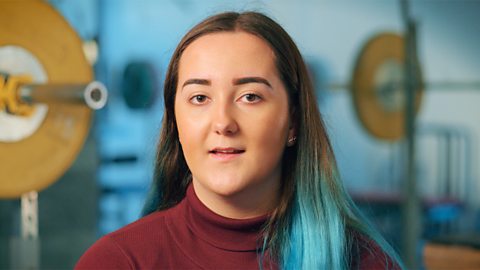
Dr Hazel Harrison and a young weight-lifter called Kristana find out why it’s good for us to keep active. In this short film Kristana explains how weightlifting has helped her to feel better about herself, develop confidence in school and overcome challenges.
Mjd - Give to others. video
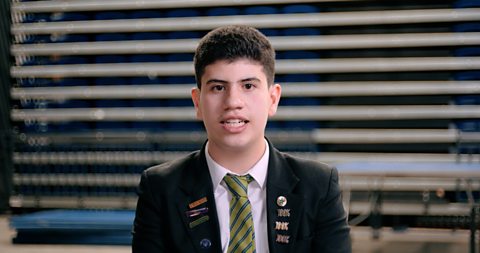
Dr Hazel Harrison and a student called Mjd explain why it’s important for us to give to others. In this short film Mjd explains how he used a growth mindset to learn English, and how he 'gives to others’ by translating for his classmates and helping them learn.
Rachel - Take notice. video
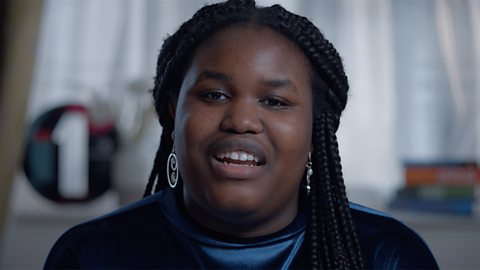
Dr Hazel Harrison and Rachel, a member of the Youth Parliament Committee, explore the concept of ‘taking notice’. In this short film Rachel shares how she takes notice of the issues that are happening around her and how she tries to make a positive change.
Ethan - Keep learning. video
Dr Hazel Harrison and adaptive surfer, Ethan, explore why it’s important to keep learning new things. Ethan has cerebral palsy, a medical condition that affects his movement and coordination. He's also an adaptive surfer and is training to go to the world adaptive championships in California. In this short film Ethan shares his experiences of using a growth mindset to learn new things.
The Brain House. video
In this short film for primary schools Dr Hazel Harrison talks about what happens in our brains when we feel different emotions.
Introducing 'The Brain Lab' - A guide for teachers. video
An introduction to the resources for teachers with tips on how the films could be used in the classroom.