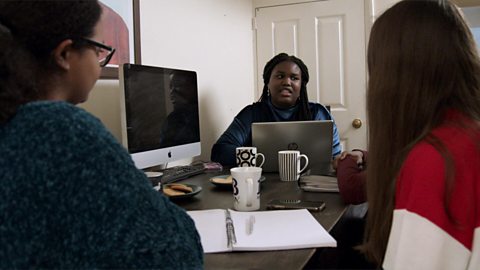
Dr Hazel:
Welcome to the Brain Lab, I’m Doctor Hazel, and this is where I'm going to tell you some pretty awesome stuffabout how our brains work.
Did you know that your brain is like a muscle? And just like a muscle, the more you use it, the stronger it gets!
So just like we need five portions of fruit and veg per day for our bodies, we also need five a day for our brains.
To keep our thoughts, feelings, and behaviours healthy. Think of it as a five a day for your brain!
Here are five ways, we can take care of our brains: Connect with other people, be active, take notice of the worldaround you, keep learning and give to others.
Today, I’m going to share with you some cool science about what happens in our brains when we get active.
Inside our brains there are billions of brain cells.
We can think of these as being a bit like tiny telephones that can connect up, and talk to each other.
When we’re being active, the movement helps our brains to make a call, and signal for the release of some realmood boosting chemicals.
So doing some exercise each day, not only keeps our bodies healthy, but our brains too.
Someone who knows all about the positive benefits that exercise can have on how you feel is Kristana.
Kristana took up weightlifting after trying out a taster session at school. It helped to feel better after going through a really difficult time.
Kristana:
I’m Kristana and I’m a weightlifter. I was bullied like, quite a lot, like from Primary, to maybe like a year or two ago.
When it first happened, I didn’t speak to anyone. It really messed with my mental health and my like, my mind.
When it really hit me the most, I had a fixed mindset, I couldn’t do anything. It stopped me from doing pretty mucheverything.
I couldn’t ask a teacher for help, I couldn’t put my hand up, everything just seemed impossible to me.
It wasn’t until I moved into secondary school where some of my teachers noticed it and they realised how bad it reallywas getting.
And they got me the help I needed. Weightlifting, gave me kind of a new perspective. It made me realise thatI can do whatever I want to do.
It made me feel quite outgoing, it made me feel like more brave and confident because I was going out and lifting in front of people.
It made me feel, as if like, I was overcoming like, all the stress and like, panic and anxiety and stuff like that.
It became like more a kind of, stress reliever.
To begin with I had no technique at all, it was just, I tried it and liked it so I kept going.
As time went on, I was able to learn the technique and learn how to do certain things and make myself better.
So making myself better made me happier as well. I don’t have a certain kind of outlook on how things go.
I just try and believe and I try and push myself and keep going. If it wasn’t for the coach I have, and the onesthat have helped out as well.
I wouldn’t have the kind of mindset I do to know that I can do it and It’s not just I can’t and I never will, it’s more of I don’t believe yet.
Within the last year, I’ve injured myself a bit so that’s kind of set me back quite a lot, having setbacks is always going to be important.
In life and everything because if you don’t have a set back how’re you going to know to improve, and to know you’re not doing the best.
Setbacks make you a lot stronger, like, whether it’s overcoming an injury and you become stronger again or you do something wrong on a test.
You learn to overcome it and you learn the knowledge, it’s, everything kind of makes you stronger mentally and physically regardless of what happens you can always tackle it.
For me especially, picking up weightlifting or anyone else picking up a sport.
Gives you the kind of growth mindset as if I can do this, what else can I do?
Because if you don’t have that growth mindset then you’re never going to want to improve, you’re never going to believe you can improve.
School wise, weightlifting has helped me out a lot because before I had my growth mindset, I didn’t think I was smart.
I didn’t think I could do well in my classes.
But within the last year, weightlifting has helped my growth mindset improve that much that to the point where my grades have completely like, switched.
I’m doing so much better than I thought I ever could.
It’s helped me also become more confident within the classroom, I can ask for help when I need it,
I can answer the question, I can learn how to do things I didn’t know how to do.
It kind of acts as a stress reliever if you have a sport, like, you can tell your mind off all your issues.
It kind of gives you the power to kind of overcome that obstacle and it gives you the chance to move on from it.
Obviously, growth mindset is going to be a hundred percent all day every day, there’s going to be times where you feel a bit more fixed mindset than you do growth.
But if you manage to push yourself out your comfort zone that slightest bit to try and do what you want to do,
there’s no telling how far you’re going to be able to go with it.
Dr Hazel:
Kristana has developed a strong growth mindset when it comes to sport and fitness.
Which means she knows with effort and support, she can improve.
She hasn’t let setbacks or obstacles stop her from continuing to learn, and to develop her skills in weightlifting.
Is there a sport or a skill that you want to get better at? Why not give it a go?
Remember that it might be really hard to begin with, but keep working at it, get some support from other people wholike doing the same activity, remember, we learn from our mistakes, so don’t give up when you hit a hurdle, find a way over it!
Video summary
Clinical psychologist Dr Hazel Harrison and a young weight-lifter called Kristana find out why it’s so good for us to do exercise and keep active.
Kristana explains how weightlifting has helped her to feel better about herself, develop confidence in school and overcome challenges.
Throughout this series Dr Hazel introduces us to the five steps to wellbeing. In this film she explains what happens in our brains when we get active.
We learn about the positive effects that being active can have on our wellbeing, and how having a growth mindset can help us to keep our skills and our brain growing.
Teacher Notes
Exercise is anything that gets your body active and makes you a bit out of breath.
It's good for both your body and your mind.
Children need to exercise for about 60 minutes each day (but it doesn’t have to be all at one time).
Exercise helps you to feel good about yourself; encourages a better night’s sleep; helps you concentrate on work; helps you keep positive; and helps your body build healthy bones, muscles and joints.
When you exercise it releases little ‘feel good’ signals in your brain and gives you a positive boost.
Before watching the film:
Watch the Teacher's guide with Dr Hazel Harrison and Natalie Costa for further support on wellbeing and growth mindset, as well as tips for using these resources.
This explains why the films were made and how they can be used, as well as offering guidance on growth mindset language and ways to integrate this into your daily teaching.
This film is produced with 7-12-year-olds in mind.
However, always make yourself familiar with the content and consider carefully whether it will be appropriate and of use for your class.
Once you are confident it is the right resource for your pupils, watch it through alone and consider how it would work best for you all.
Using the film:
This is one of five films about wellbeing and developing a growth mindset.
They can be shown in any order and are designed to encourage children to think about their own wellbeing, and how they can learn to build good habits to support their mental health and develop a positive attitude.
Classroom ideas:
Start a group discussion about being active and the positive impact it can have on wellbeing.
Design a poster with all the different ways you can exercise.
Try writing about which exercises you love to do, and how they make you feel during and afterwards.
Explore how music helps us to keep active. What types of music inspire you to move your body?
How the film links to the PSHE Curriculum:
The film covers the core theme Health & Wellbeing for KS1 and KS2, delivering learning to pupils on the following points:
what keeping healthy means; different ways to keep healthy
strategies and behaviours that support mental health - including how good quality sleep, physical exercise/time outdoors, being involved in community groups, doing things for others, clubs, and activities, hobbies and spending time with family and friends can support mental health and wellbeing
how physical activity helps us to stay healthy; and ways to be physically active everyday
the different ways to rest and relax
the elements of a balanced, healthy lifestyle
choices that support a healthy lifestyle, and recognise what might influence these
how to recognise that habits can have both positive and negative effects on a healthy lifestyle
how regular (daily/weekly) exercise benefits mental and physical health (e.g. walking or cycling to school, daily active mile); recognise opportunities to be physically active and some of the risks associated with an inactive lifestyle
that mental health, just like physical health, is part of daily life; the importance of taking care of mental health
to recognise that anyone can experience mental ill health; that most difficulties can be resolved with help and support; and that it is important to discuss feelings with a trusted adult.
This short film will be relevant for teaching PSHE at KS2 in England, Wales and Northern Ireland and 2nd Level in Scotland.
Dan - Connect with others. video
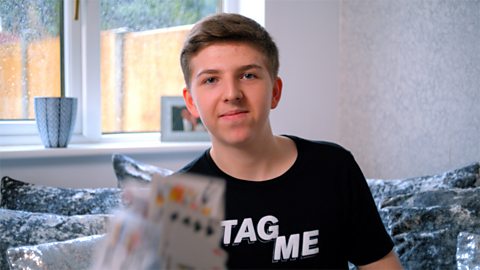
Dr Hazel Harrison and a young magician called Dan find out why it’s important to connect with other people. Dan has Asperger Syndrome, also known as Asperger's, and sometimes finds it difficult to connect with people. In this short film he shares his experiences of learning magic, using his growth mindset, and using magic tricks to help him connect with other people.
Mjd - Give to others. video
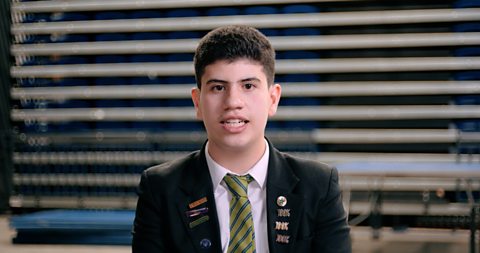
Dr Hazel Harrison and a student called Mjd explain why it’s important for us to give to others. In this short film Mjd explains how he used a growth mindset to learn English, and how he 'gives to others’ by translating for his classmates and helping them learn.
Rachel - Take notice. video
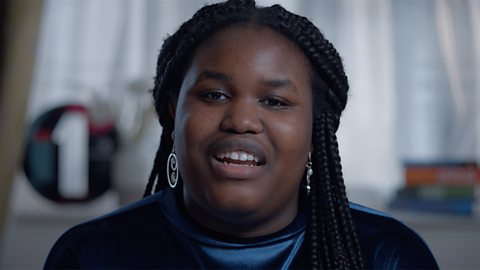
Dr Hazel Harrison and Rachel, a member of the Youth Parliament Committee, explore the concept of ‘taking notice’. In this short film Rachel shares how she takes notice of the issues that are happening around her and how she tries to make a positive change.
Ethan - Keep learning. video
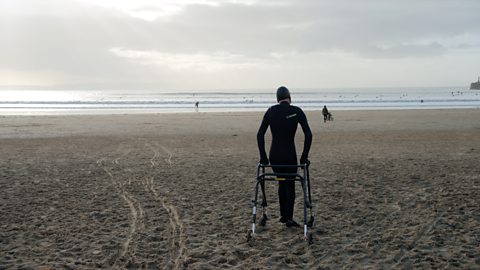
Dr Hazel Harrison and adaptive surfer, Ethan, explore why it’s important to keep learning new things. Ethan has cerebral palsy, a medical condition that affects his movement and coordination. He's also an adaptive surfer and is training to go to the world adaptive championships in California. In this short film Ethan shares his experiences of using a growth mindset to learn new things.
The Brain House. video
In this short film for primary schools Dr Hazel Harrison talks about what happens in our brains when we feel different emotions.
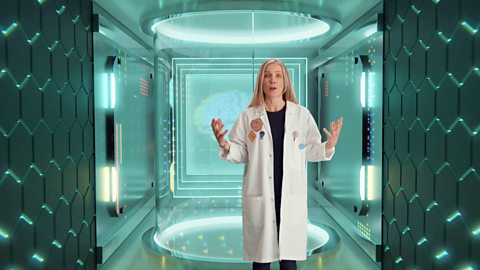
Introducing 'The Brain Lab' - A guide for teachers. video
An introduction to the resources for teachers with tips on how the films could be used in the classroom.