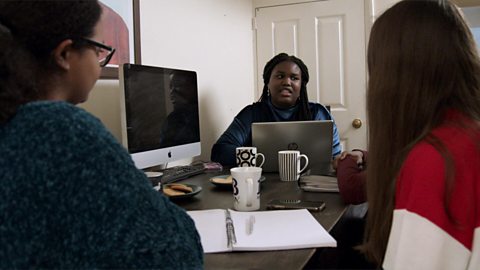
Doctor Hazel:
Welcome to the Brain Lab, I’m Doctor Hazel and I’m going to be telling you some pretty cool stuff about our brains.
Did you know that our brains are like super powerful computers that keep our bodies working?
And just like computers, our brains need to be kept updated and in good working order.
Here are 5 ways we can take care of our brains, think of it as a five a day for your brain!Connect with other people, be active, take notice of the world around you, keep learning and give to others.
Let’s look at this one: Take notice of the world around you. How does this help our brains?
Well, our brains are constantly working and sometimes they can get a bit stuck; thinking about what’s happened in the past, or worrying about what’s about to happen in the future. It’s helpful to give ourselves this ‘worry time’ and notice our feelings.
But sometimes we want to be less caught up in the past, or the future, and instead, take notice of this moment right here and now.
Rachel is a brilliant example of taking notice. She’s noticed cyberbullying and crimes taking place.
And she decided to join the youth parliament committee in order to campaign to make a difference.
Rachel:
My name’s Rachel and I'm a member of the UK youth parliament. I’m passionate about issues that affect the local community.
I think it’s really important for young people to be present in the moment and to take notice of the issues affecting them
And try to tackle it because by tackling it, they’ll have a positive impact on their mental health.
They know that they’re working towards a solution and I think it’s really good for young people to see that other young people are
Standing up for things that they believe in.
I think it has a really positive impact on me in terms of like, my mental health and everything because from like, my campaigning
And the volunteering that I do, I learnt perseverance and resilience which is a transferable skill that I can use in everything that I do.
Even if someone isn’t really good at something when they first start it, a growth mindset is about having the drive to continue working hard.
So to somebody who has an attitude where they don’t want to make mistakes, or they’re scared of looking silly
I would say, we all need to learn to be more confident to take a leap of faith, to learn from ourselves, as well as all the people around us
Because i feel like everyone has something that they can offer, and that something unique so from learning from your friends,your teachers, other people around you and other young people you can really gain a lot of skills and a lot of knowledge.
I think my proudest moment would definitely have to be the teen awards, and when I was presented with my teen hero award.
It was a really great moment emotionally for me.
In terms of encouraging other people to live in the moment and really wake up to issues that are affecting them.
What I would say is: No one should feel like their voice is too small, or their actions are too small to make a difference.
And whoever you are, whatever you want to do, everyone and anyone is capable of making a difference within their community and within the wider world.
Dr Hazel:
Rachel has a strong growth mindset. And she’s using this to keep learning and making a difference.
She’s taken notice of young people’s voices around her, and is sharing her knowledge to help others.
She’s helping her own well-being by feeling good and doing good. Why don’t you look around and take notice?
Maybe look at the world with fresh eyes. What are the things around us that are beautiful?
What are the things around us that you’d like to help change?
Why not try and make some small steps to help make this change become a reality!
Video summary
Clinical psychologist Dr Hazel Harrison and Rachel, a member of the Youth Parliament Committee, explore the importance of ‘taking notice’.
Rachel shares how she takes notice of the issues that are happening around her and how she tries to make a positive change.
Throughout this series Dr Hazel introduces us to the five steps to wellbeing. In this film she explains what happens in our brains when we take notice of what is happening around us.
We learn about the positive effects that taking notice can have on our wellbeing, and how having a growth mindset can help us to keep our knowledge and our brain growing.
Teacher Notes
Taking notice of the people, issues, occurrences and things around you can help you to be in the present moment, taking notice of the ‘here and now’.
Savouring a positive experience can help to increase feelings of positivity.
Reflecting on your own thoughts and feelings will help appreciate what really matters.
Speaking out for the things you believe in can increase your wellbeing - feeling good and doing good are closely connected.
Before watching the film:
Watch the Teacher's guide with Dr Hazel Harrison and Natalie Costa for further support on wellbeing and growth mindset, as well as tips for using these resources.
This explains why the films were made and how they can be used, as well as offering guidance on growth mindset language and ways to integrate this into your daily teaching.
This film is produced with 7-12-year-olds in mind.
However, always make yourself familiar with the content and consider carefully whether it will be appropriate and of use for your class.
Once you are confident it is the right resource for your pupils, watch it through alone and consider how it would work best for you all.
Using the film:
This is one of five films about wellbeing and developing a growth mindset.
They can be shown in any order and are designed to encourage children to think about their own wellbeing, and how they can learn to build good habits to support their mental health and develop a positive attitude.
Classroom Ideas:
Start a group discussion about people in the public eye that have taken notice to help make a change.
Discuss the different ways in which we can take notice to bring ourselves to the present moment.
Try a mindfulness exercise to encourage pupils to notice their breath.
Have a ‘take notice’ walk around the school and see if pupils can spot things they’ve never noticed before.
How the film links to PSHE Curriculum:
The films cover the core theme of Health & Wellbeing for KS1 and KS2, delivering learning to pupils on the following points:
what keeping healthy means; different ways to keep healthy
strategies and behaviours that support mental health - including how good quality sleep, physical exercise/time outdoors, being involved in community groups, doing things for others, clubs, and activities, hobbies and spending time with family and friends can support mental health and wellbeing
to value the different contributions that people and groups make to the community
the importance of having compassion towards others; shared responsibilities we all have for caring for other people and living things; how to show care and concern for others
ways of carrying out shared responsibilities for protecting the environment in school and at home; how everyday choices can affect the environment (e.g. reducing, reusing, recycling; food choices).
This short film will be relevant for teaching PSHE at KS2 in England, Wales and Northern Ireland and 2nd Level in Scotland.
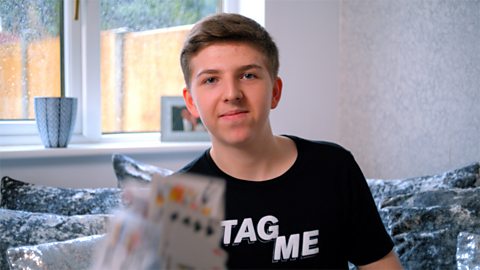
Dan - Connect with others. video
Dr Hazel Harrison and a young magician called Dan find out why it’s important to connect with other people. Dan has Asperger Syndrome, also known as Asperger's, and sometimes finds it difficult to connect with people. In this short film he shares his experiences of learning magic, using his growth mindset, and using magic tricks to help him connect with other people.
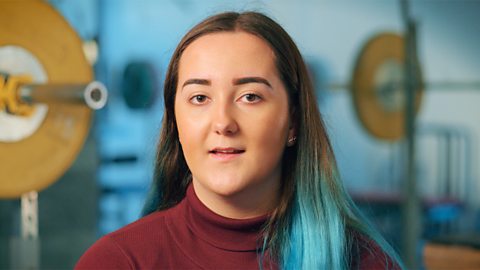
Kristana - Be active. video
Dr Hazel Harrison and a young weight-lifter called Kristana find out why it’s good for us to keep active. In this short film Kristana explains how weightlifting has helped her to feel better about herself, develop confidence in school and overcome challenges.
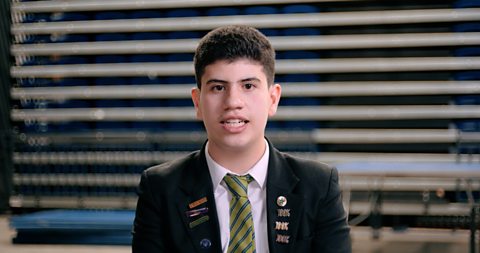
Mjd - Give to others. video
Dr Hazel Harrison and a student called Mjd explain why it’s important for us to give to others. In this short film Mjd explains how he used a growth mindset to learn English, and how he 'gives to others’ by translating for his classmates and helping them learn.
Ethan - Keep learning. video
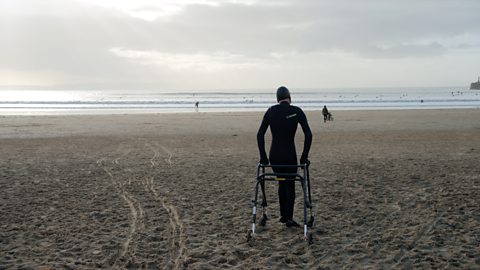
Dr Hazel Harrison and adaptive surfer, Ethan, explore why it’s important to keep learning new things. Ethan has cerebral palsy, a medical condition that affects his movement and coordination. He's also an adaptive surfer and is training to go to the world adaptive championships in California. In this short film Ethan shares his experiences of using a growth mindset to learn new things.
The Brain House. video
In this short film for primary schools Dr Hazel Harrison talks about what happens in our brains when we feel different emotions.
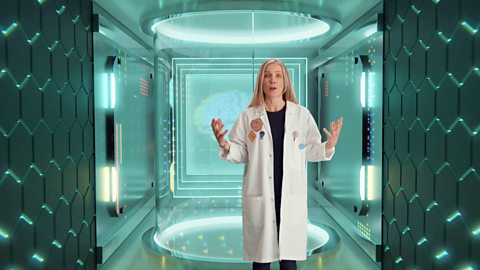
Introducing 'The Brain Lab' - A guide for teachers. video
An introduction to the resources for teachers with tips on how the films could be used in the classroom.