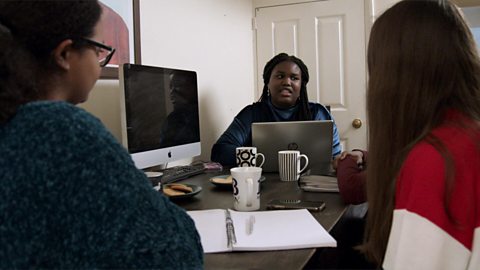
Dr Hazel:
Welcome to the Brain Lab. I’m Doctor Hazel, and I’m going to be telling you some pretty awesome stuff to do with our brains.
Our brains can help us achieve all sorts of amazing things when we have a growth mindset.
This means practicing, working hard, and being determined.
I’ve also been finding out how to keep our brains feeling healthy. Just like we can feed our bodies with five portions of fruit and veg.
There are five ways to keep our thoughts, feelings, and behaviours healthy. Think of it as a five a day for your brain.
Connect with other people, be active, take notice of the world around you, keep learning, and give to others.Today, I'm going to share with you some cool science that happens in our brains when we give to others.
When we do kind acts for other people each day, we often feel happier. In our brain, being kind can set off signals of pleasure for our whole body.
I know one person who gives to others every day.
Mjd is a 15 year old interpreter from Syria that has learnt English, and now helps other young people to learn it too, whilst also interpreting for them.
Mjd:
My name is Mjd and I am from Syria. I moved to the UK in 2015, I had to leave Syria because in 2012, my house was bombed and then my Dad decided we have to come to a safe country.
It was completely different to my country. First of all, the culture, and the weather like, everything.
It’s really hard to communicate with people, learning English was really difficult.
I kept feeling if I don’t study the language I would never be able to make friends and socialise with people.
So, in my brain was, just study and get the language as fast as you could to communicate and make friends.
Even though I was in Syria and I was top in my class, I came to the UK and being actually the bottom. But I kept trying because I knew that phrase:
You might fail once, twice, and three times, even fifty times, but then you will achieve what you’re trying to do.
I learnt English by studying at home and my dad’s friend helped me as I used to wake up around 6:30am just to study that one hour with him.
And that really helped me as a start. Also, I used to stay from 2:30 till 3:30 for ‘English as an additional language’.
And sometimes, I study even further with a teacher that teaches Maths and English.
At the start, my friends used to help me. I’ve got a friend that speaks Arabic as my language, so he used to interpret for me the basics
Of what the subjects meant. And I'm returning the favour back because I kept studying myself until I improved myself.
And learnt a full course on how to be an interpreter. I felt like from the inside that I’m returning the favour back as people used to interpret for me.
And now I'm actually helping other people, especially families and younger kids.
I really feel good when I see someone that I interpreted for and helped getting better in English because that makes me feel like I’ve achieved something -
To make that student engaging with the community and the school to socialise with people.
So for me to interpret for him at the beginning and now he could develop himself and interpret for others.
So it’s just like recycling, that returning the favour back that’s like raising really nice emotions in my heart because…
I’ve been through all that in the past and when you improve language by people helping you, it’s like as you they achieved, you achieved, you know?
To keep my mind healthy, I learn new things and share it with others. It’s really important to learn from other people.
Because a person is never perfect, so by studying every day and then taking other people’s advices such as teachers, you still grow your mind.
And you’re learning, so just keep learning, for yourself.
It’s really important to be kind and be helpful for other people because helping other people will make you feel happy from the inside.
And also when you help other people, these people will remember that “I’ve been already helped, so why should I not help other people?”
Which makes it a cycle that when they grow, they keep helping other people and that will continue forever.
Because one day you might need this help from that person.
[Dr Hazel]
Mjd is a great example of the power of giving to others. Mjd also has a great growth mindset.
He didn’t give up when it came to learning English even though he found it difficult.
He kept practicing, talking to friends and family, and he persevered even when he wasn’t getting the grades he wanted.
With his hard work, determination, and drive to succeed, he’s now using what he’s learnt to help others learn English too.
And helping others gives him a great sense of pride and fulfillment.
And giving to others really can have a positive impact on our mindset. Why don’t you give it a go?
And see how good it feels to make someone else happy. It doesn’t have to be something big - it can just be a moment of kindness that brightens someone else's day.
Video summary
Clinical psychologist Dr Hazel Harrison and a student called Mjd explain why it’s important for us to give to others.
Mjd explains how he used a growth mindset to learn English, and how he 'gives to others’ by translating for his classmates and helping them learn.
Throughout this series Dr Hazel introduces us to the five steps to wellbeing. In this film she explains what happens in our brains when we give to others.
We learn about the positive effects that giving to others can have on our wellbeing, and how having a growth mindset can help us to keep our skills and our brain growing.
Teacher Notes
When you give to others, it helps you to feel good too. Giving helps you to have a sense of purpose and belonging, and being kind can signal the brain to release ‘feel good’ chemicals.
Before watching the film:
Watch the teacher guide video with Dr Hazel Harrison and Natalie Costa for further support on wellbeing and growth mindset, as well as tips for using these resources.
This explains why the films were made and how they can be used, as well as offering guidance on growth mindset language and ways to integrate this into your daily teaching.
This film is produced with 7-12-year-olds in mind.
However, always make yourself familiar with the content and consider carefully whether it will be appropriate and of use for your class.
Once you are confident it is the right resource for your pupils, watch it through alone and consider how it would work best for you all.
Using the film:
This is one of five films about wellbeing and developing a growth mindset.
They can be shown in any order and are designed to encourage children to think about their own wellbeing, and how they can learn to build good habits to support their mental health and develop a positive attitude.
Classroom Ideas:
The film can be used to start a group discussion about a time that someone did something really kind for them and a time that they did something for someone else. How it made them feel?
Explore the idea of ‘paying it forward’. Does being kind make other people more likely to be kind too?
Ask pupils to list different ways in which we can give to others
Write a newspaper article about someone you feel gives to others
Investigate people in history who gave to others, such as Edith Cavel, Florence Nightingale, Harriet Tubman and Thomas Barnardo.
How the film links to PSHE Curriculum:
The film covers the core theme Health & Wellbeing for KS1 and KS2, delivering learning to pupils on the following points:
what keeping healthy means; different ways to keep healthy
strategies and behaviours that support mental health - including how good quality sleep, physical exercise/time outdoors, being involved in community groups, doing things for others, clubs, and activities, hobbies and spending time with family and friends can support mental health and wellbeing
the different ways to rest and relax
the elements of a balanced, healthy lifestyle
choices that support a healthy lifestyle, and recognising what might influence these
that mental health, just like physical health, is part of daily life; the importance of taking care of mental health
diversity: what it means; the benefits of living in a diverse community; about valuing diversity within communities
the importance of having compassion towards others; shared responsibilities we all have for caring for other people and living things; how to show care and concern for others.
This short film will be relevant for teaching PSHE at KS2 in England, Wales and Northern Ireland and 2nd Level in Scotland.
Dan - Connect with others. video
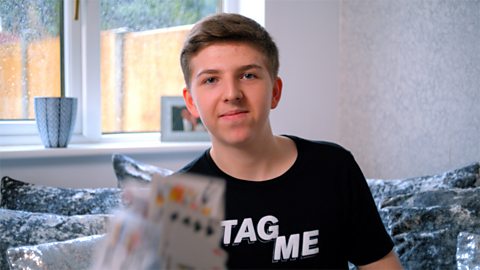
Dr Hazel Harrison and a young magician called Dan find out why it’s important to connect with other people. Dan has Asperger Syndrome, also known as Asperger's, and sometimes finds it difficult to connect with people. In this short film he shares his experiences of learning magic, using his growth mindset, and using magic tricks to help him connect with other people.
Kristana - Be active. video
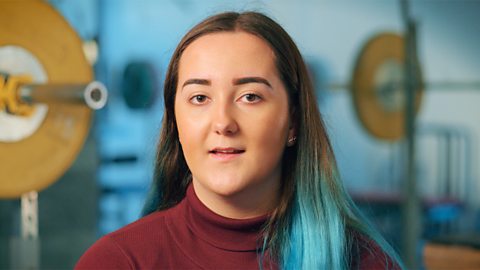
Dr Hazel Harrison and a young weight-lifter called Kristana find out why it’s good for us to keep active. In this short film Kristana explains how weightlifting has helped her to feel better about herself, develop confidence in school and overcome challenges.
Rachel - Take notice. video
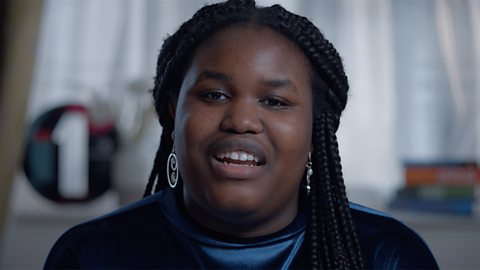
Dr Hazel Harrison and Rachel, a member of the Youth Parliament Committee, explore the concept of ‘taking notice’. In this short film Rachel shares how she takes notice of the issues that are happening around her and how she tries to make a positive change.
Ethan - Keep learning. video
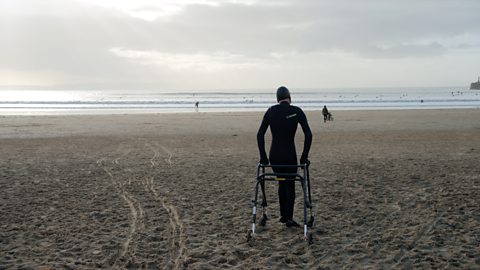
Dr Hazel Harrison and adaptive surfer, Ethan, explore why it’s important to keep learning new things. Ethan has cerebral palsy, a medical condition that affects his movement and coordination. He's also an adaptive surfer and is training to go to the world adaptive championships in California. In this short film Ethan shares his experiences of using a growth mindset to learn new things.
The Brain House. video
In this short film for primary schools Dr Hazel Harrison talks about what happens in our brains when we feel different emotions.
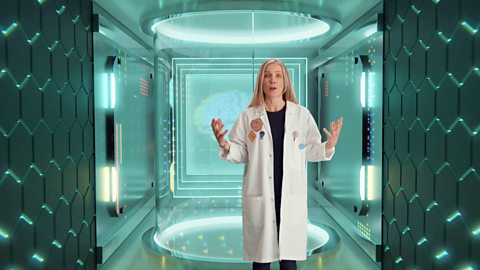
Introducing 'The Brain Lab' - A guide for teachers. video
An introduction to the resources for teachers with tips on how the films could be used in the classroom.