Raisah:
I'm Raisah and I’m from East London.
Yasmin:
I'm Yasmin and I'm also from East London.
We've come to a London kitchen to test whether we can stay cool when things go wrong.
Asma:
I'm Asma Khan, chef, author and restaurateur.
I only started cooking in my thirties.
But despite what others said, I turned this passion into a career, opening a restaurant and releasing cookbooks.
You might already know that failure is a necessary part of life.
But I'm going to talk about how to motivate yourself after experiencing failure and how you can build resilience.
Learning from mistakes and picking yourself back up again is crucial to success in life and work.
Yasmin:
How did you get into cooking in the first place?
Asma:
I moved to this country when I was 21/22.
I had no idea how to cook. I got into cooking because I was homesick and I learnt and taught myself how to cook in this country.
What was harder is because I studied law and somehow people didn't think that cooking was something that an intelligent person who's a trained lawyer would be doing.
All these years of studying and my Ph.D., I'm now changing tracks to something so different.
And I really had to show a lot of grit and resilience to continue on this path.
Okay, so we're going to make the dough of paratha.
But it's really about trying different things, different methods. Learning from every time it doesn't work.
She's clearly done this before.
Your mom's going to be so proud of you.
Raisah:
Was it difficult to turn cooking into a career?
Asma:
Ten years ago in food media, on television, anywhere you didn't see anyone like me cooking professionally.
So to even imagine that I could cook as a profession it didn't occur to me.
I just cooked because I was passionate. I loved it.
And I wanted to feed people. But even though it kind of seemed like this was a huge change,
I followed my heart. And this is probably why I was successful, because I kept my dream alive.
It was tough, but I still did it, and I'm so glad I did it.
You can never, at the first attempt, get the perfect dough because that, it comes with experience, it comes with time,it comes with practice.
Yasmin:
You mentioned setbacks in your career, what did you learn from them?
Asma:
What was really difficult was later in my career when COVID hit, all restaurants had to close. My business stopped overnight.
What kept me going and that really dark time, in Kolkata where I come from there used to be no power.
So we used to all sit outside, my father used to tell us stories and he used to say, hear the birds, because they sense dawn.
And it was this very dark time that I imagined that I was that bird.
I sensed that the darkness would end because not only was it about me, it was my entire team.
There were 35 people whose lives depended on this business that we had to pick up and hold each other and pull ourselves through it.
And the main thing is not to give up, you know, to keep fighting and finding a way and keeping hope alive.
Yasmin:
Do you believe you can learn anything from failure?
Asma:
It's a very good question. I think failure is not something you go out looking for.
It happens to you. I can give you an example of when you cook, when things don't work out, you try again and you keep trying again.
And eventually you perfect it.
And once you've perfected it, you don't make those mistakes again.
This is of course, it's a round and all the layers have not unravelled and opened up.
But I think you really shouldn't be discouraged because eventually you will get it right.
And here, next one, this one not perfect, this one will be.
And whatever happens it's going to taste great, unless you burn it.
Failure is very important because actually, if something doesn't work out, you've got to work out why?
Because if everything was smooth sailing, you would not actually grow.
You're not learning new things. So a lot of people now know me, when I'm successful, nobody saw me when I failed, and I failed more times than I've ever been successful.
And through each failure, I built myself up to where I am today.
For me, this is the kind of perfect paratha.
It's evenly cooked. It won’t always turn out like this.
But with every failure you get closer and closer to making it like this.
Thank you so much for coming.
Yasmin:
I learnt about patience and how you shouldn't give up even if something starts off bad that you can still get through it if you carry on.
Raisah:
Today I learnt when life gets difficult you have to be patient and just like when you fry the paratha, it can lose its shape and you can call this a failure.
And that's okay because you can just try again and maybe this time you'll succeed.
Chef, author and restaurateur Asma Khan talks to two students about learning from failure and learning resilience.
Asma talks about coming to the UK in her early 20's and not knowing how to cook, and doing it because she was homesick. She explains how being a trained lawyer, people could not understand how someone who was well qualified could be changing careers to go into catering and hospitality. This required grit and determination, and this was made difficult as she did not see anyone like her doing cooking on the TV or media.
The two students cook a paratha with Asma, and she goes onto explain how cooking was her passion and she followed this because she loves it.
Having suffered with setbacks such as her businesses closing during Covid-19, she says she used this experience to build mental resilience, and to be patient and not to give up.
This short film is from the BBC Teach series Lessons in Business
Teacher Notes
Things to check your students know:
- What resilience is.
Possible talking points:
Hospitality careers:
- Asma works as a chef now but points out that at the start of her career she was working in law - what skills might she have gained from her first career choice that would help her in hospitality?
- Can you think of an example when you experienced failure in the kitchen? How did you overcome it?
- Asma said it was her ‘passion’ that kept her dream alive to reach her goal of being a professional chef. Why might she have needed passion and ‘to keep fighting’ throughout her career?
Mental resilience:
- How would you define resilience?
- Asma talks about learning from failure because when you fail you can work out why things when wrong and then you won’t make the same mistakes again. Do you agree or disagree? What can be challenging about failure?
- Asma thinks resilience is ‘crucial to life and work’ - to what extent do you agree?
- Can you think of a time you have failed at something and how you responded? How could you have responded differently?
- What would you advise someone to do if they are upset at failing to pass an exam?
- Asma says ‘time, practice and experience’ are necessary to perfect something - can you think of anything else you might need? What are the barriers to perfecting something you are passionate about?
Follow on tasks - You could ask students to:
- Hospitality:students research possible career pathways and qualifications they may need to go onto a career in hospitality.They can use Bitesize Careers hospitality job profiles to find out more information. Students can also read a collection of job profiles about how to become a chef
- Resilience:students could debate the importance of resilience; alternatively, students could createan advice leaflet about how to be resilient when facing challenges aimed at a teenage audience. They can read this article from Bitesize Careers from Stacey Dooley about how to increase resilience levels.
Curriculum Notes
- This short film is to help stimulate discussion on the following topics: careers, resilience
- It is relevant to subjects such as careers and hospitality.
- Most suited to 14-16-year-old pupils across the UK in developing their understanding of soft skills needed for successful careers.
- In England, Northern Ireland and Wales it is relevant to CCEA hospitality and CCEA learning for life and work.
- In Scotland it is linked to health and wellbeing at Level 4.
More from the series Lessons in Business:
Jacky Wright - The importance of collaboration. video
Chief technology officer Jacky Wright talks to two students about collaboration and communication in the workplace.
Dorothy Byrne - Fighting for your voice. video
Journalist and President of Cambridge College Dorothy Byrne talks to two students about making your voice heard and standing up for what you believe in.
Emma Bridgewater - Turning an idea into a business. video
Ceramicist and entrepreneur Emma Bridgewater talks to two students about business planning.
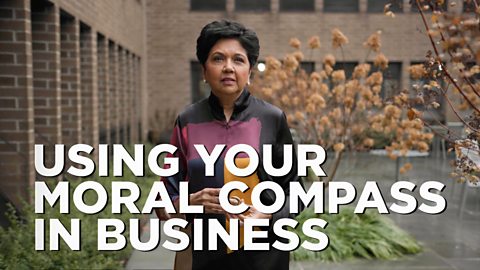
Indra Nooyi - Using your moral compass in business. video
Entrepreneur, author and former CEO of PepsiCo Indra Nooyi talks about integrity in business.
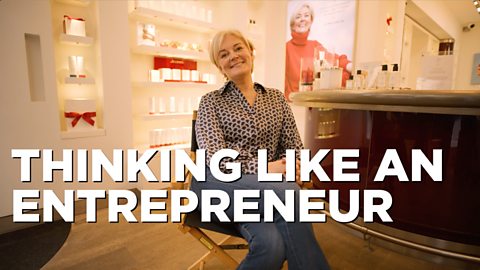
Jo Malone - Thinking like an entrepreneur. video
Perfumer and entrepreneur Jo Malone talks to two students about thinking as a leader and entrepreneur.
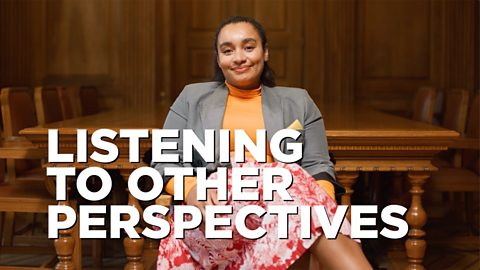
Sereena Abbassi - Listening to other perspectives. video
Equity and inclusion expert Sereena Abbassi talks to two students about listening to different people's perspectives.
Dame Sharon White - Creative problem solving. video
Chair of the John Lewis Partnership Dame Sharon White talks to two students about problem solving.