Margaret:
I'm Margaret. I'm 15 years old from London.
James:
I'm James. I'm 14 years old and I'm also from London.
Margaret:
We've come to learn from a giant in the business world on how to navigate our way through a career.
Indra:
I'm Indra Nooyi, entrepreneur, author and former CEO of PepsiCo.
You might already know about some of the important skills needed to be a strong business leader, like having clearcommunication skills and really understanding how to coach others.
But I'm going to talk about a lesser known but just as valuable lesson. Integrity, the value of a moral compass, something that anchors you and points you to a true north no matter what the environment is around you.
Margaret:
What do you mean by moral compass?
Indra:
I have a compass right here behind me.
We're not talking about this physical compass.
You know, in navigation when people are on a ship, they say a compass points to true north.
And the reason we use the word moral compass and true north is to say all of us should be guided by doing something that is pure.
That points to the ultimate in morality.
Moral compass actually relates to integrity.
Now you guys are drama students, let me give you an example from a play.
When somebody hires you to do a play, they expect you to play a role in the play.
If you get on stage and did whatever you wanted to do, the physical integrity of the play is gone.
If you don't follow the rules, that's expected of you in the play.
So when we talk about moral compass, it's how do you follow a direction that's been set by the institution that you're part ofthat keeps the integrity, the physical integrity of that institution together.
And that's really what we're talking about.
It's a tough thing to do because every day you're tempted to deviate from that.
How do you have an inner compass that says, no, I'm not going to get tempted.
James:
So, Indra, when have you ever used the moral compass in your own career?
Indra:
When you are in any part of the company, any function or any country, what happens is because each country has its owncultures, policies, procedures, sometimes you might be under pressure to do things that are not consistent with the code of conductor the values of the company.
In those cases, whatever the winds are around you, however you get buffeted, you've got to come back to what does the company expect from me in terms of code of conduct values?
What does the company expect from me to maintain the physical integrity of what I'm doing and therebythe overall integrity of the company.
And that's why we talk about the moral compass.
Think of a ship.
It's going in the ocean.
It gets buffeted by all kinds of waves.
But the compass always points to true north and says, this is where true north is.
In your mind, you've got to say, what is my true north?
And I don't care how I get buffeted around.
I've been given a set of values, code of conduct and rules.
I am not going to compromise on that.
Margaret:
How would I use my moral compass right now in my life?
Indra:
First of all, you've got to tell yourself that your life is going to be guided by ethics, integrity, and, you know, living a lifewhere you feel at the end of the day, every day that you've done nothing wrong to harm anybody around you because it's never too early to start acting with integrity.
Acting consistent with values and code of conduct, identifying your moral compass and making sure you live by it.
James:
Indra taught me that if your moral compass is the same as your company's moral compass, you're more likely to enjoy your joband you're more likely to stay in this job for a longer period of time.
Margaret:
There might be a lot of pressure to follow other people's beliefs and ideas that might conflict with your own.
That's why you always got to stay true to your moral compass and stay on your own path.
Entrepreneur, author and former CEO of PepsiCo Indra Nooyi talks to two students about the importance of integrity in business.
Indra talks about having a moral compass which allows you to follow a direction in order to keep the integrity of an institution together.
She talks about countries having different cultures and customs and how sticking to the values, business ethics, and identifying your moral compass within the work environment.
This short film is from the BBC Teach series Lessons in Business
Teacher Notes
Things to check your students know:
Definitions of the terms:
- Ethics
- Integrity
- Moral compass
Possible talking points:
Business:
- What does it mean to act ‘ethically’? Why is it important for business to act ethically?
- What are the pros and cons of running an ethical business?
- How can ethical choices impact profit?
- Why might it be challenging to always stick to company values?
- What would you do if a company’s values didn’t agree with your own?
Careers:
- No matter what career you choose Indra advises that you have your own ‘moral compass’ what does she mean by this?
- What values make up your own inner compass?
- Indra advocates acting with integrity and doing ‘nothing wrong to harm anyone’ – in what careers might this be tricky tobalance?
- What advice would you give someone who felt they needed to deviate from their own moral compass to fulfil their company’s goals?
Follow on tasks - You could ask students to:
- Careers: – imagine you have been asked to create a marketing campaign to appear on Tiktok andInstagram to sell high sugar energy drinks to young teenagers. What are the ethical considerationsyou might need to think about?
- Business: – create a code of conduct for yourself – what are your values in the work place and in life?When might you find it challenging to stick to these values and how might you overcome thesechallenges?
- Students can also explore jobs that use Business by viewing Bitesize Careers business job profiles
Curriculum Notes
- This short film is to help stimulate discussion on the following topics: careers, ethical decision making.
- It is relevant to subjects such covered in lessons such business or careers.
- Most suited to 14-16-year-old pupils across the UK in developing their understanding of ethics and careers.
- In England, Northern Ireland and Wales it is relevant to GCSE business and CCEA – learning for life and work.
- In Scotland it is linked to National 4 Business studies.

More from the series Lessons in Business:
Jacky Wright - The importance of collaboration. video
Chief technology officer Jacky Wright talks to two students about collaboration and communication in the workplace.
Asma Khan - Learning resilience. video
Chef, author and restaurateur Asma Khan speaks to two students about building resilience.
Dorothy Byrne - Fighting for your voice. video
Journalist and President of Cambridge College Dorothy Byrne talks to two students about making your voice heard and standing up for what you believe in.
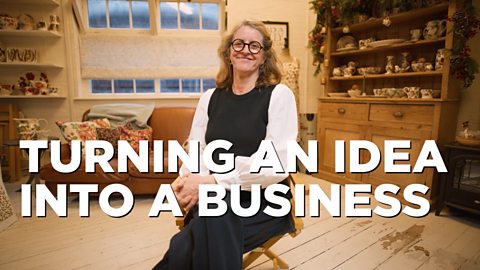
Emma Bridgewater - Turning an idea into a business. video
Ceramicist and entrepreneur Emma Bridgewater talks to two students about business planning.
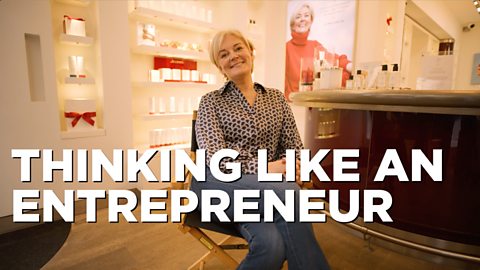
Jo Malone - Thinking like an entrepreneur. video
Perfumer and entrepreneur Jo Malone talks to two students about thinking as a leader and entrepreneur.
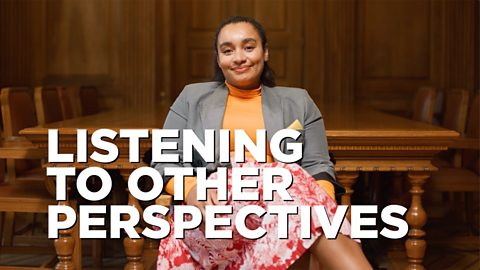
Sereena Abbassi - Listening to other perspectives. video
Equity and inclusion expert Sereena Abbassi talks to two students about listening to different people's perspectives.
Dame Sharon White - Creative problem solving. video
Chair of the John Lewis Partnership Dame Sharon White talks to two students about problem solving.