Saimon:
I'm Saimon, I’m 15 years old and I am from East London.
Ihfaz:
I'm Ihfaz, I’m 17 and I'm also from East London.
We're here to meet someone who turned her creative gift into a global business.
Jo:
I'm Jo Malone. I'm an entrepreneur and the creative founder of two global fragrance brands.
So you probably already know an entrepreneur somewhere in your life.
But I'm going to teach you how to think like an entrepreneur.
Being an entrepreneur is not just about business. It gives you the ability to think differently and think creatively.
And that can be absolutely life changing.
Ihfaz:
Jo, how do I think like an entrepreneur?
Jo:
Well, I believe you're born an entrepreneur. You're born to create. And as we get older, we kind of lose touch,but we sometimes have to re learn it.
I love things that are really simple. I like things that come down to three steps, five steps and I visualise this toolbox to teach other people how to think like an entrepreneur.
You know, instead of hammers and saws and screwdrivers, it's things that you can use in your everyday life.
And within this toolbox, I have five P’s. So you need to create a product. And whether that's a physical productor a service or part of a business, but it's the product in which you're going to buildyour business and your brand.
What is the the place you're going to sell it? Where is it going to be sold? Is it online?
Is it a physical retail product? You're then looking at people. Who are the people that are going to help youbuild this?
So how do you build your team? How do you find great people?
You need to figure out: what is the price of this product?
How much does it cost to make? Because what it costs you to make, not just physically, but all your team and the price that you sell it at, the bit in between, of course, is called profit, which is why mathematics is so important.
Because without that piece there is no business, it just becomes a hobby.
And once you've got to that point, you've then looking at where do we promote it?
How do we tell the story? How do I get the story told a thousand times?
And so those five P’s, if you learn those five P’s, you are equipped to create something,create your own business.
I think it's really important that we now see: what is that entrepreneurialtool box Jo? Show me.
So this is the tapas bar, but normally in a tapas, you'd be eating.
The only thing you're going to do here don't eat anything.
You only smell.
It's all about the experience of smell and how we take experience and make it really different.
What I'm doing is I'm putting all the products in situ in the place that you would use them.
But I've made you think about the product in a different way and that when we go out in businessand we try and build, that is often what we have to do.
We take a product that's already there.
But how do I make the story different?
How do I make the consumer see the product differently?
Ihfaz:
So with reference to the toolbox, how does this relate to the five P’s?
Jo:
So the five P's are products. What we're seeing the physical bits of the tapas.
As for pricing, how much does it cost?
This cost pennies, by the way, and converts
94% of the time into a sale. So we know that it's a means of promoting and marketing and telling our story,but they're all things that you don't have to be a business person to learn.
Saimon:
Okay, but how will this toolbox help me?
Jo:
Well, Saimon, I think not only for business, but actually for life.
I think if you learn some of these disciplines and put them into your life, it will help you build a product.
Or maybe a friend of yours will say, you know what, Saimon, could you come and just help me?
I'm starting a brand, I don't know, X, Y and Z.
If you've got that toolbox mentally in you, you can go through those disciplines and just take them off and by the end of it, you would have had a really interesting conversation with someone and maybe, maybe you might have created yourself your own job.
So really what I'm saying is it's a way of thinking that can really equip you. It's almost like a language. Having that entrepreneurial toolbox will keep your mind thinking in an entrepreneurial way.
Ihfaz:
Today I learnt about the five P’s. One of the ones I found interesting was promotion, and we saw this by Jo presenting us with a bar experience.
Saimon:
Today I learnt how to be more creative as a business person.
Entrepreneur Jo Malone talks to two students about how to think creatively and differently as a business leader.
She believes having the five 'P's can be the route to success - product, place, people, profit, promotion.
Jo describes each of these and demonstrates this by showing the students a range of her products and what she thinks about when it comes to launching them.
This short film is from the BBC Teach series Lessons in Business
Teacher Notes
Things to check your students know:
- What an entrepreneur is
Possible talking points:
Business:Jo talks about her 5 step ‘toolbox’ for building a successful business. Her 5P’s are:
Product
Place to sell
People
Price
Promote
Which of these steps do you think is most important and why?
When Jo talks about ‘people’ she is talking about the people who she works with. What is the importance of considering all the stakeholders involved in a business?
To what extent is price a significant consideration? How can you calculate total cost of a product?
Jo talks about ‘promote’ as being the aspect of the business in which you ‘take something that is already there but make the consumer see it differently’. Can you think of any products that have used this strategy in their marketing? Why is it an effective strategy?
Careers:
- What is an entrepreneur?
- What are the challenges and benefits of being an entrepreneur?-How does Jo’s ‘5P’s toolbox’ help frame your thinking around careers as an entrepreneur?
- _Jo talks about the importance of creative thinking – why is this such an important skill for an entrepreneur to have?
- Jo says we are all ‘born an entrepreneur –born to create.' To what extent do you agree?
Follow on tasks - You could ask students to:
- Careers: – apply Jo’s '5P's toolbox' to a product idea of their own and create a business plan
- Business: – consider jobs in which creative thinking is key and make a list of experiences students haveor can organise to develop their creative thinking skills
- Students can also explore jobs that use Business by viewing Bitesize Careers business job profiles
- Alternatively, research famous entrepreneurs and the career paths and experiences they gained in order to become successful.
Curriculum Notes
- This short film is to help stimulate discussion on the following topics: careers, business.
- It is relevant to subjects such covered in lessons such business or careers.
- Most suited to 14-16-year-old pupils across the UK in developing their understanding of soft skills needed for successful careers and understanding of how business works.
- In England, Northern Ireland and Wales it is relevant to GCSE business.
- In Scotland it is linked to National 4 Business studies.

More from the series Lessons in Business:
Jacky Wright - The importance of collaboration. video
Chief technology officer Jacky Wright talks to two students about collaboration and communication in the workplace.
Asma Khan - Learning resilience. video
Chef, author and restaurateur Asma Khan speaks to two students about building resilience.
Dorothy Byrne - Fighting for your voice. video
Journalist and President of Cambridge College Dorothy Byrne talks to two students about making your voice heard and standing up for what you believe in.
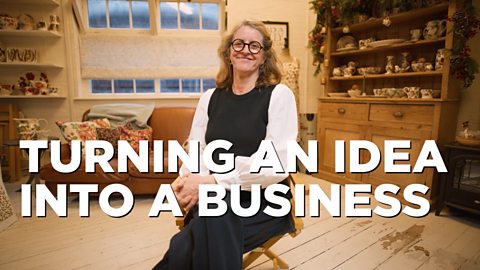
Emma Bridgewater - Turning an idea into a business. video
Ceramicist and entrepreneur Emma Bridgewater talks to two students about business planning.
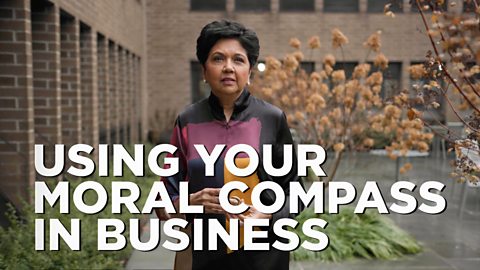
Indra Nooyi - Using your moral compass in business. video
Entrepreneur, author and former CEO of PepsiCo Indra Nooyi talks about integrity in business.
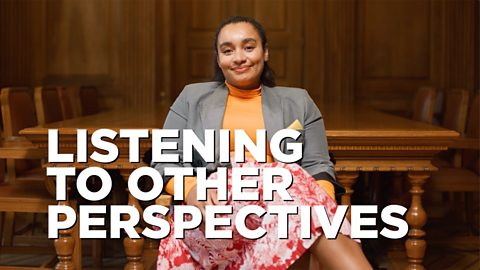
Sereena Abbassi - Listening to other perspectives. video
Equity and inclusion expert Sereena Abbassi talks to two students about listening to different people's perspectives.
Dame Sharon White - Creative problem solving. video
Chair of the John Lewis Partnership Dame Sharon White talks to two students about problem solving.