Have you ever found a spider in your bath? Sometimes they fall in and can't get out again.
Spiders come in all shapes and sizes, but all spiders have eight legs. Try and count them. One… two… three… four… five… six… seven… eight. Spiders have eight legs.
Here comes another spider. It lives in a web. Spiders like to eat bugs, and this one has caught a woodlouse. Most spiders like to live on a web. They make the web out of strong silk.
Spinning the web from silk takes a spider quite a long time. This film has been speeded up. It takes a spider much longer than this to build its web. Spiders spin their webs round and round in a spiral. Once the web is spun, it is very strong and sticky, so that if anything flies into it, they get all tangled up.
Spiders love nothing more than a nice juicy insect. After the spider has had its meal, it mends the web and sits and waits for another bug to come along. But it could be a long wait.
Spiders' webs don't just catch bugs and flies. They also catch water. Sticky webs can catch water droplets. If you look really closely, they look like strings of pearls or shiny beads.
But some spiders don't have to spin webs. This spider can jump, and so it is called a jumping spider. Some jumping spiders are really colourful. Jumping spiders have amazing eyes which help them to spring from one place to the other. This one has spotted a dragonfly on a leaf, so it jumps over to get closer. But the dragonfly sees the spider and runs away.
Video summary
A report about different types of spiders, where they live, how they build webs, their diet, their bodies, legs and eyes. The report includes some time lapse film of a spider building a web and eating an insect.
This clip comes from the BBC series, Our Planet: Spiders and Animal Shelters.
Teacher Notes
- This clip could be used to follow a literacy lesson on nursery rhymes. ‘Little Miss Muffet’ and ‘Incy Wincy Spider’ might initiate discussion about why people can be afraid of spiders.
- Now that pupils have discovered that insects have six legs but spiders have eight, you might want to investigate this further with them by going on a bug hunt to consolidate this work.
- Watching the last part of the clip may inspire a web hunt, perhaps making use of photography. What spiders can be found around the school? Can pupils find any webs?
- Pupils can make their own spider webs using white chalk on black paper or with string and art straws.
- Pupils can research the many features of spiders and their diet.
This clip is relevant for teaching Science at KS1 in England and Wales, Foundation and KS1 in Northern Ireland, and early level and first level in Scotland.
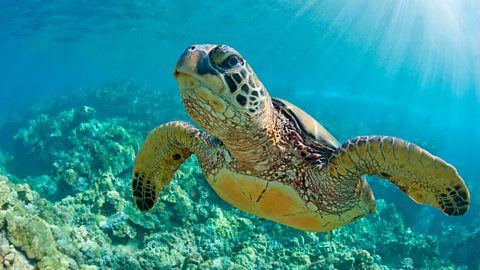
Animals that live in the sea. video
Discover examples of sea life and see how they move underwater in this video about marine animals.
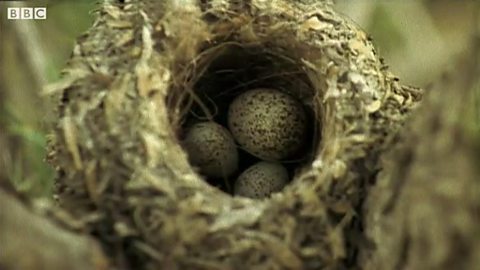
Animals that lay eggs. video
Birds, mosquitoes, frogs, crabs and moths hatch their young in nests, water and other surprising places in this video about egg-laying animals.
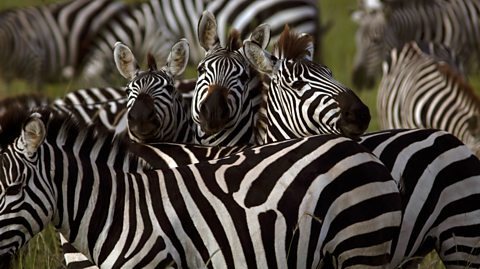
Animals with spots and stripes. video
The natural patterns of giraffes, leopards, tigers and zebras are celebrated in this video about spotted and striped animals.
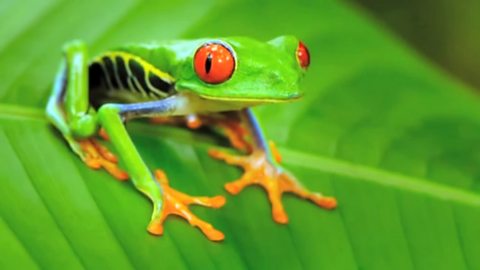
Characteristics of amphibians. video
Amphibians live in and out of water, and even transform from tadpoles into frogs, in this video slideshow.
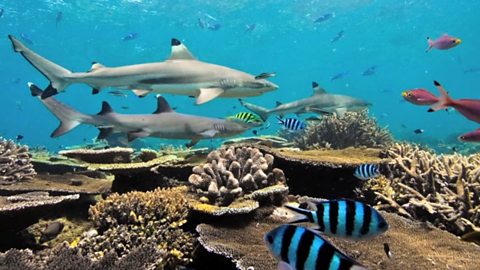
Characteristics of fish. video
Adaptations like fins and tails help all kinds of fish, even giant sharks, to live underwater in this video slideshow.
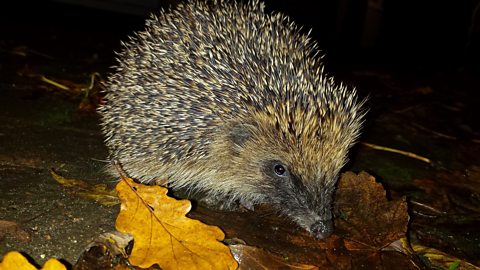
Nocturnal animals and birds. video
Barn owls, mice, hedgehogs, bats, badgers, moles and worms come out at night in this video about nocturnal animals.