There are some animals that only come out at night and they are called nocturnal animals.
Woo. Woo! Who do you think these eyes belong to?
Owls. Owls have big eyes to help them see in the dark. This white owl is called a barn owl because she likes to live in barns and sheds. Mice like to live in barns too but they have to be careful. Barn owls like mice for supper. This mouse had better be careful. Phew! That was close! Barn owl chicks are always hungry. So their parents have to feed them all the time.
Owls aren't the only animals that come out at night. Lots of other animals are nocturnal too.
Prickly hedgehogs come out at night… to see what they can find to eat. A slug could make a tasty treat.
Bats huddle in the roof of a church. They come out at night to hunt for moths. The bats use their big ears to listen out for the moths. They have VERY good hearing.
If you see a black-and-white face in the woods, it might be a badger. Badgers wait for night time, when it's safe to come out. They collect straw for their burrows and play in the dark.
Moles live in holes, so they like it dark as well. Moles are great diggers. And they have great, big, flat paws to dig with. They can't see very well. So they use their noses to sniff out for worms. Worms come out at night to the moles' delight. Moles love worms for tea. Worms have to wriggle away quickly if a mole comes by.
So the next time you see a shadow at night, it might not be what you expect.
Video summary
A short video about nocturnal animals and birds and their adaptations. There is night-time footage of barn owls, mice, hedgehogs, bats, badgers, moles and worms.
This clip comes from the BBC series, Our Planet: Animal Feet and Night-Time Animals.
Teacher Notes
- This clip can be used for pupils researching different nocturnal animals.
- Pupils could watch the clip before taking part in drama activities, acting out the behaviour of the animals to reinforce understanding.
- The clip can be paused after the first question and possible answers taken: "Why do you think owls’ eyes are so big?"-The clip could be used for descriptive writing, focusing on the use of adjectives to describe animals’ features.
This clip is relevant for teaching Science at KS1 in England and Wales, Foundation and KS1 in Northern Ireland, and early level and first level in Scotland.
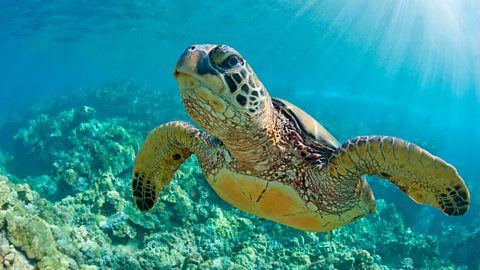
Animals that live in the sea. video
Discover examples of sea life and see how they move underwater in this video about marine animals.
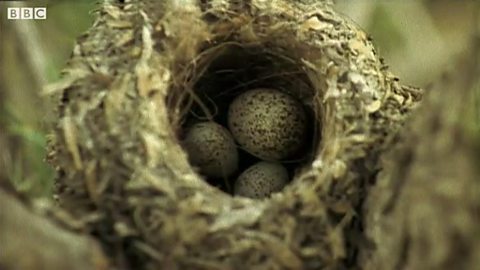
Animals that lay eggs. video
Birds, mosquitoes, frogs, crabs and moths hatch their young in nests, water and other surprising places in this video about egg-laying animals.
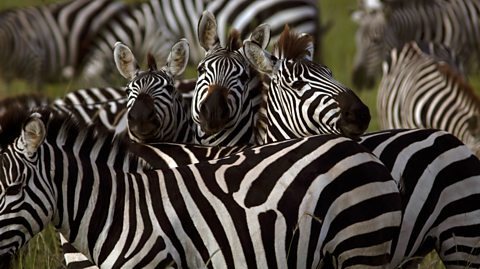
Animals with spots and stripes. video
The natural patterns of giraffes, leopards, tigers and zebras are celebrated in this video about spotted and striped animals.
Characteristics of amphibians. video
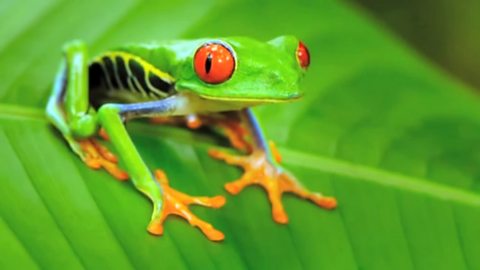
Amphibians live in and out of water, and even transform from tadpoles into frogs, in this video slideshow.
Characteristics of fish. video
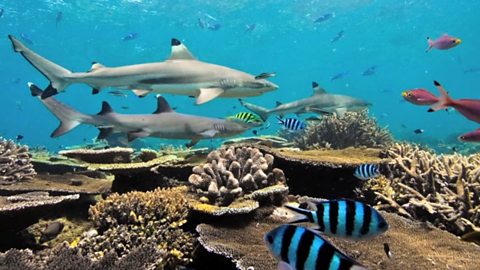
Adaptations like fins and tails help all kinds of fish, even giant sharks, to live underwater in this video slideshow.
Characteristics of spiders. video
Discover how spiders use their eight legs and eyes to spin webs and hunt insects in this KS1 Science video on types of animals for primary schools.