This is a baby giraffe. And it's born with lovely patterns on its skin. The patterns stay the same all through the giraffe's life. They're like giant spots.
What other animals have spots? Leopards. Leopards never change their spots. Like the giraffes, leopards are born with their spots and the pattern doesn't change. The spots are big on their backs with a pale centre, perfect for hiding in shadows. On their feet and heads, the spots are smaller and all black.
There are black leopards too. They are known as "black panthers". At first you might think they're all black, but they've still got spots - though they are very hard to see. The spots on this leopard are much easier to see.
Some big cats have spots - this big cat has stripes. Tigers are stripy all over. Look at the beautiful, thick, black stripes on this tiger. Even though you might think all tigers look the same, they don't. No tiger has exactly the same markings as another.
But is it the tiger who's got the best stripes… or is it the zebra?
It's got black and white stripes all over. When you see a herd of zebra together, it becomes one big stripy pattern. No other animal looks so striking on the African plains. The zebra can't hide - his stripes make him stand out from the crowd. Zebras look like horses, don't they? But no horses are stripy like the zebra.
Which do you like best - stripes or spots? Stripy zebra and stripy tiger… or spotty leopard and spotty giraffes?
Video summary
Explore the different patterns that animals have on their bodies: giraffes and leopards with spots and tigers and zebras with stripes.
This clip comes from the BBC series, Our Planet: Skin Patterns and Owls.
Teacher Notes
- Pupils could watch the clip and discuss with a partner why the spots and stripes help each animal in their environment.
- The clip could be used for pair work, allocating each pair a plain animal, for example an elephant. They can research, or be provided with, the animal's habitat - in this instance, the African plains - and potential dangers or threats found there.
- The pupils can then design a pattern to help their animal survive its habitat and natural threats.
- Finally, the pairs can present their adapted animal to the class, explaining how its new pattern will aid its survival.
This clip is relevant for teaching Science at KS1 in England and Wales, Foundation and KS1 in Northern Ireland, and early level and first level in Scotland.
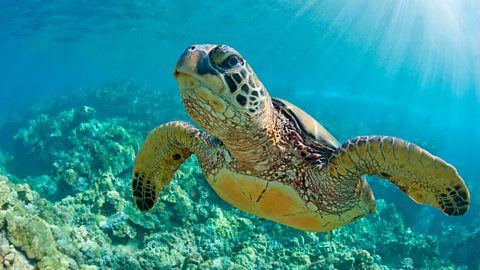
Animals that live in the sea. video
Discover examples of sea life and see how they move underwater in this video about marine animals.
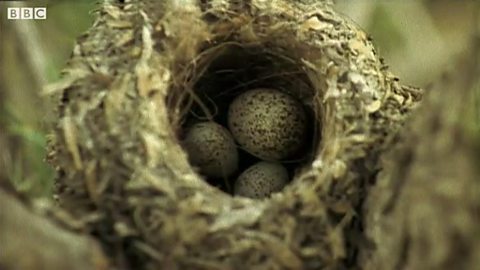
Animals that lay eggs. video
Birds, mosquitoes, frogs, crabs and moths hatch their young in nests, water and other surprising places in this video about egg-laying animals.
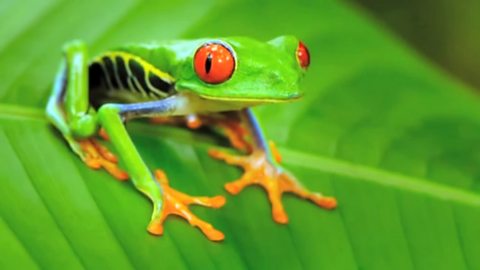
Characteristics of amphibians. video
Amphibians live in and out of water, and even transform from tadpoles into frogs, in this video slideshow.
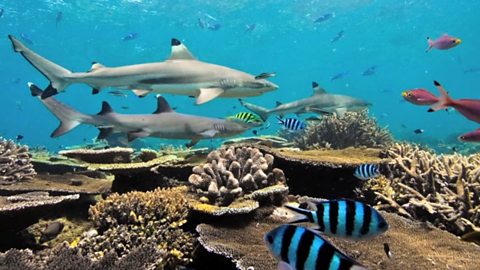
Characteristics of fish. video
Adaptations like fins and tails help all kinds of fish, even giant sharks, to live underwater in this video slideshow.
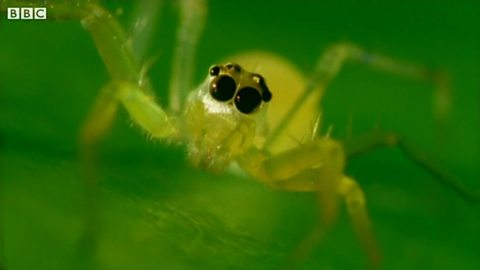
Characteristics of spiders. video
Discover how spiders use their eight legs and eyes to spin webs and hunt insects in this KS1 Science video on types of animals for primary schools.
Nocturnal animals and birds. video
Barn owls, mice, hedgehogs, bats, badgers, moles and worms come out at night in this video about nocturnal animals.