Some creatures begin their life in water. But as they get older, they change so they can live on land. These creatures are called amphibians.
Frogs are amphibians. In the spring, female frogs lay thousands of eggs in pools or streams. Little black dots in clear jelly balls called frog spawn. The black dots eat the jelly and grow. Soon they'll be tiny black tadpoles swimming in the water, breathing through gills on each side of the head.
They're still growing and changing. Back legs grow first, then front legs. No need for their tadpole tails now. They soon drop off. Now tiny frogs hop away from the pond. As they grow, they'll discover new things to eat, like slugs and insects.
There's a special word for this amazing change. Metamorphosis. It happens to all amphibians.
Frogs that live in other countries sometimes look very unusual. Horned frogs are found in South America. They don't actually have horns, but they do have very wide mouths.
Poison dart frogs are dangerous. They live in South America, too. And their bright colours warn other animals to stay away! They get their name because hunters in the Amazon rainforest dip their darts and arrows into frog poison to help them catch other animals.
Toads are bigger than frogs. Common toads and natterjack toads live in Britain, but they're not the biggest.
In South America, cane toads can be almost fifteen centimetres long. Sometimes they're even called giant toads. They have dry bumpy skin with ridges over their eyes. Cane toads are good at finding food with their sense of smell. They eat all sorts of things - plants, small creatures, even birds. They're poisonous, so most animals can't eat them.
In the summer, Britain's garden ponds and damp ditches are good places to look for smooth newts. It's a very special thing to find a dark, bumpy great crested newt. They are quite rare and, like frogs, toads and newts, they're amphibians.
Video summary
A brief audio slideshow showing the different characteristics of amphibians and what makes them different to other types of animals - including their incredible metamorphosis from newly-hatched young, like tadpoles, into adult forms.
Teacher Notes
- This clip could be used as an introduction to amphibians and metamorphosis.
- Pupils could be asked to list the characteristics of amphibians and compare them with characteristics of other animals.
This clip is relevant for teaching Science at KS1 in England and Wales, Foundation and KS1 in Northern Ireland, and early level and first level in Scotland.
Animals that live in the sea. video
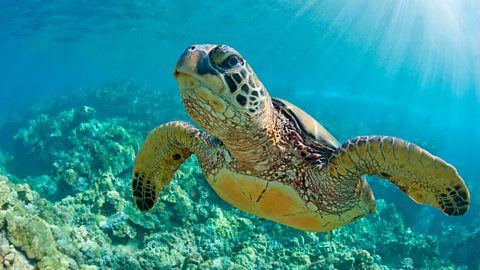
Discover examples of sea life and see how they move underwater in this video about marine animals.
Animals that lay eggs. video
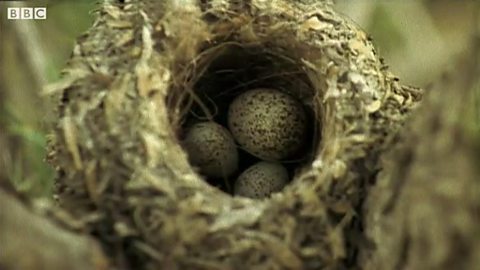
Birds, mosquitoes, frogs, crabs and moths hatch their young in nests, water and other surprising places in this video about egg-laying animals.
Animals with spots and stripes. video
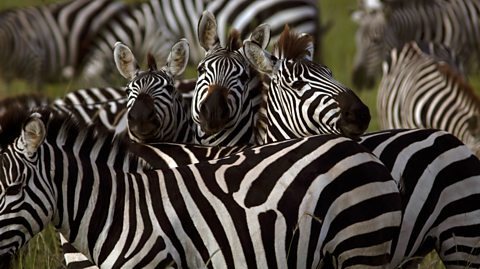
The natural patterns of giraffes, leopards, tigers and zebras are celebrated in this video about spotted and striped animals.
Characteristics of fish. video
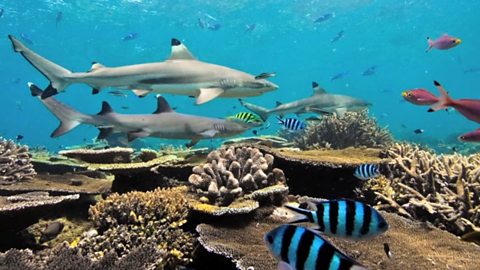
Adaptations like fins and tails help all kinds of fish, even giant sharks, to live underwater in this video slideshow.
Characteristics of spiders. video
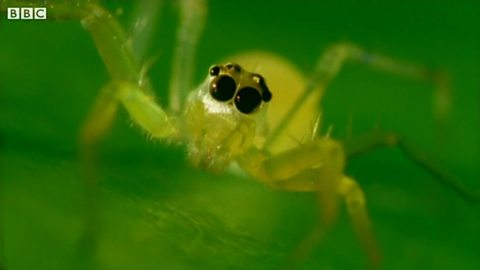
Discover how spiders use their eight legs and eyes to spin webs and hunt insects in this KS1 Science video on types of animals for primary schools.
Nocturnal animals and birds. video
Barn owls, mice, hedgehogs, bats, badgers, moles and worms come out at night in this video about nocturnal animals.