Fish all live in water. Some in the salty sea, some in freshwater lakes and rivers.
They breathe through gills, little openings on the side of the head.
Most fish are covered in scales that protect them and help them swim.
Salmon born in British rivers swim downstream to the sea and onto cooler water, as far away as Canada. That's an amazing journey. Eventually, they'll go back to their own river, swimming and leaping back up to where they began life. Now it's their turn to lay eggs that will hatch into young fish.
Tuna fish live in salty water. They're big, sometimes even bigger than a man, and they're fast swimmers. Just as well, because sharks like to eat them!
Sharks hunt for food. They're predators. Inside their strong jaws are lots of sharp, pointy teeth.
Pike are predators too, and live in lakes. They have long, pointed heads and will lie, still and waiting, ready to catch a fish swimming close by. Supper!
Flat fish like turbot and plaice are good at hiding. They're camouflaged against the sandy bottom of the sea. A flatfish's mouth and both its eyes are on one side of its body, so it can see what's above it.
Angler fish live in deep water. They have what looks like a tiny fishing rod dangling over their mouth. Other fish come to see… and get eaten!
Swimming together in shoals makes it harder for fish to be caught by predators, but not by fishermen. Herring and mackerel swim in shoals.
Some fish never swim in the sea or lakes or rivers. They're pets. Just like this goldfish.
Video summary
A brief audio slideshow showing the characteristics of fish, explaining how they move, survive and find food under water.
Teacher Notes
- This clip could be used as an introduction to fish.
- Pupils could be asked to list the characteristics of fish and compare them with characteristics of other animal groups.
This clip is relevant for teaching Science at KS1 in England and Wales, Foundation and KS1 in Northern Ireland, and early level and first level in Scotland.
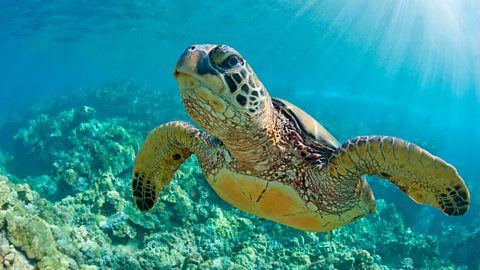
Animals that live in the sea. video
Discover examples of sea life and see how they move underwater in this video about marine animals.
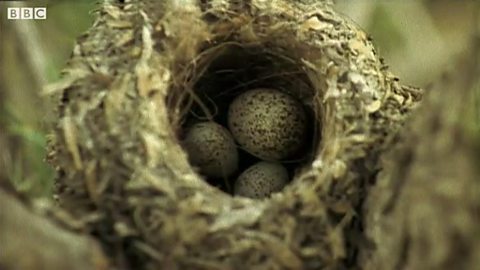
Animals that lay eggs. video
Birds, mosquitoes, frogs, crabs and moths hatch their young in nests, water and other surprising places in this video about egg-laying animals.
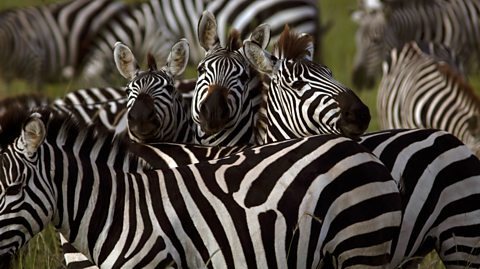
Animals with spots and stripes. video
The natural patterns of giraffes, leopards, tigers and zebras are celebrated in this video about spotted and striped animals.
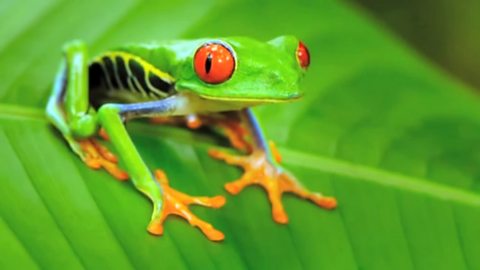
Characteristics of amphibians. video
Amphibians live in and out of water, and even transform from tadpoles into frogs, in this video slideshow.
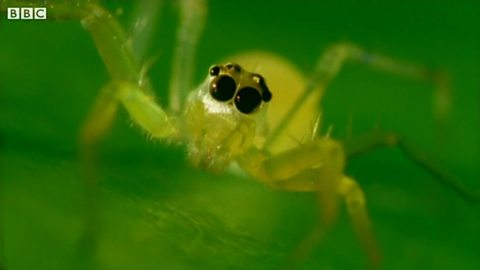
Characteristics of spiders. video
Discover how spiders use their eight legs and eyes to spin webs and hunt insects in this KS1 Science video on types of animals for primary schools.
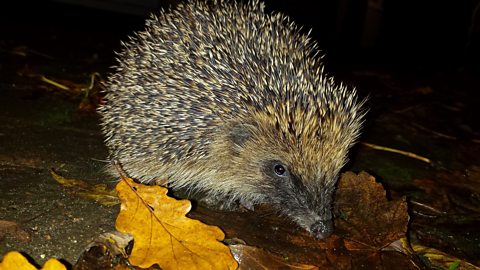
Nocturnal animals and birds. video
Barn owls, mice, hedgehogs, bats, badgers, moles and worms come out at night in this video about nocturnal animals.