In the 18th and 19th centuries, Britain changed from a mainly agricultural society into a society based on larger scale manufacturing in mills and factories. We call this industrialisation.
This was due to the development of machinery that could do jobs more quickly than humans.
One of the most important inventions was the steam engine. It provided power for transportation and powered most of the machines in the new factories.
Most factories used coal to power their new steam engines.
Coal mines opened up all across Britain to meet this rising demand and towns and villages grew up around them.
People flocked to the towns and cities to work in the mills and factories.
They worked with huge machinery in dangerous conditions, putting their health and often their lives at risk.
Wages were low, so they struggled to pay for housing and food. There was overcrowding and poor sanitation and so diseases spread easily.
Even children worked in the factories, often doing dangerous jobs like crawling under machinery to remove fluff and scraps of material. Many of these children were orphans who worked long hours in terrible conditions for very little money.
The air and waterways became polluted and dangerous from all the burning coal.
People who could afford it went on holiday to the seaside where they could breathe cleaner air.
But the poorest workers were left to live in these terrible conditions.
Over time, laws were brought in to improve conditions for workers, which eventually lead to safer conditions and the end of child labour.
Industrialisation changed the way of life in Britain forever.
Video summary
This short film gives pupils an understanding of the process of industrialisation and how it impacted on the lives of people in Britain.
It considers how and why the Industrial Revolution happened in Britain, and what life was like before, during and after the process of industrialisation.
The film also considers the impact the Industrial Revolution had on life in Britain in the following years.
Teacher Notes
This short film is an ideal tool to help pupils to understand the process of industrialisation and to think about how their lives might be different if industrialisation had not happened.
It also provides an opportunity to think about some of the negative impacts of industrialisation, for example on the environment.
Points for discussion
- What is industrialisation?
- How did industrialisation change lives?
- What were the factors that started the process of industrialisation?
- How would life be different today if industrialisation had not taken place?
Suggested activities
After watching the film, you could challenge your pupils to undertake case studies about inventions and discoveries, exploring how their lives would be different if such inventions and discoveries had not been made. Pupils could also consider how these inventions and discoveries impacted on the lives people at the time.
Pupils could use timelines to sequence discoveries and inventions to find out which came first, and determine if there was a pattern to these discoveries and inventions.
They could also consider the positive and negative impacts on all aspects of society during the Industrial Revolution.
Can pupils find out what came after the Industrial Revolution and what were its causes?
This short film is relevant for teaching history at KS1 and KS2 in England, Wales and Northern Ireland and 1st and 2nd Level in Scotland.
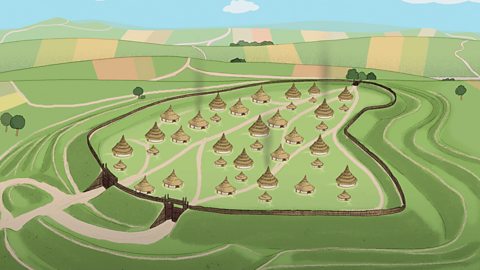
Hill forts. video
An animated introduction to Iron Age hill forts for primary pupils.
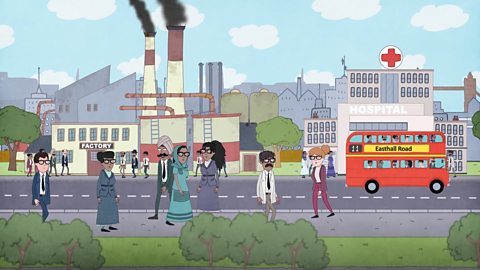
Migration. video
An introduction to migration for primary pupils, looking at how migration to and from the United Kingdom has changed over time.
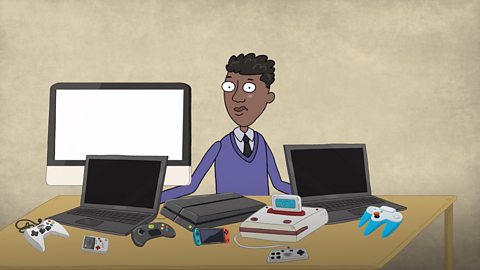
The digital revolution. video
An animated introduction for primary pupils to the impact of the digital revolution over the past 50 years.
Roman roads. video
An introduction for primary pupils as to why and how the Romans built a network of roads in Britain.