Can you imagine trying to do your school work without the internet? Or what life would be like without computers or smartphones?
Today, almost anything can be done online, from ordering food to playing games with your friends.
But, your parents and teachers weren't so lucky when they were your age.
We call this rapid development of digital technology, the Digital Revolution.
Did you know that today's smartphones have more processing power than the Apollo 11 spacecraft had on board when it went to the moon in 1969?
Since then, the Digital Revolution has changed all of our lives.
In the second half of the 20th century, scientists began to develop smaller and more powerful, cheaper computers.
Until the 1980s people didn't have computers in their homes or schools, and most people didn't even have one at work. But, computers soon became necessary for many jobs.
Mobile phones then started to appear. At first, they were huge and could only make phone calls. No texting or browsing the internet.
Today, it's possible to communicate with people using mobile phones without even having to speak, without even having to be in the same country.
The development of technology continues right up to the present day, with improvements to the internet and digital communication happening all the time.
But while the digital revolution has brought many benefits, it's also brought new problems. For example, online bullying, clever scams and nasty trolling, have become serious concerns. If anything like this happens to you, you should talk to an adult you trust.
Over the last 50 years, the Digital Revolution has changed the way we live, learn and work, and new developments will continue to change our lives in the future.
I wonder what life will be like in another 50 years?
Video summary
This short film was first published in 2020.
This short film gives pupils an understanding of the digital revolution and how it has impacted on everybody's life over the past 50 years.
It considers why and how the digital revolution happened, what life was like before the digital revolution, and wonders what life will be like in another 50 years.
The film also considers the impact the digital revolution has had on young lives in terms of threats like online bullying.
Teacher Notes
This short film is an ideal tool to help pupils understand the digital revolution and draw parallels with the industrial revolution.
It will encourage pupils to think about how their lives would be different without the technology that we now take for granted.
It also provides an opportunity to think about some of the negative impacts of the digital revolution, for example the risk of online bullying on social media.
Points for discussion
- What is the digital revolution?
- How has the digital revolution changed lives?
- What is the industrial revolution? Are there any parallels with the digital revolution?
- How would life be different without the digital revolution?
Suggested activities
After watching the film, pupils could conduct case studies around inventions and discoveries, both digital and physical. They could explore how their lives would be different if these inventions and discoveries had not been made.
They can also think about how the digital revolution impacted on life when computers began to emerge in the mid-20th century.
Pupils could sequence the discoveries and developments of the digital revolution to find out which came first and determine if there was a pattern to these developments.
They could also then consider whether or not the digital revolution has had a positive or negative impact for all areas of society.
Could pupils talk about what developments they think will come next, and why?
This short film is relevant for teaching history at KS1 and KS2 in England, Wales and Northern Ireland and 1st and 2nd Level in Scotland.
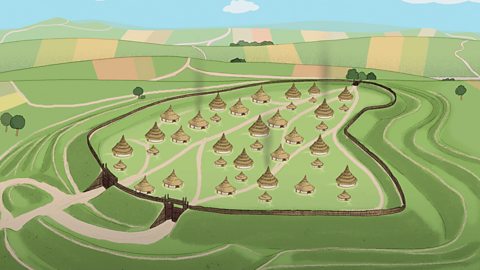
Hill forts. video
An animated introduction to Iron Age hill forts for primary pupils.
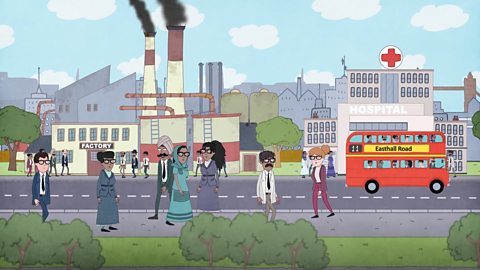
Migration. video
An introduction to migration for primary pupils, looking at how migration to and from the United Kingdom has changed over time.
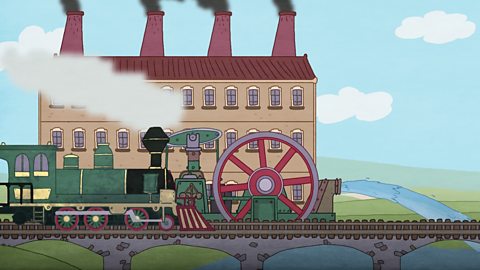
Industrialisation. video
An animated introduction to industrialisation for primary pupils.
Roman roads. video
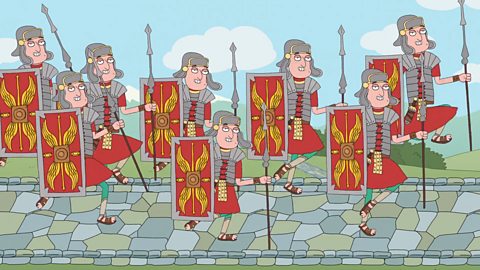
An introduction for primary pupils as to why and how the Romans built a network of roads in Britain.