STEPH MCGOVERN:Hello, I'm Steph McGovern, and I'm here to help you to get to grips with business studies.
STEPH MCGOVERN:Now, I've been reporting on finance and the economy for years and I've spent many, many hours meeting people in factories like this one, finding out how they work and how things are going.
STEPH MCGOVERN:It totally fascinates me and I'm hoping that you're going to be really interested in this too. So without further ado, let's get down to business.
STEPH MCGOVERN:Now, to succeed in business, you need to be flexible and responsive.
STEPH MCGOVERN:That great idea you had that you thought would be a massive success may not be working, and so you've got to be ready to assess the situation and adapt your plans and to basically act fast to fix things.
STEPH MCGOVERN:Here is a great example of that happening with the one time Dragon's Den star, Theo Paphitis. Here we find him helping a couple of café owners realise their dream. So I'll let him do the work, well, while I have a coffee break.
THEO PAPHITIS:People are always asking me, "Is this a good time to start a business?" And the answer is always, "Yes, as long as, of course, you do your homework."
THEO PAPHITIS:Londoner James Oarham, packed up his job as a consultant with Japanese food chain Wagamama and then moved his wife Becca and their young family to Gloucester. They've taken over Hedley's, a café just around the corner from Gloucester Cathedral.
BECCA OARHAM:We love Gloucester, we fell in love with Gloucester. Simple as that.
THEO PAPHITIS:So you didn't come to Gloucester because you thought, "This is a great place to have a business." You came to Gloucester because you fell in love with Gloucester.
JAMES OARHAM:Yes.
BECCA OARHAM:Yes.
THEO PAPHITIS:And what if Gloucester was a bad place to have a business?
JAMES OARHAM:While Gloucester may have had a couple of challenges over the last few years and it's–
THEO PAPHITIS:A couple of challenges?
THEO PAPHITIS:It's justBECCA OARHAM:We believe in Gloucester. It's on the up.
THEO PAPHITIS:I admire James and Becca's enthusiasm but three cafés have recently closed down in the same high street. Hedley's was already struggling when they took it over in January and they still have to add £3,000 a month in turnover just to break even.
THEO PAPHITIS:So tell me, how much did you actually pay to buy the business and the site?
JAMES OARHAM:A little bit over £300,000.
THEO PAPHITIS:Wow. Did you borrow that from the bank?
JAMES OARHAM:No, we had some savings and also we sold our house in London. We had some equity there so, we used those funds to buy the business.
THEO PAPHITIS:Putting your personal savings and your family home into funding a business is always a big risk, but my biggest worry is the location of the café.
JAMES OARHAM:You've got your Costas, your Neros, your Starbucks opening up all over the place so, you know, it is… Nobody's going to say it's easy on the high street for coffee at the moment.
THEO PAPHITIS:It's not easy on the high street but my biggest concern still remains, you need footfall this end of the high street, because if you don't you're going to end up like that and like that.
What's footfall? Well that's the number of people going back and forth and hopefully into your business.
THEO PAPHITIS:Hedleys simply isn't getting enough customers through the front door. They have to start turning a profit quickly, and they need to work out whether it's the pricing or as I think, the location, that's keeping the locals away.
THEO PAPHITIS:I've found my vocation.
THEO PAPHITIS:I've suggested that we head down to the busier part of town with a range of Hedley's homemade cakes and sandwiches. James and Becca think they offer something different to the other cafes in Gloucester. We want the locals to tell us what they're prepared to pay.
Yummy.
THEO PAPHITIS:What would you pay?
MALE GREY HOODIE:£6.50?
THEO PAPHITIS:£6.50.
BECCA OARHAM:Anybody waiting for a little slice of cake?
THEO PAPHITIS:There wasn't a bigger one.
FEMALE PINK CHECK SHIRT:5.99?
FEMALE QUILTED JACKET:7, 8 pound? 6, 7, 8 pound, yeah?
THEO PAPHITIS:This is what it's all about.
THEO PAPHITIS:The results are in and it turns out the public think James and Becca's prices are fair, but there's a theme emerging and as I suspected, it's the cafe's location that's putting people off.
MALE BLUE DIAMOND JUMPER:It's a bit out of town now.
FEMALE GREY SCARF:So I wouldn't really go to Hedley's normally because it's so far down.
THEO PAPHITIS:With the lunchtime rush over, it's time for some home truths.
THEO PAPHITIS:You are totally relying on people going to the cathedral for your customers and that's not going to make you any money.
JAMES OARHAM:And you're absolutely right, Theo, and you know, we're obviously going to do everything we can to try and get as many people down to Hedley's as you can but we're also thinking more widely.
JAMES OARHAM:We've got the first of quite a big corporate customer coming in to try and sell some sandwiches through to them.
THEO PAPHITIS:So for this to really work for you you need additional revenue streams.
JAMES OARHAM:We do.
THEO PAPHITIS:And stretching the brand, delivering corporate buffets, then it will work.
JAMES OARHAM:Yeah, it's going to be Hedley's across three or four dimensions.
THEO PAPHITIS:And without that, the dream is going to struggle.
JAMES OARHAM:Without that the dream will struggle I think, yeah.
THEO PAPHITIS:Time is critical. James and Becca have only got six months to turn this business around before they run out of cash. I'll be back to see if they make it until then.
STEPH MCGOVERN:So it sounds like James and Becca realised Theo was right about their location being a problem and decided on a plan to address the situation that could lose them all their savings. Let's see what happened next.
THEO PAPHITIS:It's only been six months since my first visit, but there's already been some very big changes to the Hedley's brand. An industrial kitchen, a team of sandwich makers, and a fleet of delivery vans. Business is booming.
JAMES OARHAM:We've really been expanding and growing the more commercial side of the business. So, you know, taking buffets out to businesses in the area, looking to develop some corporate customers and investing in this side of it.
JAMES OARHAM:It's a bit of early starting but yeah, making… Just making a lot of sandwiches actually is what we've been really focussing on.
THEO PAPHITIS:Unbelievably, James and Becca have bagged more than a hundred new catering contracts. Today, James is delivering to a national trust park in Cheltenham.
BECCA OARHAM:We really wanted a local supplier, someone who's really renowned for high quality 'cause National Trust, obviously you come expecting a really good piece of cake. And so we knew we needed someone really good and Hedley's have turned out to be a perfect match actually.
THEO PAPHITIS:I'm impressed. James and Becca have taken my advice to focus on outside catering but what about that quiet café that was draining their life-savings? When I last saw you, you had less than a year's worth of cashflow left.
JAMES OARHAM:Yeah.
THEO PAPHITIS:This thing had to work.
JAMES OARHAM:The café had a fantastic summer, ahead of expectations.
THEO PAPHITIS:And the weather was brilliant.
JAMES OARHAM:The weather was brilliant…
BECCA OARHAM:It was so busy we had to take on more staff to cope with how busy we've been.
THEO PAPHITIS:Does that mean that the café is now going to profit?
JAMES OARHAM:Yes.
BECCA OARHAM:Yes.
THEO PAPHITIS:Definitely, on its own two feet?
BECCA OARHAM:Yes. It was beyond all expectations how many customers were coming in.
THEO PAPHITIS:Brilliant.
BECCA OARHAM:It was amazing.
JAMES OARHAM:Because the business was very profitable over the summer we've been able to reinvest those funds in growing the business.
THEO PAPHITIS:So you haven't had to go to the bank to borrow more money?
JAMES OARHAM:We haven't had to go to the bank. Sales wise, it's been fantastic. I was looking at the last seven months, we're up 75%.
THEO PAPHITIS:75% growth?
JAMES OARHAM:75% sales growth.
THEO PAPHITIS:Has it been difficult? Because the biggest problem small businesses have is scaling up.
BECCA OARHAM:You know, there were times in the summer he was seven days a week, up at four, not back till ten o'clock at night. Everybody works really hard and that has been the biggest challenge It's seven days a week when it's your own business but we're proud of it.
THEO PAPHITIS:Wow, when I first met James and Becca I actually thought they were taking unacceptable risks. I actually thought, "Maybe they're betting the family silver."
THEO PAPHITIS:But you know what? They've done their homework, which goes to show, if you put the hours in, do the research, know your market, you will be successful.
Dragon Den’s Theo Paphitis interviews two café owners of Hedley’s, and assesses the relative importance of each element of the marketing mix - particularly location.
The market for cafés in Gloucester city centre is saturated, with several failed café plots for let.
Financial data on one café is given suggesting turnover must increase by £3000 to achieve break even.
The importance of location in the marketing mix is identified as Hedley’s café is some distance from the city centre and the impact on footfall (the number of passing customers) is analysed.
Theo organises a tasting session in the busiest part of Gloucester to see if price, product or location is more important in the café’s overall marketing mix.
Theo returns to Gloucester three months later to find that Hedley’s have changed strategy and branched out into outside catering; supplying high quality sandwiches to local shops and visitor attractions.
Expansion has been financed by reinvesting the profits of their city centre café. The owners explain the challenges of managing an expanding business and the long hours of work involved - sometimes seven days a week.
Teacher Notes
Key Stage 4
This short film could be used as a lesson starter to explore how underperforming businesses can adapt tactics and strategy to reach their objectives. Students could explore how different sources of finance can be used to fund further expansion. Are retained profits likely to be sufficient? Are there benefits in being a company and selling new shares, even if control is diluted? Are there opportunities for Hadley’s to become a franchise?
Curriculum Notes
This short film is suitable for teaching GCSE (KS4) / National 5 business.
Students and teachers over the age of 16 can create a free Financial Times account. For a Financial Times article about challenges of owning a coffee business from 2017, click here.
More Business with Steph McGovern:
Logistics, stock control and car manufacturing. video
James May visits Mini in Oxford to investigate 'just-in-time' logistics.

Lean car production. video
James May visits Nissan to investigate modern methods of production.
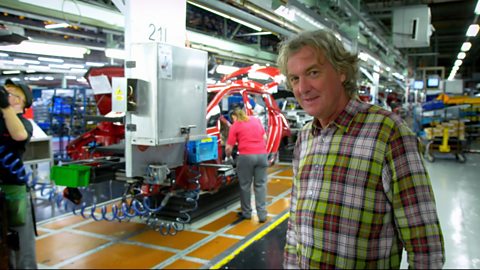
Market research and new car design. video
Exploring how Nissan uses market research to make design decisions.

The challenge of running a theme park. video
Declan Curry investigates business strategies used by Pleasure Island, a family owned theme park in Cleethorpes.

Kaizen - new ideas to improve productivity. video
How workers at Toyota come up with new ‘kaizen’ ideas every month.
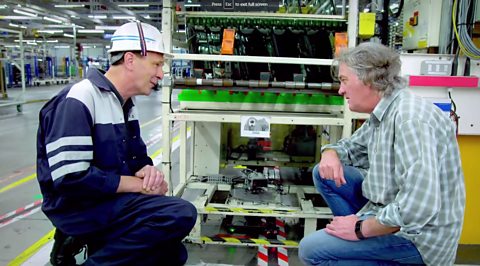
Robots and automation in car manufacture. video
James May finds out how dancing robots are used to make Minis.

The rise and fall of Sunny Delight. video
Evan Davies explores why Sunny Delight took the market by storm but soon faded away.
How to market a new cereal. video
How Kellogg’s use marketing to launch a new product.