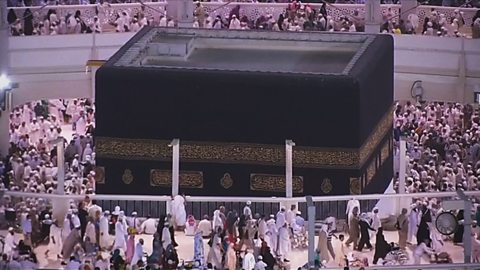
SARA: 12-year-old Kaisan goes to the East London Mosque with his dad. A mosque or an Arabic masjid is a Muslim place of worship. Every year 1.6 million peoplecome here to pray study or just hang out and learn more about Islam. During holy times like Ramadan some Muslims even sleep here.
Muslims male and female they'll go to pray five times a day. They go to the mosque to learn from the imam to learn the Qur'an to learn how to worship God to learn how to become human beings. We believe that the mosque is the heart of the community.
SARA: You won't find any pictures of God or the Prophet Muhammad in the mosque or holy shrine because images of their faces are considered disrespectful. But you will often find the most amazing Islamic architecture.
Mosques are so important they're even mentioned in the Muslim holy book the Qur'an. The Prophet Muhammad he said that whoever builds a mosque for God in this world then God will build for him a mansion in paradise.
SARA: Men and women have separate prayer halls at the mosque. At his mosque Kaisan prays with his dad in the men's section. During prayers everyone faces the qibla a niche in the wall pointing towards the Kaaba in the holy city of Mecca. There's a verse in the Qur'an which Allah says 'The whole world has been made a mosque for you.' So it's like if you're anywhere you can always pray.
Video summary
Twelve-year-old Kaisan visits the East London Mosque ("masjid" in Arabic) with his dad.
It's a place to pray, study, and learn how to be a good human being from the iman (holy man).
It is considered disrespectful to make pictures of God or the prophets in Islam, so mosques are decorated with patterns, calligraphy and stained glass.
Men and women have separate prayer halls, and they pray towards a niche in the wall that faces in the direction of Mecca.
This is from the series: My Life, My Religion - Islam
Teacher Notes
Find from the web some examples of mosques near to your school ('near' may mean 50 miles away in rural Yorkshire or in Cornwall for example, but this still makes the study more local).
Use web images and mosque sites to examine with the class what is similar and what is different between the large purpose-built East London Mosque in the clip and other local examples.
Most purpose-built mosques have a dome and a minaret, but all mosques have somewhere to wash, a Qibla wall to show the direction of Mecca, and space to bow and pray.
Pupils could use the similarities and differences exercise to compare a mosque to another place of worship - church, temple, Gurdwara or synagogue for example.
This is from the series: My Life, My Religion - Islam
These clips will be relevant for teaching Religious Education at KS2 in England, Wales and Northern Ireland and First and Second Level in Scotland.
Being a young Muslim. video
A young Muslim girl from London called Sara introduces herself, her Muslim faith and her family.

The Qur'an. video
Kaisan and Naeem share ways that the Qur’an makes a difference to their lives.
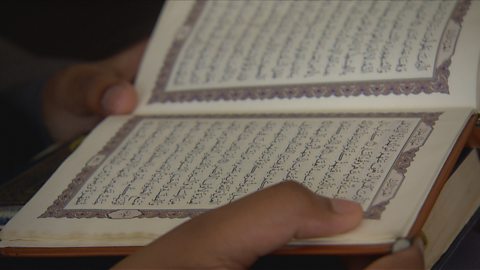
The washing ritual, 'Wudu' video
Before prayer, Muslims make sure they are clean, using the washing ritual - ‘Wudu’.
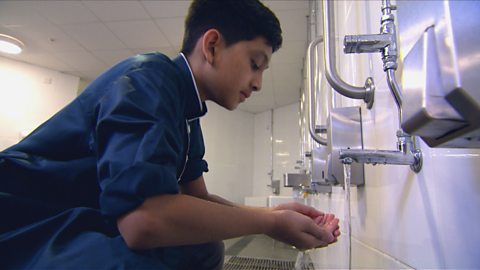
Prayer in Islam. video
Kaisan, a 12 year old British Muslim boy, explains how he prays five times a day, and says what it means to him in spiritual terms.

The Muslim pilgrimage, Hajj. video
Sara, aged 11, describes how the Hajj pilgrimage has an impact on Muslims.
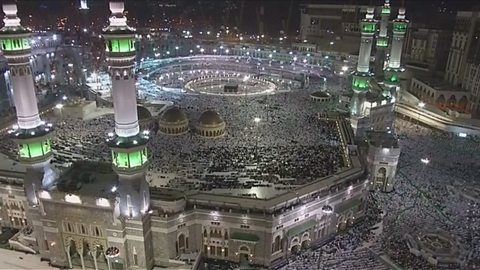
Ramadan and Eid ul Fitr. video
Sara, aged 11, explains why fasting is good: for devotion to Allah, for self discipline and for sympathy for the poor, explaining her religious practice.
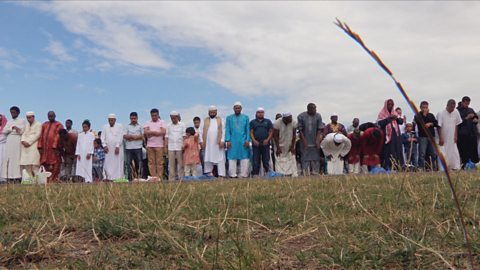
The Hijab. video
Sara, aged 11, has decided to start wearing the hijab as she begins secondary school. She explains why this matters to her and expresses her Muslim faith.
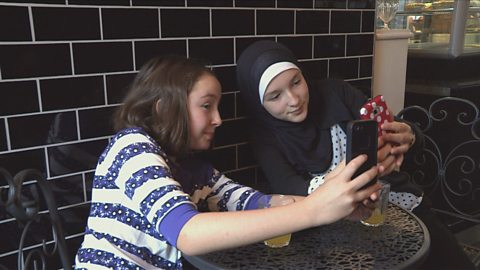
What is Islam? video
Young Muslim girl Sara gives a brief guide to the faith by describing the five Pillars of Islam: belief, prayer, giving, fasting and pilgrimage.