SARA: OK so we are off to school. Boring! This year is a big year for me. Jumper. I have moved up to secondary school with one of my best friends India. And I have started wearingthe Muslim headscarf the hijab all the time when I am out.
CLICKING
INDIA: Selfie!
It was a decision I made as part of my faith.
Do you not like that one no?
What was it like at first wearing the headscarf at first going to high school wearing it?
I was a little bit nervous but I guess every year seven is a bit nervous when they go to high school. It's just cos I was so different cos I was wearing a headscarf but… Yeah.
I remember when I first saw you coming in I knew who you were but I sort of forgot in the moment. "But not now I'm used to it.
SARA: The word hijab comes from the Arabic for veil. It describes headscarves worn by many Muslim women. When they pray some men also cover their heads and wear modest clothes that reach the knees. Wearing a headscarf kind of justshows that I'm proud to be a Muslim cos it's somethingthat I'm sacrificing. I'm like giving up like doing hair styles and stuff like that for my religion.
I've changed a lot this year. I think 12 will be my favourite age cos you're still like a little child but not a teenager yet. So I've changed a lot but I'm still pretty much the same person. Being Muslim is not just about believing in God it's also about being a good person. Like you can't just believe in God and not be a good person and then call yourself a good Muslim. You have to be a good person as well.
Nice meeting you.
Um…nice meeting you.
OK bye.
Bye!
Video summary
Sara describes making the decision to wear the hijab when she started secondary school.
She talks to her friend India about how it made her feel nervous, but they both soon got used to it.
Many Muslim women wear a hijab (the word means "veil"), symbolising modesty and respect for Allah, and many Muslim men dress modestly to pray too.
For Sara, it is a sign of commitment and pride in her faith.
This is from the BBC Series My Life, My Religion: Islam.
Teacher Notes
Children are often very interested in the outward symbols of Muslim dress, and the hijab is a prominent sign of identity in Britain today.
While good RE should make sure that many other larger questions about Islam are addressed too, pupils take an interest in this.
It's not a good plan to make 'what women wear' too strong a focus in this work on Islam, but note that for Sara, religious and personal reasons are explained well, and her own choice in the matter is rather to the fore.
These clips will be relevant for teaching Religious Education at KS2 in England, Wales and Northern Ireland and First and Second Level in Scotland.
Being a young Muslim. video
A young Muslim girl from London called Sara introduces herself, her Muslim faith and her family.

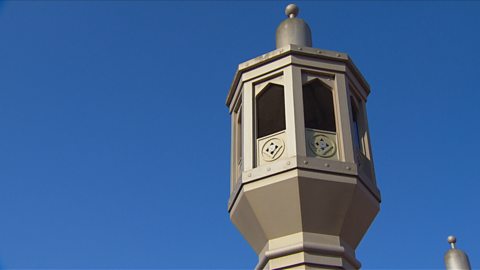
The Mosque. video
Kaisan, aged 12, shows us round the East London Mosque or Masjid, house of prayer.
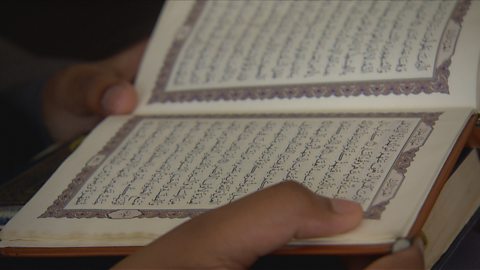
The Qur'an. video
Kaisan and Naeem share ways that the Qur’an makes a difference to their lives.
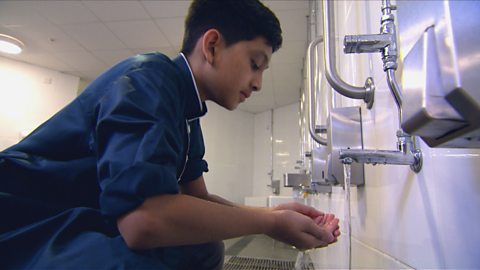
The washing ritual, 'Wudu' video
Before prayer, Muslims make sure they are clean, using the washing ritual - ‘Wudu’.
Prayer in Islam. video
Kaisan, a 12 year old British Muslim boy, explains how he prays five times a day, and says what it means to him in spiritual terms.

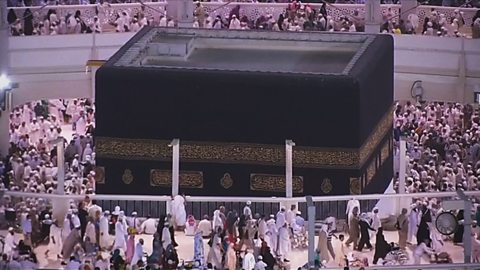
The Muslim pilgrimage, Hajj. video
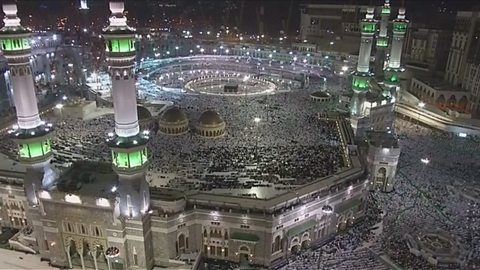
Sara, aged 11, describes how the Hajj pilgrimage has an impact on Muslims.
Ramadan and Eid ul Fitr. video
Sara, aged 11, explains why fasting is good: for devotion to Allah, for self discipline and for sympathy for the poor, explaining her religious practice.
What is Islam? video
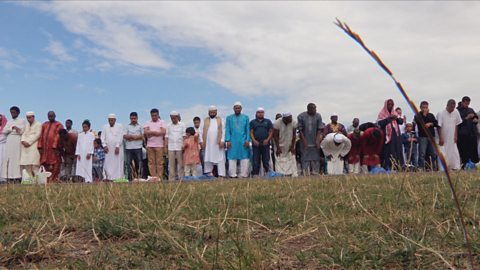
Young Muslim girl Sara gives a brief guide to the faith by describing the five Pillars of Islam: belief, prayer, giving, fasting and pilgrimage.