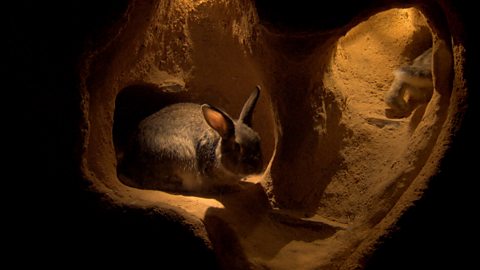
Chris Packham uses a man-made burrow to investigate water voles, which are one of the rarest burrowing animals in the UK and an endangered species.
He explains how they like to spend a lot of time in the water and that their burrows can sometimes be seen in the muddy banks of rivers.
He also describes how they have built defence features into their burrows, like underwater entrances and swamped U-bends, to protect them from predators.
Baby water voles (pups) are born underground, but at 14 days, they must learn to swim.
Chris explains how the waterproof fur enables them to dry quickly and that, unlike other aquatic mammals, water voles do not have webbed feet.
When the water voles are outside, they stay out of sight of predators in covered runs, hidden under the long grass.
This clip is from the series The Burrowers.
Teacher Notes
You could ask the class if they can name any endangered species and/or ones that are now extinct?
Do they know of any endangered species here in the UK?
You could get the class to produce posters or leaflets that focuses on an endangered species and what is being done to conserve them.
Curriculum Notes
This clip is relevant for teaching Science at KS1 and KS2 in England, Northern Ireland and Wales and at Early and 1st Level in Scotland.
More from The Burrowers:
How do badgers keep clean? video
Chris Packham uses footage from a man-made badger sett to explore how badgers overcome various challenges to clean themselves underground.
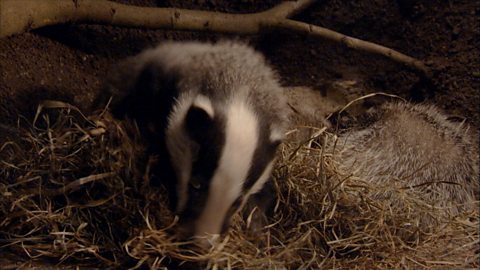
How do badgers live underground? video
Chris Packham investigates how badgers live in family setts underground that are distributed across their territory.
How have moles adapted to live underground? video
Chris Packham observes moles in a man-made burrow and explores the ways that they are adapted for life underground.
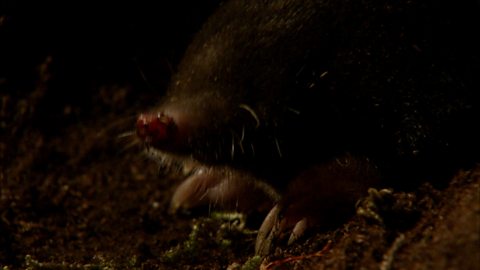
How do rabbit babies live underground? video
Chris Packham visits a man-made rabbit warren to observe rabbits being born and explore how they adapt to life underground.
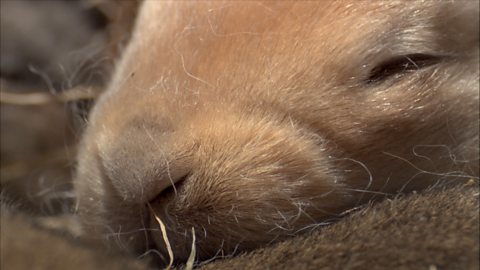
What is a rabbit warren like? video
Chris Packham investigates a deserted rabbit warren that has been filled with concrete to show its shape and structure.