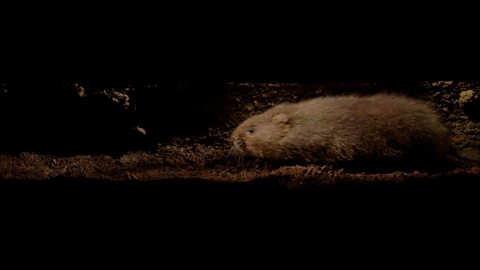
Chris Packham describes how badgers know their place within the family hierarchy.
Badgers spend a lot of time grooming themselves and each other.
Scratching helps to remove parasitic insects, including fleas.
The fleas feed on the blood of the badger and lay their eggs in the badgers’ bedding.
The badgers change their bedding very frequently, scattering the old bedding widely and bringing in new material that is soft and warm.
Bringing in fresh green wild garlic probably helps to deter fleas.
This clip is from the series The Burrowers.
Teacher Notes
You could begin by asking your class what they do to keep clean, and how often they change their clothes.
What would happen if they didn’t do this?
How do they think that animals keep themselves clean? What do they know from watching their own pets at home?
After watching the clip, you could ask them to describe what they found most surprising about the ways that badgers keep clean.
Curriculum Notes
This clip is relevant for teaching Science at KS1 and KS2 in England, Northern Ireland and Wales and at Early and 1st Level in Scotland.
More from The Burrowers:
How do badgers live underground? video
Chris Packham investigates how badgers live in family setts underground that are distributed across their territory.
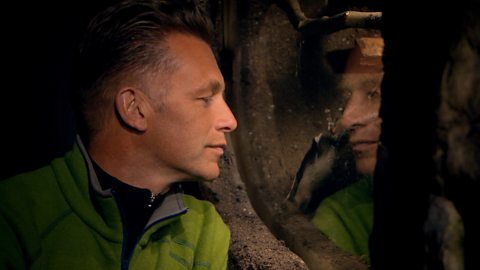
How have moles adapted to live underground? video
Chris Packham observes moles in a man-made burrow and explores the ways that they are adapted for life underground.
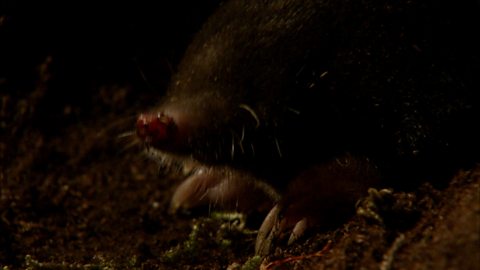
How do rabbit babies live underground? video
Chris Packham visits a man-made rabbit warren to observe rabbits being born and explore how they adapt to life underground.
What is a rabbit warren like? video
Chris Packham investigates a deserted rabbit warren that has been filled with concrete to show its shape and structure.
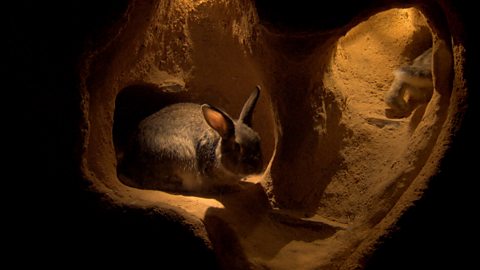
How have water voles adapted to live near the water? video
Chris Packham investigates how water voles have adapted to live in and near to the water.