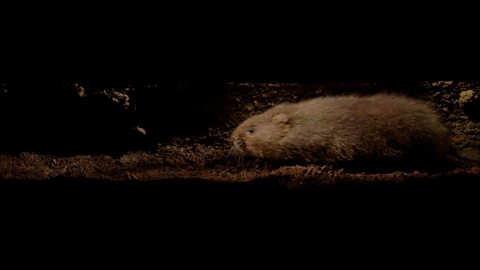
Chris Packham uses a man-made burrow to observe the ways that moles have adapted for life underground.
He explains how they require less oxygen than other mammals and, though they have poor eyesight, their sensitive noses and tails are used to feel underground.
Their hands and feet are also well adapted for digging.
Chris observes seals and describes how they also have their forelimbs on the sides of their body to help them push through water, much in the same way that moles push through the soil.
An expert helps Chris to interpret skeletons from a seal and a mole to investigate the similarities in detail.
This clip is from the series The Burrowers.
Teacher Notes
You could start by asking the class what they know about moles. Where do they live? What do they eat? What makes moles good at living underground?
After viewing the clip, you could ask the class what surprised them the most about moles?
Ask them what moles and seals have in common, for example, they are both mammals.
Curriculum Notes
This clip is relevant for teaching Science at KS1 and KS2 in England, Northern Ireland and Wales and at Early and 1st Level in Scotland.
More from The Burrowers:
How do badgers keep clean? video
Chris Packham uses footage from a man-made badger sett to explore how badgers overcome various challenges to clean themselves underground.
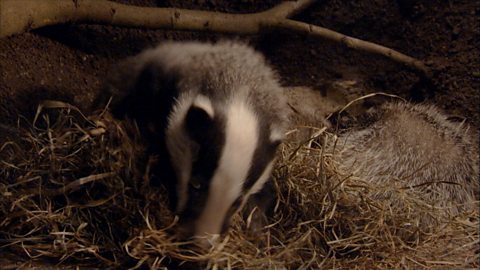
How do badgers live underground? video
Chris Packham investigates how badgers live in family setts underground that are distributed across their territory.
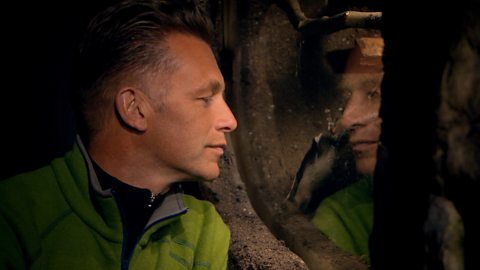
How do rabbit babies live underground? video
Chris Packham visits a man-made rabbit warren to observe rabbits being born and explore how they adapt to life underground.
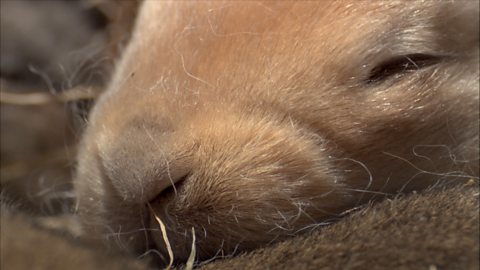
What is a rabbit warren like? video
Chris Packham investigates a deserted rabbit warren that has been filled with concrete to show its shape and structure.
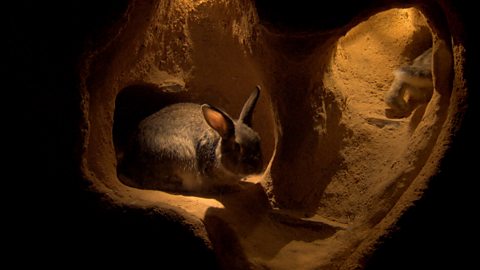
How have water voles adapted to live near the water? video
Chris Packham investigates how water voles have adapted to live in and near to the water.