Chris Packham investigates a deserted rabbit warren that has been filled with concrete to show its shape and structure.
He meets a scientist who describes the complexity of the warren, including a 'rabbit roundabout'.
Tunnels can be used to escape from predators.
Footage taken inside a specially constructed warren is then seen and dominance hierarchies are referred to.
Chris explains that overcrowding results in some rabbits having to leave to find new places to live.
This clip is from the series The Burrowers.
Teacher Notes
Ask students to share in groups what they know about rabbits and how they live in the wild. Do they live alone or in groups? Where do they live?
After watching the clip, the students could create Plaster of Paris casts of footprints in mud or damp sand in order to investigate the scientific techniques being used to study rabbits.
Curriculum Notes
This clip is relevant for teaching Science at KS1 and KS2 in England, Northern Ireland and Wales and at Early and 1st Level in Scotland.
More from The Burrowers:
How do badgers keep clean? video
Chris Packham uses footage from a man-made badger sett to explore how badgers overcome various challenges to clean themselves underground.
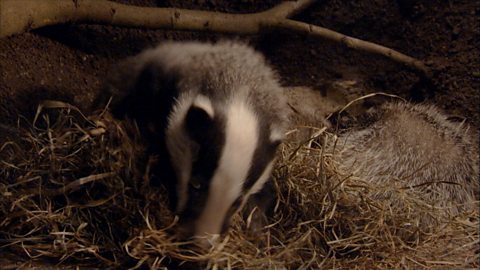
How do badgers live underground? video
Chris Packham investigates how badgers live in family setts underground that are distributed across their territory.
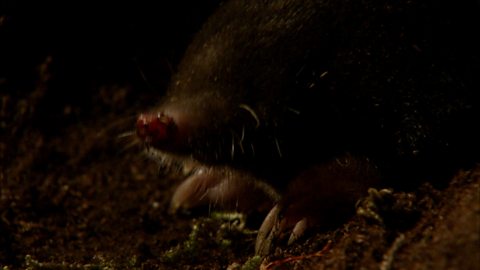
How have moles adapted to live underground? video
Chris Packham observes moles in a man-made burrow and explores the ways that they are adapted for life underground.
How do rabbit babies live underground? video
Chris Packham visits a man-made rabbit warren to observe rabbits being born and explore how they adapt to life underground.
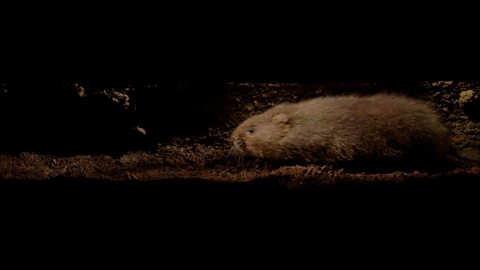
How have water voles adapted to live near the water? video
Chris Packham investigates how water voles have adapted to live in and near to the water.