FERGAL:
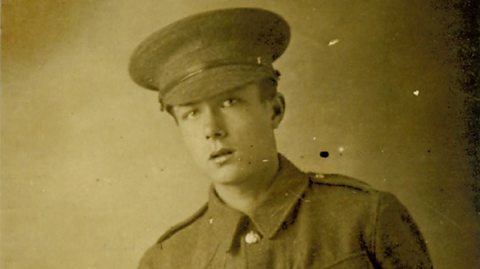
St John Battersby was brought up here in Blakely on the outskirts of Manchester. In fact, is father was the first vicar of this parish.
ANTHONY BATTERSBY:
He ran away from home just after the outbreak of the war, because his mother had died and he wanted to go into the army. His father was horrified. Not that he had joined the army, but that he had joined it as an ordinary soldier. He clearly felt his son should be in the army as a leader.
FERGAL:
Commensurate with his father’s social position.
ANTHONY BATTERSBY:
Yes.
FERGAL:
And his father of course intervenes. And we know that because there is a reference here seeking support from the Mayor of Manchester.
ANTHONY BATTERSBY:
And the headmaster of Middleton Grammar School. And they both say this boy would make an excellent officer. Little white lie along the way.
VOICE OVER:
It succeeded. 14 year old St John Battersby was commissioned as a Second Lieutenant.
After spending nearly a year in training back home, St John finally arrived in France in the spring of 1916, as the allies were planning a massive offensive at the Somme.
ANTHONY BATTERSBY:
So they were put on a train, and he describes how this train came to the end of the line in the middle of a field. Surrounded by ammunition boxes. There’s my dad, 16 years old, really in the war. He is responsible for 30-odd men and his decisions may result in them dying or not dying.
PETER DOYLE:
We have very little understanding of what it was like to be an officer, and particularly a junior officer. These were men who had to lead from the front. They were men who were distinguishable by dress. So every time an officer went out they would be in danger. Therefore the casualty rates amongst junior officers was the highest. These men were difficult to replace, and so you have this incredible situation where you might have a 16 year old in charge of men in their thirties, even forties.
VOICE OVER:
The first time St John Battersby had to lead his men over the top turned out to be on the deadliest day in British military history.
On July 1st 1916, the first day of the battle of the Somme, 20,000 British soldiers died under a hail of artillery and machine gun fire.
FERGAL:
What happens to your father when he goes over the top?
ANTHONY BATTERSBY:
He said that he came out of the trench and was advancing with machine gun fire coming from his right. He said he could see the fire sweeping the field, he could see men falling before him. And just as the machine gun arrived and hit him it jammed and stopped firing.
ANTHONY BATTERSBY:
He took a number of bullets in the hip .
FERGAL:
This 16 year old can see the machine gun fire coming towards him and he keeps walking towards it.
ANTHONY BATTERSBY:
Yeah.
FERGAL:
It’s hard to conceive of that.
ANTHONY BATTERSBY:
The vast majority of the – of the battalion just simply disappeared.
This land is just full of dead people.
VOICE OVER:
The battle of the Somme raged on until November 1916.
FERGAL:
Three months after he was shot on the Somme, sixteen-year-old St John Battersby was back on the front line.
He was barely two miles from where he’d been wounded.
ANTHONY BATTERSBY:
He’s under a bridge across the trench, and a shell landed on top of it.
One was killed outright, one had both his legs blown off. My father had his left leg seriously damaged. Probably by something like that. That on its own would sever a leg. Four weeks later, he had the leg amputated.
VOICE OVER:
‘To Secretary War Office, Sir. I am in receipt of your letter informing me that there is no alternative but to relinquish my commission owing to ill health. As I am only an amputation case I could do almost any home service duties. I would wish to remain in until the end of the war, if possible. Your obedient servant, R St John Battersby.’
ANTHONY BATTERSBY:
He stayed in until September 1920.
VOICE OVER:
After the war, St John Battersby became the vicar of Chittoe, a quiet parish in the west country. But the war never left him.
ANTHONY BATTERSBY:
In the hour or two before he died, he was on the Western Front, yelling, shouting orders, ‘the Bosch are coming. We’re going over the top now.’ Right down deep on the ground floor of his memory was the Western Front.
Video summary
St John Battersby, the son of a vicar from Blakeley in north Manchester, joined the army against his father's wishes when he was only fourteen.
Appalled that his son would serve only as a private, his father allied with the boy's headmaster to get St John promoted to the rank of second lieutenant.
St John was posted to the Somme in 1916 where he was responsible for leading men more than twice his age into the biggest offensive of the war: an offensive which saw him injured on the first day and put out of action for two months.
Shortly after returning to action, he was the victim of a shell attack and had to have a leg amputated. Although this injury forced him to relinquish his commission, he offered to remain in the army and help with the war effort in whatever way he could.
The film also includes a short section which explores St John's life after the war, when he left the army to became a vicar but found it hard to separate himself from the memories of life on the front line.
Contains images which some viewers may find upsetting. Teacher review recommended before using in class.
This film is part of the series Teenage Tommies.
Teacher Notes
Pupils could consider the reasons why a boy as young as St John was so keen to join the army, reflecting on how this differs from their own experiences as teenagers.
The clip refers to the dangers officers faced when serving close to the front line. Pupils could be asked to consider why this might have been the case.
This clip will be relevant for teaching history. This topic appears in OCR, Edexcel, AQA, WJEC KS4/GCSE in England and Wales, CCEA GCSE in Northern Ireland and SQA National 4/5 in Scotland.
Aby Bevistein. video
Aby Bevistein, an émigré from Eastern Europe, joined the Middlesex Regiment in September 1914 aged only 16.
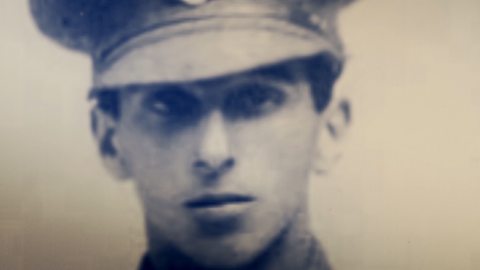
Cyril Jose. video
Cyril Jose joined the Devonshire Regiment, even though he was only 15 years old.
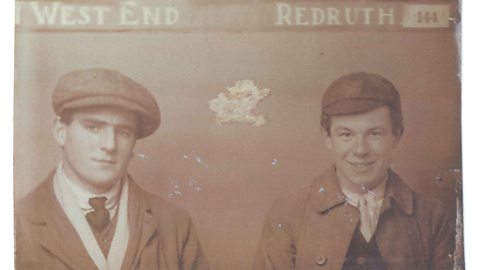
Ernest Steele. video
Ernest Steele volunteered to fight for his country in late 1914, even though he wasn't yet nineteen.
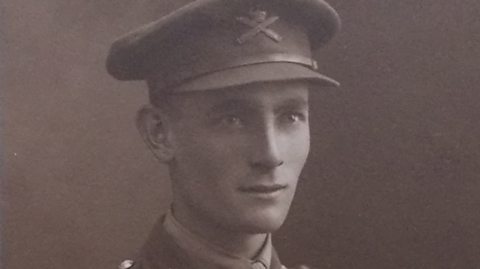
Horace Iles. video
Horace Iles was travelling on a Leeds tram when a stranger presented him with a white feather, even though he was only fourteen years old.