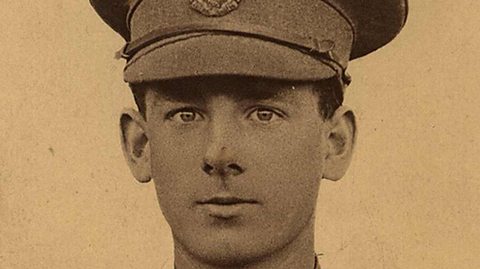
VOICE OVER:
After leaving school at 13, Horace Iles started work as a blacksmith’s apprentice. A year later, he volunteered.
FERGAL:
He was two years younger than you. You’re his great grandnephew.
WILLIAM ILES:
Yeah.
WILLIAM ILES:
When he left school he was 13. I mean, I would have been in year nine. I was tiny back then - I don’t know how in one year he could have passed for an 18 year old.
TREVOR ILES:
One of the reasons why he joined was he was handed a white feather on the tram. Which was quite a prevalent practise, particularly from mothers and grandmothers whose - their children, boys that had joined up.
FERGAL:
Was that suggesting he was a coward?
TREVOR ILES:
It – that was the suggestion.
FERGAL:
I mean, he was only 14.
TREVOR ILES:
Yeah.
FERGAL:
What do you say, ‘I’m too young, I couldn’t fight?’ A minute later he’s up here on the moor joining up.
After 18 months training, Horace Iles was sent to the Western Front in 1916. Some of the original trenches where Horace served near the Somme river still exist.
But what would it have been like for 16 year old Horace once he found himself in a trench for the first time?
ROD BEDFORD:
Even before you arrive you’re going to be passing behind you the cemeteries in their great numbers. The dead stacked behind this trench. And you may look out into no man’s land and see the dead men already out there.
The stench of these trenches, the smell of the cordite, the rumbling guns. Suddenly, it’d be your turn.
VOICE OVER:
Horace’s turn was to come quickly enough. On the 30th June he was one of 600,000 soldiers waiting to go over the top the following day as part of a massive allied offensive on the Somme.
As Horace waited for his turn to go over the top, there were no allowances for youth.
ROD BEDFORD:
If we were in this trench now, going over the top, the old soldier will say to the youngster, ‘follow me, my lad, I’ll see you through it.’ If I’m the first up that assault ladder, the machine gun hasn’t yet started to strafe the trench. If I’m going up the third or fourth man out that trench, the machine guns are now tapping into these sandbags. And I could cop it in the chest or the head.
And you know who’s going to go and get it don’t you? It’s going to be the 16 year old, isn’t it?
Letter to Horace from his Sister:
‘My dear Horace, just a line or two. I’m so glad you are all right so far, but I need not tell you what an anxious time I am having on your account.’
‘We did hear that they were fetching all back from France under 19. For goodness sake Horace, tell them how old you are. I’m sure they will send you back if they know you are only 16. If you don’t do it now you’ll come back in bits and we want the whole of you. Just remember I am always thinking of you and hoping for your safe return.’
WILLIAM ILES:
‘Your loving sister, Florrie.’
The problem with it though, is by the time it got sent over there he was already dead. So she was returned – she was sent back the unopened letter with just ‘Killed in Action’ written at the top.
I’ve read somewhere that he was left out there for a year.
VOICE OVER:
July 1st 1916 was the bloodiest day in British military history. 20,000 men - and boys – died.
VOICE OVER:
‘For Horace and all the Leeds Pals, may you all rest in peace knowing you’re not forgotten and have our gratitude. From four Leeds Pals.’
WILLIAM ILES:
I’m happy for who he was. And grateful for what he did and that’s all I really can do.
Video summary
In the early years of the World War One, it was not unusual for women to present young men with a white feather as a suggestion that they were too cowardly to volunteer for service.
Horace Iles was travelling on a tram in Leeds one day when a stranger presented him with a white feather, even though he was only fourteen years old. He subsequently gave up his apprenticeship with a blacksmith and enlisted in the army.
After eighteen months of training, he was posted to the Somme, a quiet region in France which was about to become the focus for the biggest offensive of the war.
Horace’s sister was desperately concerned for her brother and wrote a letter begging him to admit his age and return home. The letter was returned to her unopened, with a stamp indicating the recipient had been killed in action.
Horace had been one of the nineteen thousand fatalities on the first day of the Somme, the bloodiest day in the history of the British army.
Contains scenes that some viewers may find upsetting. Teacher review recommended before using in class.
This film is from the series Teenage Tommies.
Teacher Notes
This clip could be used along with examples of early propaganda posters as part of an inquiry into methods used to persuade young men to sign up to join the armed forces in the first months of the war.
As part of this task, pupils may wish to consider why someone would present Ernest with a white feather, even though he was so young.
This clip will be relevant for teaching history. This topic appears in OCR, Edexcel, AQA, WJEC KS4/GCSE in England and Wales, CCEA GCSE in Northern Ireland and SQA National 4/5 in Scotland.
Aby Bevistein. video
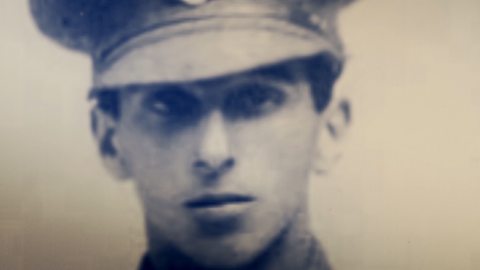
Aby Bevistein, an émigré from Eastern Europe, joined the Middlesex Regiment in September 1914 aged only 16.
Cyril Jose. video
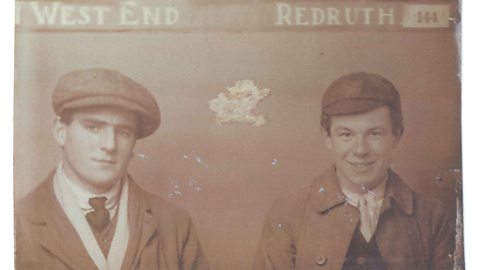
Cyril Jose joined the Devonshire Regiment, even though he was only 15 years old.
Ernest Steele. video
Ernest Steele volunteered to fight for his country in late 1914, even though he wasn't yet nineteen.
St John Battersby. video
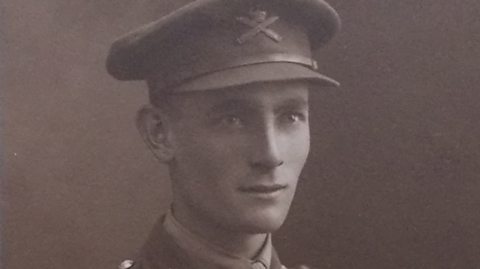
St John Battersby, the 14-year-old son of a vicar from Blakeley in north Manchester, signed up to join the army against his father's wishes.