De-Graft visits a nature reserve in Scotland to explore the importance of peatland and wetland habitats.
De-Graft: This is the Red Moss of Balerno reserve where I’m exploring what are known as wetlands. Locals and tourists come here for walks and take in the scenery, and the birds love it too… Ooh I’ve spotted some!
Wetlands such as swamps, marshes, or bogs, are areas where the ground is saturated, or full of water, and doesn’t drain properly.
Bogs mainly consist of a plant called moss. Later locals Aarya and William are going to be getting a close up look at the moss here with me. But first, let’s zoom out.
The Red Moss of Balerno reserve is in the Lothians in Scotland, just south of the country’s capital city, Edinburgh. 60% of the UK’s bogs or peatland is in Scotland, a lot of which is in the very north, or the Highlands, of Scotland.
The Red Moss of Balerno is one of only twenty raised peat bogs still surviving in this part of Scotland called the Lothians. The ground is wet and uneven so peatland reserves have created boardwalks like this to provide access.
Bogs form in cool places with plenty of rain. Moss is able to grow in low mineral conditions, it doesn’t rot away but builds up to form deep layers which is called peat. Bogs like this one have been growing for thousands of years, with the layers of peat growing just millimetres per year to now make up a bog that’s several metres deep.
Peatlands are important habitats and home to a lot of wildlife including rare species of water birds and incredible little insects such as jewel beetles, dragonflies and heath butterflies.
Peatland is really important for our planet: It helps prevent flooding by absorbing water from rainfall. It’s a great source of drinking water and it locks in carbon and keeps it from damaging the environment.
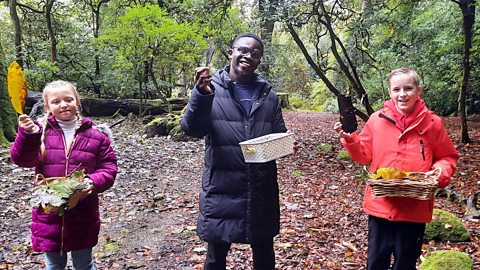
Aarya and William are with me at the reserve helping to investigate a bit more. We’re using magnifying glasses to zoom in and look at the moss.
We’ve got some red moss.
So guys, despite the wet weather, I still think this place looks incredible, what do you two make of it?
Child: I think it’s just magnificent.
Child: All the nature looks really pretty.
De-Graft: Yeah, absolutely and it feels really peaceful out here.
Now we’ve been using our magnifying glasses to see what we can spot out here. What kind of things have you guys found?
Child: Really pretty pink flowers and they were all around the place.
Child: Saw a lot of mushrooms, saw one big one!
De-Graft: Yeah, I spotted that too!
Now sadly in the past, and in some places today, peatlands are destroyed and burned to make room for housing and trees. But when this happens a greenhouse gas called carbon dioxide is released into the atmosphere. That carbon dioxide has been locked away in the moss for thousands of years, but when it’s released it can be very harmful to the environment. Alright, big question for you guys, have you got any ideas about how we can protect peatland areas like this?
Child: Maybe not walking on the plants. You could look around and not destroying it and keeping it clean.
Child: Raise awareness and put banners or posters around to keep the peatlands safe.
De-Graft: Yeah, that’s great!
OK, time to compare… One of the best examples of peatland in the UK is an area of blanket bog called The Flow Country in the very north of Scotland. It’s 4000 kilometres squared. If you put the UK capital cities - London, Edinburgh, Cardiff, and Belfast - all together, they would cover an area only half the size of the Flow Country.
So we’ve found some really interesting types of moss here but moss doesn’t just grow in nature reserves and bogs, it can be found all over the UK. So why not try to find some near where you live. Zoom in and have a look for yourself.
Come on then, let’s go explore some more.
Video summary
Download/print a transcript of the video.
De-Graft visits the Red Moss of Balerno nature reserve in Scotland to consider the importance of peatlands and wetlands.
The Red Moss of Balerno is a wetland or bog - an area where the ground is saturated and the water doesn’t drain away. Most of the UK's bogs (60%) are in Scotland and the moss that grows in bogs forms a layer of peat.
De-Graft explains how peat-lands are important habitats and home to lots of wildlife, including many rare species of waterbirds and insects. Peatland is also important as it helps prevent flooding by absorbing water from rainfall and it locks in carbon, thus reducing the causes of climate change. So it is vital to conserve peatlands and other wetlands.
Teacher Notes
Download/print the Teacher Notes for this episode (pdf).
Teacher Notes prepared in partnership with the Geographical Association.
Questions to consider:
- What is a wetland area? Where might they be found?
- What kind of wildlife can you find out about that exists in wetland areas?
- Where have you spotted moss before? What was it like? Can you describe it?
- Why do you think peat-lands are important? What are the benefits of peatlands?
- How does it make you feel hearing that peat-lands have been burned down in the past and are sometimes destroyed still today?
- How do you think climate change might be affecting peatlands?
- What ideas do you have about how we can look after the UK’s wetland areas?
Suggested activities to further explore learning:
1. Build a mini wetland or bog garden in your school
Use the instructions from the Wildlife Trust to utilise a poorly-drained area of your school grounds to make a bog garden.
Remember to avoid buying peat-based compost to use in your garden or bog.
2. Endangered habitat research
- Pupils could search news websites or online newspapers to find out about another endangered ecosystem or habitat in the world that’s in the news today, and make a report about it to present to classmates.
- Pupils could draw the key characteristics of their environment case study.
- Encourage them to find the habitat’s location on a world map.
- Pupils should think about questions like: what’s the problem; why is it happening; what could help/are there any practical solutions; and why is it important to care and do something?
- Once pupils have shared their investigations with the class they could discuss whether there are any common problems or issues, and how this makes them feel.
This task touches upon curriculum guidance about engaging with news and looking at geography stories that are in the media. Encourage children to consider what positive steps they and others can take to preserve the oceans to ensure this activity leaves them feeling empowered rather than anxious. This short film profiles a young conservationist called Georgie, who utilising her scuba diving and photography skills to inform marine management. This Bitesize Careers page offers students profiles of other jobs in conservation.
3. Go on a moss hunt
- Moss doesn’t just grow in reserves and bogs, you can find it all over the UK in rural and urban areas. Pupils could take a trip to a local woodland or nature reserve area and use magnifying glasses to get a close-up look at all the different types of moss and all the places it grows.
- Pupils could have a clipboard and a piece of paper with circles drawn on for them to then sketch what they’ve seen through their magnifying glass onto the circles on their piece of paper, doing annotations of the textures, colours, and any insects spotted.
- Pupils could use a compass to see whether moss growing on vertical objects such as posts, walls, gravestones and trees tend to do so facing a particular direction (this is usually north-facing as conditions stay damper due to receiving little or no direct sunlight).
- Alternatively, if not possible within school time, this is something pupils could be encouraged to do with a parent/guardian or family member during their own time outside of school and they could bring in photos or drawings of their findings.
Key terminology:
Bog – areas where the ground is saturated or full of water and doesn’t drain properly. Bogs form in cool places with plenty of rain.
Carbon Dioxide – Otherwise known as C02. It’s a greenhouse gas that’s linked to global warming.
Carbon sink – carbon that is stored in living or dead plant and animal cells and not in the form of carbon dioxide within the atmosphere.
Conservation – protecting a natural environment, often to make sure species of animals or plants are not harmed.
Flooding – the overflow of water onto land that is usually dry.
Flow Country – found in the far north of Scotland, it is the most intact and extensive blanket bog in the world.
Greenhouse gas – gas that traps escaping heat from the earth and rather than releasing it into space, keeps our planet warm and contributes to global warming.
Habitat – a place that an animal lives, where it finds food, water, and shelter. There is a huge range of habitats across the planet, from deserts to rainforests.
Marsh – type of grassy wetland that is rich in minerals.
Moss – Moss is a type of plant able to grow in low mineral conditions. It doesn’t rot away but builds up to form deep layers which is called peat.
Nature reserve – a protected area where removing or destroying nature is not allowed. Often nature reserves are open to the public to enjoy and appreciate the scenery and wildlife.
Peat-lands – an area formed over thousands of years that’s made up of peat, which is a type of soil that forms in wet ground that doesn’t drain properly.
Swamp – a type of wetland with trees.
Wetlands – areas where the ground is full of water and doesn’t drain properly. Different types of wetlands include swamps, marshes, and bogs.
Suitable for teaching geography at KS2 in England and Northern Ireland, Progression Step 3 in Wales and 2nd level in Scotland.
Food, farming and agriculture. video
Exploring farming and agriculture - a key UK industry. Includes arable, pastoral and mixed farming and examples of rural and urban farms.
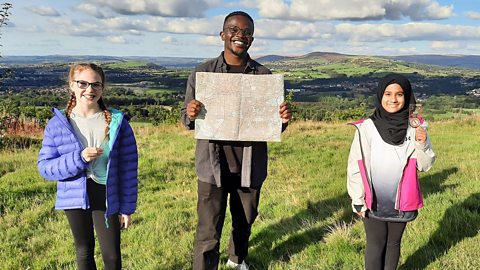
UK settlements and navigating using maps. video
Exploring the different types of settlement in the UK - including villages, towns and cities - and how to navigate using maps, including symbols, compass points and co-ordinates.
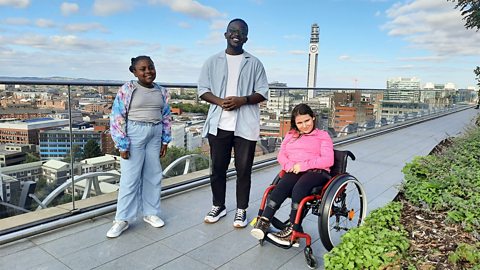
Urban settlements - living in a city or megacity. video
Exploring key aspects of cities and megacities - building use, population density, environmental impact and sustainable choices.
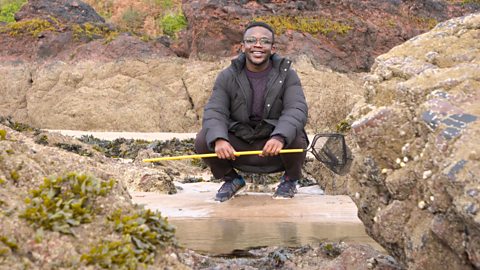
Coasts and sustainable use of natural resources. video
Examining a coastal region of North Wales, including a local wind farm and examples of the sustainable use of natural resources.
Rivers - the course of a river from source to mouth. video
Exploring the key aspects of rivers - the source, tributaries, streams, meanders, ox-bow lakes, river mouth and estuary.
Mountains - how tectonic plates create mountain ranges. video
Exploring how tectonic plate movement creates mountains where the plates collide and single peaks formed by volcanoes.
Lakes, lochs, reservoirs and the water cycle. video
Visiting Lake Windermere to consider lakes, lochs and reservoirs and their place in the water cycle.
Forests - deciduous and coniferous woodland and biodivsity. video
Exploring a forest region in the Lake District to discover the rich biodiversity of woodland habitats.
Shore, coast and ocean. video
Visiting a marine reserve in Scotland to discover the biodiverse habitat it offers, but also the importance of conservation.