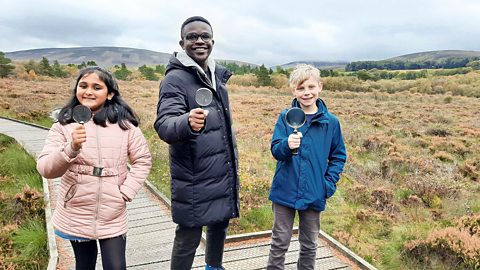
De-Graft explores food and agriculture in the UK - including a visit to an urban farm.
De-Graft: Farming, or agriculture, is a massive industry in the UK. In fact, over 70% of land here is used for farming. And that ranges from growing crops, like vegetables and plants, to keeping animals big and small - like bees!
Farming is all about harvesting and using natural resources. And in this case it’s collecting honey from a bee hive.
Later locals Ethan and Aicha are going to be helping me plant some vegetables and learning a lot me about farming. But first, let’s zoom out.
We’re in Manchester, which is an urban environment. Farming typically happens in more rural environments across the UK. In places like County Antrim, Northern Ireland the rocky and hilly landscapes, which usually have less fertile soils, are best for farming livestock such as sheep. While in counties like Norfolk and Suffolk in the East of England there’s lots of flat and fertile land which is good for growing crops like wheat.
Different regions are better suited for different types of farming because of the climate, soil, and topography (the shape of the land). There are three main types of farming: Arable farming, which means growing crops like vegetables and wheat. Pastoral farming, which means raising animals for things like meat, wool and dairy products. And mixed farming, which means growing crops and keeping animals.
In other countries farming can look quite different from farming in the UK, like growing rice in China or coffee farming in Central America.
Farming helps feed the population. Sometimes produce will be sold straight into shops or supermarkets, and sometimes crops will be processed or turned into something else first like potatoes into crisps, or wheat into flour. Intensive farming is when farming is done in a way to maximise the produce that is harvested, often by using fertilisers to boost the soil’s nutrients or pesticides to kill off insects that eat crops. Some people prefer organic farming, which means producing food without the use of chemicals.
I've met up with Manchester locals Ethan and Aicha to plant some vegetables at an urban rooftop farm.
So guys, when you walked in, what did you think of this place?
Child: I thought it was a bit nice because I’ve never seen a place like this before. I was thinking that it was pretty beautiful actually.
Child: Like a big huge garden, because of all the plants around here.
De-Graft: Yeah, it is like a big huge garden. And what are some of the things that you think could make farming a bit difficult?
Child: The rain because the soil can get all soggy.
Child: Finding the right places to dig.
De-Graft: Good suggestions, guys. There are lots of factors that can affect farming such as the weather and soil type. Farming can involve using heavy machinery too, which can be hard work and costs a lot of money. But farming doesn’t have to be on massive plots of land with massive machines. But actually you have places like this called urban farms that you guys can get involved in.
Let’s hear from an expert. Jo is an urban farmer in Manchester – so what is an urban farm?
Expert: Urban farms allow people to support their local economy, to get in touch with their food and where it comes from and to shop seasonally. It’s all about growing produce in an environment, like a city centre, that is different to traditional countryside farming.
De-Graft: OK, time to compare… There are roughly 173,000 square kilometres of farmland in the UK – that's an area nearly the same size as the whole of Austria, Switzerland and Slovakia combined!
Where’s the nearest farm near you? And what does it look like? Zoom in and take a look for yourself.
Right, guys, I think it’s time for us to finally water our plants. Let’s go!
Video summary
Download/print a transcript of the video.
This film explores farming and agriculture in the UK - one of the UK’s major industries.
De-Graft is in Manchester, finding out about beekeeping at an urban farm. There are different types of farming – arable, pastoral, and mixed farming - and different areas are better suited for certain types of farming depending on factors such as weather, topography and soil type.
In countries other than the UK farming can look quite different - such as coffee plantations in Central America, or rice fields in China.
De-Graft is joined by two local children to plant vegetables at an urban rooftop farm and to consider that farming doesn't always have to be on a large scale or rural.
Teacher Notes
Download/print the Teacher Notes for this episode (pdf).
Teacher Notes prepared in partnership with the Geographical Association.
Questions to consider:
- What is farming?
- What are the three different types of farming? How are these different types distributed across the UK?
- Why is farming important?
- What are some of the challenges involved with farming?
- How might the weather affect farming?
- What different types of farming can you think of around the world?
- What are pesticides and fertilisers? How do you feel about them being used on our food?
- How do you think farming is affected by climate change?
- Where do you think your food comes from? How can you find out?
- How is food production changing?
- Who is involved in production of our food?
- Is your local area known for a particular food?
Suggested activities to further explore learning:
1. ‘Hotseat’ a farmer
Pupils could interview a real-life farmer either in person or via a video call. Children could plan what questions they want to ask and what areas of farming they’d like to find out about. Maybe they’d even be able to get a bit of a virtual tour of a farm if doing the interview via video call.
You could watch this short film about a man called David who moved to Britain and became a farmer, growing crops he once enjoyed in his home country of Zimbabwe. Or you could watch this short film, which profiles a young farmer called Aimee from the Shetland Islands in Scotland.
Pupils could then use all the things they’ve found out about the farmer to write a diary entry from their perspective, describing some of the things encountered in a normal day farming. Encourage pupils to think about how the farmer feels, what is difficult and what is enjoyable about their job.
2. Start a mini farm
As a class, plan and create a mini farm in your school grounds. Things to think about could include:
- Where would you create this plot or plant your crops to ensure a good harvest?
- Do a recce of the different possible areas to plant in - what is the soil like? Is the land even or bumpy? Does it get a lot of sunlight or is it sheltered?
- What kind of vegetables or fruits do you want to grow? Maybe you could create a vegetable plot or raised bed to grow root vegetables and herbs to be used in the school canteen if you have one?
- What kind of materials or resources will you need? Could you use recycled bottles for example to grow seeds in?
- What different roles will there be for people to do to keep the farm healthy and growing?
Key terminology:
Arable farming – a type of farming that produces crops, such as wheat.
Agriculture – another word for farming. Usually used to refer to the whole process of farming, from growing, to harvesting, to selling/distributing produce.
Fair trade – a system which aims to ensure that the growers of goods receive a fair share of the profits.
Fertiliser – a substance put on plants to give them nutrients to help them grow. Fertiliser can be man-made or organic.
Intensive farming – a type of farming that tries to maximise produce, often by using fertilisers and pesticides.
Livestock – animals raised in an agricultural or farm setting.
Mixed farming – a type of farming that produces crops and rears animals.
Organic farming – growing produce without using man-made chemicals that could harm wildlife or the environment.
Pastoral farming – a type of farming which involves rearing animals.
Pesticides – substances that are sprayed onto crops to kill insects and weeds that can reduce plant growth.
Urban farming – growing produce in a city environment, different to a rural (countryside) environment.
Topography – the physical features of an area of land, such as whether there are rivers, mountains, or lakes.
Suitable for teaching geography at KS2 in England and Northern Ireland, Progression Step 3 in Wales and 2nd level in Scotland.
UK settlements and navigating using maps. video
Exploring the different types of settlement in the UK - including villages, towns and cities - and how to navigate using maps, including symbols, compass points and co-ordinates.
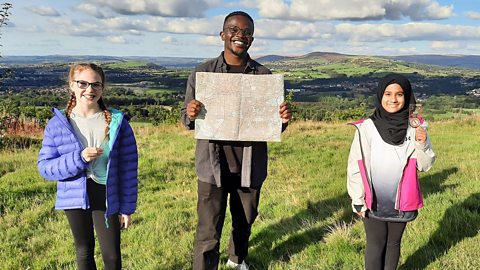
Urban settlements - living in a city or megacity. video
Exploring key aspects of cities and megacities - building use, population density, environmental impact and sustainable choices.

Coasts and sustainable use of natural resources. video
Examining a coastal region of North Wales, including a local wind farm and examples of the sustainable use of natural resources.
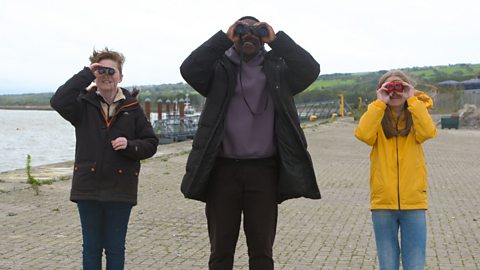
Rivers - the course of a river from source to mouth. video
Exploring the key aspects of rivers - the source, tributaries, streams, meanders, ox-bow lakes, river mouth and estuary.
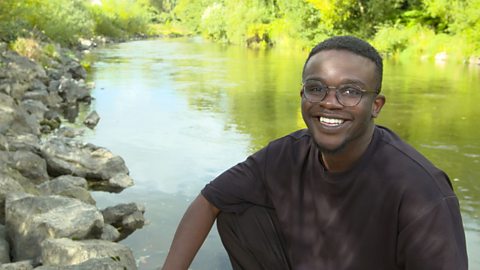
Mountains - how tectonic plates create mountain ranges. video
Exploring how tectonic plate movement creates mountains where the plates collide and single peaks formed by volcanoes.
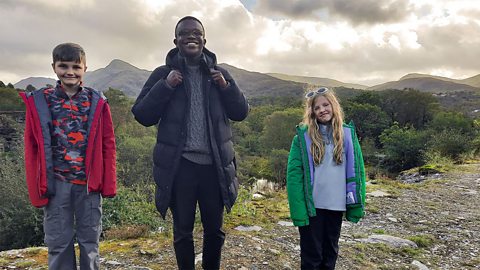
Lakes, lochs, reservoirs and the water cycle. video
Visiting Lake Windermere to consider lakes, lochs and reservoirs and their place in the water cycle.
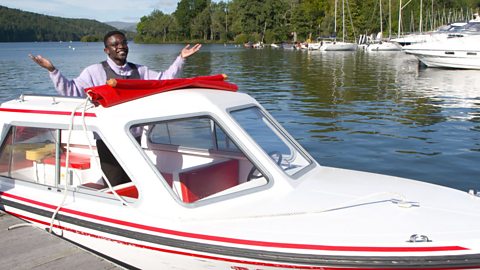
Forests - deciduous and coniferous woodland and biodivsity. video
Exploring a forest region in the Lake District to discover the rich biodiversity of woodland habitats.
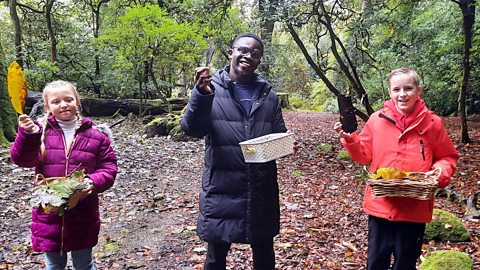
Shore, coast and ocean. video
Visiting a marine reserve in Scotland to discover the biodiverse habitat it offers, but also the importance of conservation.
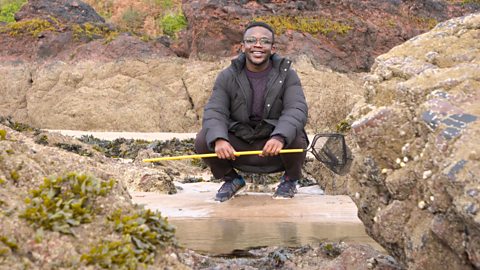
Peatlands, wetlands and the carbon cycle. video
Exploring the significance of peatland and wetland habitats to store water and absorb carbon or CO2.