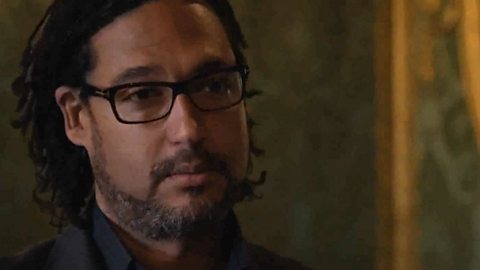
DAVID OLUSOGA:'These are Britain's forgotten slave owners.'
DAVID OLUSOGA:'By the early 1830s, the slave owners were losing the battle to defend slavery. Inspired by their religious faith and humanitarian values, the abolitionists were winning the moral argument. In 1832, the government finally started making plans to abolish slavery altogether. But the slave owners still had one more fight left in them. If they were going to lose their slaves, they wanted to be compensated. And they justified their demands by appealing to the values Britain held most sacred. The parliamentary archives reveal their trump card.'
DAVID OLUSOGA:And this act, as it says here, it was designed for the dividing, allotting and interclosing of lands. Over here, I have one of the estate acts. This one… was designed to give the Duke of Norfolk the right to make certain leases. Many of the acts in this room are about the same thing. Property. Just over half of all the acts passed in Britain in the 18th Century were, in one way or another, property acts. Property was sacred to the British, and the idea that the government, or anybody else, could deprive you of your property was abhorrent. So if you want to understand why it was that in the end the key to ending slavery was to compensate the slave owners then you have to understand what these acts and what this room is trying to tell us. That property, and the rights to property, ran at the very heart of British culture and British law.
DAVID OLUSOGA:'The slave owners argued that the emancipation of the slaves amounted to the confiscation of their property. This, they claimed, was an assault on their legal rights that could destroy the British economy. It was an idea that won widespread political support.'
DAVID OLUSOGA:For the abolitionists there was, within this concept of compensation, the most appalling dilemma. If the only way to end slavery was to pay the slave owners compensation for the loss of their property, then the abolitionists had to accept that the slaves were property, and that human beings, made by God in His image and endowed with an immortal soul, could somehow be made into property, into things. But that was the concept they'd spent half a century denouncing and campaigning against. At the very end of their moral crusade, in the last act of this great drama, they had no choice, they were given no choice, by the slave owners but to abandon, just for a moment, their most cherished and fundamental principle.
DAVID OLUSOGA:By 1833, it was clear that the slave owners had won. Emancipation would only come with compensation. The British government had agreed to distribute £20 million between all the slave owners for the loss of their human property. £20 million in 1833 is a lot of money.
DAVID OLUSOGA:It's always very difficult to work out how much a historic figure might be worth today, but how might we think about that in today's money?
NICK DRAPER:It's possible to use price indices, retail price indices, inflation indices, which translates the cost of bread then into the cost of bread today. And onthat basis, that £20 million would be worth about £1.7 billion today. However, all of us can buy many more loaves of bread with the jobs that we do than was possible, so there's a significant increase in real wages over that period, which has to be reflected. And on that basis, the number would be about 16 or £17 billion.
DAVID OLUSOGA:'This mammoth task was undertaken at a time when there was nothing that we would recognise today as a civil service. It fell to team of just 10 men. They were called the slave compensation commission, and they worked from this building in Whitehall, now the Wales Office.'
DAVID OLUSOGA:The task that confronted the slavery compensation commission, the men who met in this building, was to find a way that was fair and transparent and efficient. Distributing that £20 million, that £17 billion in today's money.The evidence of how they went about doing that can be seen in this document. This is a copy of the London Gazette, which is the official journal of the British government. This edition's from 1834, but to somebody opening this, this was modern, it was shockingly modern. And the most modern aspect of this process is the fact that a claim is submitted through a form. Now, It's almost impossible to go a week of your life in the 21st Century without having to fill in some sort of form, but this was a very new and radical idea in the 1830s, because what a form does is it standardises. Everybody, no matter who they are, fills in the details, puts numbers in columns, and these rules apply equally to everybody.
DAVID OLUSOGA:'By the time of abolition, slavery was widely seen as a shameful thing. Many slave owners went out of their way to avoid admitting their involvement. But the lure of compensation drew them out of the shadows. Every single slave owner who came forward is recorded in the national archives in Kew in London, 46,000 of them. It's a complete census of ownership, at the point when slavery was taking its last gasp. These compensation records reveal just how much money was paid out to the slave owners, how they walked away with millions, while the enslaved received nothing.'
Video summary
Historian David Olusoga investigates how British slave owners fought for compensation as the government moved towards abolishing slavery within the Empire in 1832.
He outlines how abolitionists were forced to reluctantly accept that slaves were the legal property of their owners in order to get the legislation through Parliament.
This concession meant that 20 million pounds (around 17 billion pounds today) was set aside to be shared out among 46,000 claimants, awarded by a ten man Slavery Compensation Commission.
The slaves themselves received nothing.
This is from the series: Britain's Forgotten Slave Owners.
Contains scenes which some viewers may find upsetting. Discussion of slavery could raise emotive issues around racism and identity. Teacher review is recommended prior to use in class.
Teacher Notes
This could supplement a study of the abolition of the British slave trade and the abolition of slavery within the British Empire itself.
It could be linked to the issue of whether Britain should pay reparations for its past involvement in slavery.
It could also be used as an example of how a historian makes use of archival evidence to support their case.
This clip will be relevant for teaching History at KS3, KS4/GCSE, in England and Wales and Northern Ireland.
Also at National 4 and National 5 in Scotland.
This topic appears in OCR, Edexcel, AQA, WJEC, CCEA GCSE and SQA.
Why British slave owners opposed Abolition. video
Historian David Olusoga investigates the resistance to the abolition of slavery.
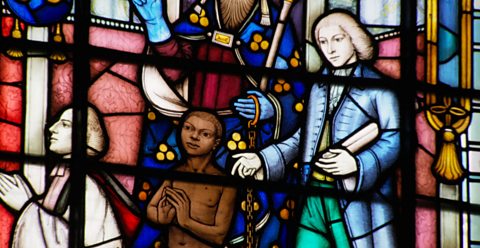
British slave owners in the 1830s. video
Historian David Olusoga investigates evidence of British slave ownership in the 1830s.
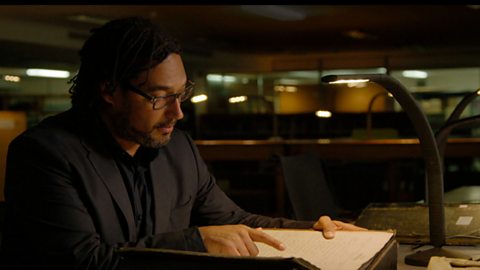
The Barbados Slave Code. video
David Olusoga and the Barbados Slave Code.
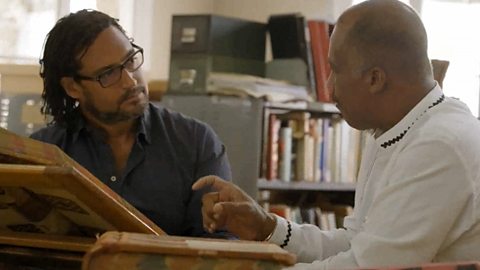
The social and economic impact of slave ownership on British society. video
David Olusoga explores slave ownership at Harewood House.