DRAMA:
Leo: Camera Three ready…take three…camera four ready…
VO:
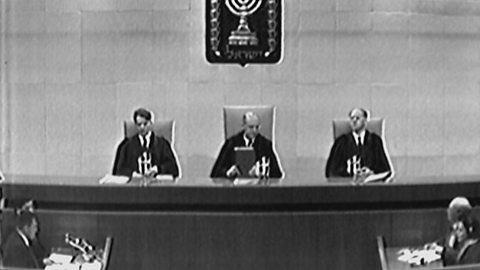
The trial of Adolph Eichmann was the first documentary television series that was broadcast around the world.
DRAMA SYNC:
Stay on the judges
VO:
It took place in 1961, sixteen years after the end of the Second World War. For prosecutors and survivors alike, it was an historic opportunity to share some of the truth of the murder of six million Jews in The Holocaust.
DAVID CESARANI:
The importance of the trial is that it told the Jewish story of the Second World War for the first time. It gave a face to the Nazis.
GABRIEL BACH:
Before the trial started some teachers called me and said that there are many young people in Israel who don’t want to hear about the Holocaust. Why? They feel certain feeling of shame. He cannot understand how millions of people can let themselves be destroyed without defending themselves. But we wanted to show how they were misled up to the last minute and couldn’t defend themselves.
VO:
The recording of the trial was the brainchild of American television producer Milton Fruchtman. Fruchtman had made documentary films in Israel and features in the United States. In the television drama, ‘The Eichmann Show’, Fruchtman is played by actor Martin Freeman. On Fruchtman’ s team: a young production assistant, Alan Rosenthal.
ALAN ROSENTHAL:
The first time I met Milton. Here was this producer who I knew had come from Hollywood, so I was a little bit in awe but in fact he turned out to be a very very nice guy. A good guy, a mensch as we used to say in Hebrew or Yiddish.
DRAMA SYNC:
Milton: Leo, Leo Hurwitz.I cannot tell you how…
VO:
Fruchtman hired Leo Hurwitz to direct the recording of the trial. Hurwitz had made social documentary films on poverty, hunger and racism in the United States; he’d been blacklisted in the 1950s for his Communist sympathies and then couldn’t get work. The team that produced the recording of the Eichmann trial have acute memories of the man.
DRAMA SYNC:
Milton: I’d like to introduce you to your camera operators…
ALAN ROSENTHAL:
He was one of the greats of American documentary. He was nervous. He was edgy. Nobody could do the job as well as he could.
RON HUNTSMAN:
He could get very agitated and quite cross about things. He was a very intense man really.
DRAMA:
Hurwitz: OK, stop. STOP
ALAN ROSENTHAL:
If something went wrong, he would let you know.
DRAMA:
Judge: What is clearly taking place. We are here to rate them on the cameras…
VO:
Fruchtman was in for a shock.
MILTON FRUCHTMAN:
The three judges came into the courtroom and the Chief Justice Landau looked out and said: “There will be no television. There will be no cameras in this courtroom”.
DRAMA:
Hurwitz: OK stop stop.
VO:
The judges had thought that cameras would distract from proceedings of the trial.
MILTON FRUCHTMAN:
Well, when I looked out I realised I made a big mistake. I had left cameras out in the open. Visible. And of course, it could be disturbing for the witnesses. They could become self-conscious, concerned about testifying and all that sort of thing.
VO:
Fruchtman and Hurwitz came up with an ingenious solution: conceal the cameras by inserting them into the walls of the courtroom.
The judges approved.
DRAMA:
Leo; Take three.
DRAMA SYNC:
And on the following day…
VO:
In the recordings of proceedings of the trial, the camera direction of Leo Hurwitz was exceptional – as his son Tom remembers.
DRAMA SYNC:
Camera four ready, let’s go close on Eichmann. No no not the witness, Eichmann.
TOM HURWITZ:
Here we had the drama unfold shot by shot, question by question, the way a film would be cut, from close up to close up, from reaction shot to reaction shot, from detail and hands and cut-a-ways to the audience. It made it a real live drama.
VO:
In the production control room, the atmosphere was intense.
TOM HOROWITZ:
I’d been in control rooms before, not many, but I had been in a few and they were kind of lively and tense but this one was deadly serious.
VO:
For the production team, the experience was one they would never forget.
WITNESS MICHAEL PODCHLEWNIK:
I lay near my wife and two children and I wanted them to shoot me.
ALAN ROSENTHAL:
In the television room, for four hours you’ve been looking at hell. You’ve been looking at the blackness of the human soul and you’d go out and it was too much….you’d go out and there’d be blue skies, the birds…Kids were playing in the street… To adjust these two worlds was one of the hardest things. A world of blackness, evil and darkness and a world of light of humanity, of life.
RON HUNTSMAN:
It became very depressive actually. Depressing you….you… it could easily get you into an awful mood of misery really, that you couldn’t get out of. You had to be very careful about that.
VO:
The trial was a landmark moment in history.
ARCHIVE:
We found girls carrying discs with boys names…
VO:
And for many of those who took part, a pivotal moment in their lives.
Video summary
The trial of Adolf Eichmann in 1961 became the first documentary television series to be broadcast around the world. It was a historic and ground-breaking moment in revealing some of the experiences and tragedies of the Holocaust and the deaths of some six million Jews. But broadcasting the trial did not come without objections.
We hear from historian, Professor David Cesarani, who suggests that the trial was important because it told the Jewish story of World War Two for the first time, and for humanising and dramatising a story so vast that it was almost inconceivable.
On the other hand, Gabriel Bach, who was deputy prosecutor at the trial, recalls objections to its broadcast from a delegation of Israeli teachers and the feelings of shame they expressed that millions of people had allowed themselves to be destroyed without defending themselves.
Television producer, Milton Fruchtman, talks about how he realised the cameras could impact on the evidence, potentially distracting the witnesses, and the solution they came up with to solve this problem.
And director Leo Hurwitz’s son, Tom, tells how his father's camerawork lent to the tension and watchability of the trial, especially the close-ups of Eichmann's facial expressions combined with cutaways to a shocked audience.
This short film is from the BBC series, The Eichmann Show.
Due to the sensitive nature of the subject matter, we strongly advise teacher viewing before watching with your pupils.
Teacher Notes
The trial of Adolf Eichmann revealed how rigorous the prosecution team were in the collection of evidence and ensuring its credibility. Over one hundred witnesses were selected for the trial and sixteen thousand documents were presented.
Pose questions to students such as:
What would define a credible witness in a trial of this nature?
To what extent can the live recording of a trial impact on witnesses' testimony?
Extension questions could be:
In what ways might the camera influence feeling towards the accused? In this case, Adolf Eichmann.
Why was the programme produced?
Who produced it?
How does the content impact on viewers?
Do you feel it is unfairly biased? Why or why not?
Even if the recording is biased, is it still a useful historical record?
Extension debate could be:
"In that courtroom in Jerusalem, people heard the voices of those victims in a way that they hadn't heard them before."(Deborah Lipstadt, Professor of Modern Jewish History and Holocaust Studies at Emory University)
How far do agree that the trial of Adolf Eichmann has come to characterise our impression of Holocaust history and learning?
This short film will be relevant for teaching history. This topic appears in OCR, Edexcel, AQA, WJEC KS4/GCSE in England and Wales, CCEA GCSE in Northern Ireland and SQA National 4/5 in Scotland.
Adolf Eichmann: Architect of the Holocaust. video
Using a combination of archive footage, dramatisation and interviews with people involved in the television production and the trial, this short film introduces students to the groundbreaking trial of Adolf Eichmann.
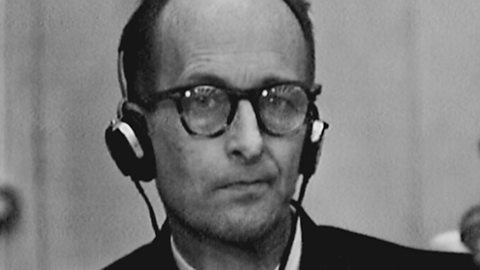
How far can one person be held responsible for the Holocaust? video
On 11th December 1961, Adolf Eichmann was pronounced guilty of all charges against him and sentenced to death. But how far can responsibility for the Holocaust be attributed to one man?
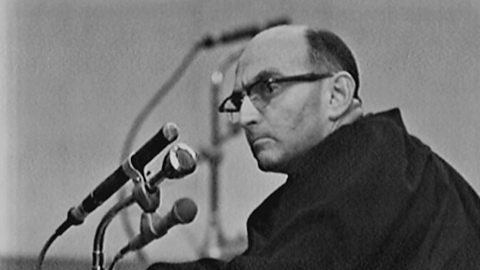
How Adolf Eichmann's trial revealed the horrors of Auschwitz. video
Historians and witnesses explain how the Adolf Eichmann trial was a turning point for Holocaust survivors who found that their testimonies were being taken seriously for the first time.
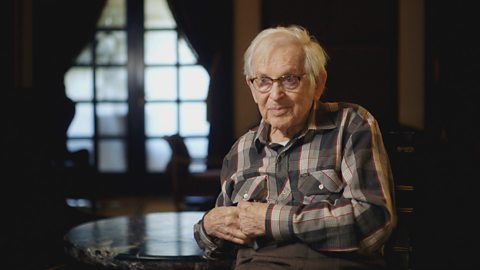
The Eichmann trial and the State of Israel video
The trial of Adolf Eichmann was an important moment in the development of the State of Israel which was just 13 years old in 1961.