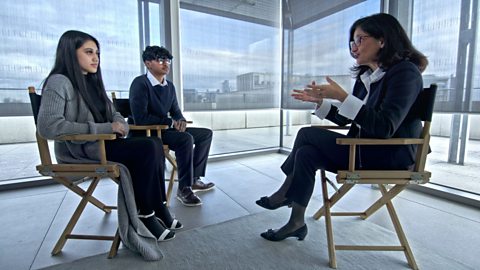
Jessie:
I'm Jessie. I've cycled from my home in Devon to COP26 in Glasgow to raise awareness about the alternative modes of transport that I think we need to be using to help curb climate change. Now I'm really excited to meet an activist who has been passionate about human rights and the environment all his life.
Kumi:
I'm Kumi Naidoo. I grew up in South Africa as an activist against apartheid. And since the age of 15, I've been an activist working on human rights, gender equality, environmental justice and now climate justice. You might already know about famous activists like Nelson Mandela, Martin Luther King, Rosa Parks and, more recently, Malala Yousafzai and Greta Thunberg. What does it take to change the world around you for the better? This is the case no matter what you are passionate about.
Jessie:
So firstly, how do you define the word activist?
Kumi:
For me, an activist is somebody who has the audacity to believe that their efforts and their actions can actually make a huge difference and bring about change.
Jessie:
So, what makes a good activist to you?
Kumi:
A good activist is someone who's humble, who doesn't think they know everything. A good activists will look at people who are not having the same views as them and respect them and still say, well, OK, my job is to find a way to communicate with people who don't agree with me to win them over.
Jessie:
Knowing that you're not always right is such an interesting thing to learn as a young person because I think we're always learning and I think it's remembering to bring that into activism and not just shouting into the echo chamber of the people you understand and the life experiences you've had.
Kumi:
Absolutely. And I like so much that you use the word echo chamber. Unless we are willing to see the humanity in the people that disagree with us and build a bridge to help them come to where we are, then we're not engaged in true activism. You don't always win people over by simply shouting at them. You have to be able to create an engagement with people and dialog with people.
Jessie:
So how do we win the hearts and minds of the decision makers whose views and ideas we need to change?
Kumi:
Sometimes the best way to get people in power to make a change in decision is to redirect your gaze not upwards to the people who actually have the power, but to direct your gaze to the people who are powerless and to make sure that you've got sufficient numbers of people organised, mobilised and ready to put pressure. The use of language is one of the most important things about activism. How can we speak truth to power? Don't sanitize how deep the crisis that humanity finds itself as a result of climate, but do it in a way that does not give people a sense that it's too late, that it's not worth standing up.
Kumi:
The most important thing about activism right now, which speaks to those in power, is if we can keep a smile on our face, celebrate each other.
Jessie:
For me, I've really noticed the power in our emotions and having that equal amounts of outrage and optimism.
Jessie:
What other smaller actions, more physically would you suggest?
Kumi:
So there are lots of things that people could do, even without necessarily joining organizations. All politics is local. If you live in the neighbourhood and there's no recycling, try and figure it out with your neighbours. Get together, have a community meeting, figure out how you can put the City Council to do better on recycling. If there's very few green spaces and there's a need to plant more trees, get together, organise. Young people throughout the world and throughout history have been able to change a lot. And we see now how young people are changing things, but it usually starts on things that are really directly associated with our daily lives.
Jessie:
I'm hoping that many young people who are watching and me myself can really change the way we think and really move forward from the lessons you've learned, because there's a better way than to share wisdom. So thank you so much.
Kumi:
Thank you very much. Jessie and I would say that I learned a lot from you. And that's what gives me hope that your generation can bring some fresh thinking to old problems and do much better than my generation did.
Jessie:
Thank you. My chat with Kumi was incredible. He really highlighted the importance of everybody working together, and that anybody can be an activist. He's given me lots of valuable lessons, which I can take away to try and make my activism more impactful and more inclusive.
Kumi Naidoo talks to Jessie, a young environmental activist, about how he got involved in activism and how to be a good activist.
He talks about growing up in South Africa as an activist against apartheid, which led to working on human rights, gender equality, environmental justice and now climate justice.
Kumi explains what it means to be a good activist, being willing to see the humanity in the people that you disagree with, and finding a way to communicate.
He emphasises the importance of engaging with the people who are powerless, and gaining enough support to put pressure on those with the power.
This short film is from the BBC Teach series Lessons with Leaders.
Teacher Notes
Things to check your students know:
- What climate change is. This guide from Bitesize's 'The Regenerators' may be useful
- What human rights are.
- What an activist is.
Possible talking points:
- Activism:
- Kumi says ‘An activist is somebody who has the audacity to believe that their efforts and actions can actually make a huge difference and bring about change’.
The word ‘audacity’ has two meanings: firstly, a willingness to take bold risks; and secondly, rude or disrespectful behaviour.
Which meaning of audacity do you think Kumi is referring to? Why?
Is it easy to be an activist? Why? Why not?
What does Kumi say makes a good activist? Do you agree?
Why is the use of language one of the most important things about effective activism?
How does activism link to our studies on active citizenship?
Persuasive communication:
- How can we communicate effectively with people we disagree with?
- What is outrage? What issues make you feel outrage? How do you behave and communicate when you feel outraged?
- What is optimism? How do you behave and communicate when you feel optimistic about an issue?
- How do we show ‘equal amounts of outrage and optimism’ in our writing? What techniques can we use?
- Who does Kumi think the best audience is for our communication about things in society we want to change? Why?
Climate change:
- Kumi says we shouldn’t ‘sanitise how deep the problem’ of climate change is. What does he mean by this? Why is this important?
- How does Kumi think we should communicate with people to engage them in climate change activism?
- What does Kumi mean when he says ‘all politics is local’? Do you agree?
- What physical actions can we take to be an activist for climate change in our local area?
Follow on tasks - You could ask students to:
- Citizenship/careers: research the different jobs they could choose to do if they wanted to become an activist and the different qualifications or experiences they might need to reach one of these career options.
- Geography/climate change: write an action plan for tackling climate change in the local area – identify the key challenges and threats to the climate by the local area and what people can do, following Kumi’s advice for effective activism. This Bitesize Careers collection and article are a good starting point for exploring jobs to help protect the planet.
- English/persuasive communication: write a speech arguing about an issue that makes them feel outrage. Prep students to consider the techniques they might use to show outrage (for example; emotive language, exaggeration) but ensure they communicate with optimism by offering solutions and staying positive.
Curriculum Notes
- This short film can be used to help stimulate discussions around topics such as: climate change, activism, persuasive communication and careers.
- It may apply to topics covered inenglish or geography lessons, or lessons in citizenship and careers.
- It's most suited to 14-16 year-old pupils across the UK in developing their transactional writing skills.
- In england it is also relevant to PSHE and citizenship.
- In Scotland it is relevant to National 4 in geography and modern studies.
- In Northern Ireland and Wales it’s relevant to ‘Learning for Life and Work’ CCEA in lessons on local and global citizenship.

More from the series Lessons with Leaders:
Cressida Cowell - The importance of play. video
Author and illustrator Cressida Cowell talks to two students about the importance of play in unlocking your creativity.
Rich Roberts - Learning from failure and luck. video
Nobel Prize winning scientist Rich Roberts talks about learning from failure and luck.
Jocelyn Bell Burnell - Why unconscious bias matters. video
Professor Jocelyn Bell Burnell talks to two students about why unconscious bias matters.
Venki Ramakrishnan - The race in science. video
Scientist Venki Ramakrishnan explains the vital role played by competition and cooperation in science.
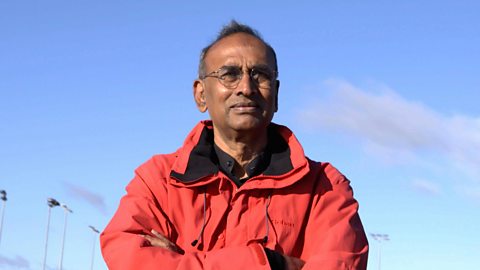
Benjamin Zephaniah - Finding your voice. video
Poet and novelist Benjamin Zephaniah talks about the importance of finding your voice.
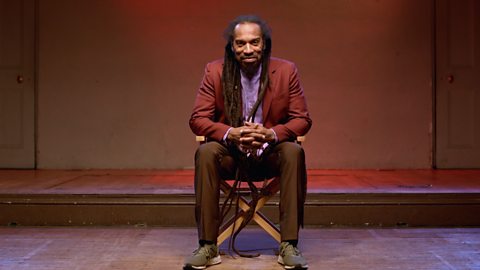
Paul Nurse: What is life? video
Biologist and Nobel Prize winner Paul Nurse talks about what biology tells us about life.
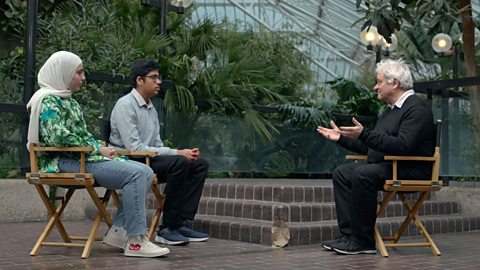
Minouche Shafik - How to be a good citizen. video
Former Deputy Governor of the Bank of England Minouche Shafik talks about why we take part in society.