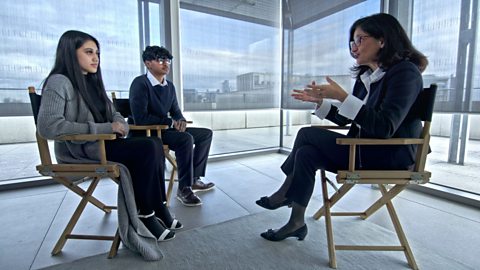
Ben:
Hi, I'm Ben, I'm 14, I'm from Cambridge.
Kyani:
I'm Kyani, I'm 15, and I'm also from Cambridge.
Venki:
I'm Venki Ramakrishnan and I'm a scientist at the MRC Laboratory of Molecular Biology in Cambridge. Often, vaccine development takes years, but sometimes there's a global emergency, as we had with the COVID pandemic and the development of a vaccine is a race against time.
Kyani:
How did they develop the COVID 19 vaccine so quickly?
Venki:
On the one hand, it is amazing that vaccines were developed so quickly. But on the other hand, what went into the vaccine is based on years of development and successive generations of knowledge, and each group of scientists who work on it, build on previous scientists’ knowledge and they in turn provide knowledge for subsequent generations of scientists. So you can think of it as a sort of long relay of knowledge and this development of the vaccine, you can think of that as the last lap.
Ben:
What about competition? Does that inspire people to work faster and better or will it cause problems in some way?
Venki:
I think science is a mixture of competition and cooperation. Science really needs people to cooperate to help each other share knowledge. But competition also makes people work harder and faster because in science, you often get credit for being the first person to discover something. And just like in sports, competition drives up standards, makes people give their best. But science is not just competition. Sometimes people who are competing are also helping each other because they're publishing their papers. As soon as you publish, they've learned what you've done and then if they do something, you're learning from them as well. So, you're indirectly collaborating, even while competing.
Kyani:Did it ever feel overwhelming, first working in a proper professional lab?
Venki:
Yeah, so you know, I grew up in India and I didn't go to very famous universities initially. And so, the first time I went to a top research university, I did feel a bit intimidated thinking that, well, maybe I have fooled them and they're going to find out how really dumb I am. And then, you know, they'll regret actually hiring me here or, you know, allowing me to study here. And so you do get this feeling of being an imposter. But I think you have to realise almost everybody feels that, even the people who you think are not outsiders actually deep down they worry whether they're actually up to it or not. When I first came to this lab, I remember being intimidated, but then I saw a lot of these famous scientists and they were just like anybody else. They were ignorant about lots of things. And, you know, they weren't always right, and they weren't afraid to ask questions, you know about things they didn't know. Science is really about finding out, you know, the answers to questions rather than about status or being sort of in awe of somebody. Well, it's been nice chatting with both of you.
Kyani:It was lovely to meet you.
Ben:
Yeah, nice to meet you. Thanks a lot.
Venki:
All right. Have fun.
Ben:
I've learned that although there is competition within science, no matter what, you all kind of collaborating and working together because at the end of the day, we're trying to make a discovery and it doesn't really matter who makes it first.
Kyani:
When you think about people in professions such as this, you think, oh, they know exactly what they're doing, 24-7, it must be very easy for them. But they're just like everybody else. And I feel like when you gain experience and you gain knowledge, then you become more at ease.
Scientist Venki Ramakrishnan explains the vital role played by competition and cooperation in science.
He talks about the Covid 19 vaccine and explains how the development might have seemed very quick, but in reality this was the result of years of research, and each group of scientists building on the knowledge of previous generations.
Venki explores the importance of competition and cooperation, and how science really needs people to cooperate but competition also makes people work harder and faster.
He explores the feeling of being an imposter when he first arrived from India to study at one of the top research universities. But, he realised almost everybody feels that, even the people who you think are not outsiders actually deep down worry whether they're actually up to it or not.
This short film is from the BBC Teach series Lessons with Leaders.
Teacher Notes
Things to check your students know:
- What a vaccine is.
- The definitions of: competition and cooperation.
Possible talking points:
Resilience and collaboration:
- ‘What went into the vaccine is based on years of development and successive generations of knowledge. Each group of scientists who work on it build on previous scientists' knowledge and they in turn provide knowledge for subsequent generations of scientists’. What does Venki mean by this? What are the benefits of working together in this instance?
- ‘Science is a mixture of competition and cooperation’. Do you feel more motivated when you’re working with someone or against them? Do you think it is possible to compete and collaborate at the same time? Why?
- ‘Competition makes people work harder and faster […it] drives up standards’. To what extent do you agree? When can competition negatively impact people?
- ‘Indirectly collaborating even while competing’. Can you think of examples when this happens in your education?
Careers in science:
- What does it mean to feel intimidated or to feel like an imposter?
- Venki felt intimidated by the top universities he worked in because he didn’t feel like the schools he went to were very well known. Do you think he was right to feel this way? Is the name of the university Venki achieved his education from important? Why?
- Venki said he realised the scientists he was working with ‘weren’t always right and they weren’t afraid to ask questions’. What does this tell you about the characteristics you might need to be successful at for a career in science?
- ‘Science is really about finding out the answers to questions rather than about status or being in awe of somebody’. Do you agree?
Follow on tasks - You could ask students to:
- Collaboration and resilience: Reflect on times they have felt motivated and/ or demotivated by opportunities to collaborate OR compete. How did they overcome challenges presented? What did resilience look like in these experiences - how did it help them move forward?
- Careers in science: Research Venki’s education and experience to consider the qualifications and experience they might need to be Scientists.
Curriculum Notes
- This short film is to help stimulate discussion on the following topics: careers in science, resilience and collaboration.
- It is relevant to subjects such as careers and science.
- This video is most suited to 14-16 year old pupils across the UK studying GCSE science or interested in careers in science.
- In Scotland it is relevant to Highers human science and 4th Level health and wellbeing ‘Resilience’.
- In Northern Ireland it’s relevant to GCSE biology.
- In Wales it’s relevant to GCSE biology.

More from the series Lessons with Leaders:
Cressida Cowell - The importance of play. video
Author and illustrator Cressida Cowell talks to two students about the importance of play in unlocking your creativity.
Kumi Naidoo - How to be a good activist. video
Kumi Naidoo talks about how he got involved in activism and how to be a good activist.
Rich Roberts - Learning from failure and luck. video
Nobel Prize winning scientist Rich Roberts talks about learning from failure and luck.
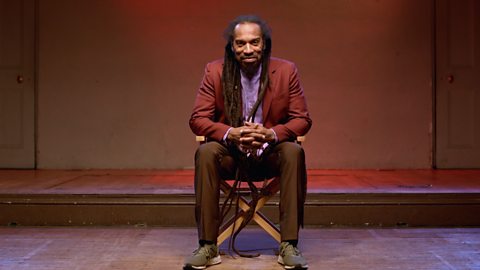
Benjamin Zephaniah - Finding your voice. video
Poet and novelist Benjamin Zephaniah talks about the importance of finding your voice.
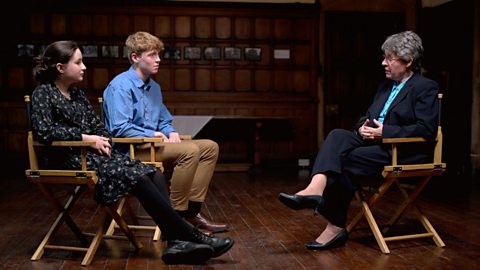
Jocelyn Bell Burnell - Why unconscious bias matters. video
Professor Jocelyn Bell Burnell talks to two students about why unconscious bias matters.
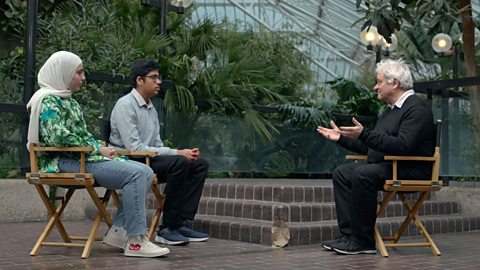
Paul Nurse: What is life? video
Biologist and Nobel Prize winner Paul Nurse talks about what biology tells us about life.
Minouche Shafik - How to be a good citizen. video
Former Deputy Governor of the Bank of England Minouche Shafik talks about why we take part in society.