POLICIA:
Buenos días. ¿Cómo estás?
PEPE:
Bien ¿Y tú?
POLICIA:
Muy bien, gracias
INSPECTOR:
¿Dónde vives?
POLICIA:
¿Dónde vives? Por favor.
INSPECTOR:
¿Dónde…vive…usted?
PEPE:
¡No! Por favor ¡No!
INSPECTOR:
¿Dónde vives?¿En el norte?
PEPE:
No. En el norte no.
POLICIA:
¿En el este? ¿En el oeste?
PEPE:
No. Ni el este ni en el oeste
INSPECTOR:
En el sur entonces. ¿Dónde en el sur?
PEPE:
En Málaga. En el sur.
Mi casa está cerca de la playa.
INSPECTOR:
Vive en Málaga. En el sur. Casa cerca de la playa.
POLICIA:
Descríbenos la casa.
¿Y si te doy una Magdalena?
PEPE:
¡Vivo en una casa de dos pisos!
INSPECTOR:
¿Qué?
PEPE:
¡Vivo en una casa de dos pisos!
POLICIA:
Casa. De. Dos. Pisos
INSPECTOR:
Casa. De. Dos. Pisos ¿Dónde exactamente?
PEPE:
Al lado de una panadería
INSPECTOR:
¡Una panadería – Ja! Me gustan las panaderías Pero a ti…Te odio.
POLICIA:
¿Vives con alguien o vives sólo?
PEPE:
Tengo un gato
INSPECTOR:
¿Un gato? ¿Cómo se llama?
PEPE:
Me llamo Pepe
POLICIA:
¡No! ¿Cómo se llama el gato - no cómo te llamas?
PEPE:
Ah. El gato se llama Francisco Javier Marzán Blas Pérez Iber y Blas Castillo.
PEPE:
O simplemente…Juan
INSPECTOR:
Describe un día típico. Describe un día típico
PEPE:
No, por favor, no. Para. Para. Vale Los lunes, martes y miércoles me despierto a las seis
POLICIA:
Y.… ¿Luego?
PEPE:
Luego…Me levanto
POLICIA:
Se levanta
INSPECTOR:
Se levanta
¿Y los otros días?
PEPE:
Los jueves y viernes me levanto un poco más tarde – a las siete y media O a las ocho menos cuarto
POLICIA:
Y ¿los sábados y domingos?
PEPE:
Los fines de semana me levanto a las once de le mañana
INSPECTOR:
¡Qué perezoso! Y después ¿Qué haces?
PEPE:
Me lavo los dientes y me visto
POLICIA:
Se lava los dientes y se viste
INSPECTOR:
¿Te vistes eh?
PEPE:
Por supuesto. ¿Me das una magdalena?
INSPECTOR:
No. Y.… ¿Después de vestirte?
PEPE:
Preparo el desayuno
INSPECTOR:
¿Y qué comes en el desayuno?
PEPE:
Churros. Con chocolate.
INSPECTOR:
Me encantan los churros
POLICIA:
Yo prefiero café con leche
INSPECTOR:
¿Y después del desayuno?
PEPE:
Demasiadas preguntas… Bueno. Voy al trabajo
INSPECTOR:
¿Vas AL TRABAJO?
PEPE:
Si – a robar un banco
INSPECTOR:
Y
POLICIA:
¡A-ha!
Va al trabajo a.… ¡Robar un banco!
Video summary
A thief is questioned about his daily routine by a good and bad cop as a way of uncovering his crimes.
The good cop attempts to get the information by sweetness and cupcakes. The bad cop gets progressively angrier with the thief, using dastardly techniques such as tickling him or throwing away the cupcakes.
The thief is asked where he lives, what his daily routine is and finally what he does for a job. He reveals that he lives in Southern Spain in a house by the beach. He also reveals the times he wakes up and gets out of bed. He reveals that he brushes his teeth and gets dressed and even what he has for breakfast. His final revelation is that he goes to work by robbing a bank.
The cops are satisfied they have done their job.
Teacher Notes
Working in pairs, pupils could be given either Map A or Map B of Spain with some major cities marked on it. Map A would have different cities to Map B. Without revealing their map, the pupils take it in turns to describe the location of a city on their map e.g. ‘Bilbao está en el norte’. Their partner marks the city on their own map. They then compare their answers at the end.
They could also be given a worksheet with a list of daily activities in a random order. Pupils number the activities in the order they hear them. Some pupils could challenge themselves to write the time next to the activities.
This clip is relevant for teaching Spanish at Key Stage 3 in England, Northern Ireland and Wales and at Third Level in Scotland.
Spanish KS3: Undercover training - 'Como Ir De Incognito' (part 5/10) video
Explore Spanish vocabulary around truth and identity as the police go through their undercover training.

Spanish KS3: Cracking the safe - 'La Caja Fuerte' (part 6/10) video
Expand understanding around arguments, numbers and dates as the criminal gang attempts to crack a safe.
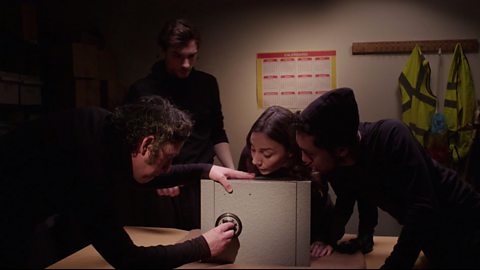
Spanish KS3: The search widens - 'Se Buscan En El Extranjero' (part 3/10) video
Explore Spanish vocabulary around travel, geography, food and paella as the police try to make sense of the criminals' movements.
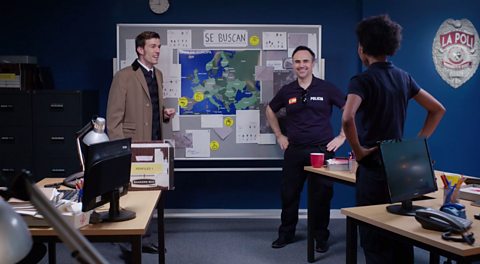
Spanish KS3: Undercover - 'De Incognito' (part 7/10) video
Expand understanding around games, hobbies and music as the police go undercover.
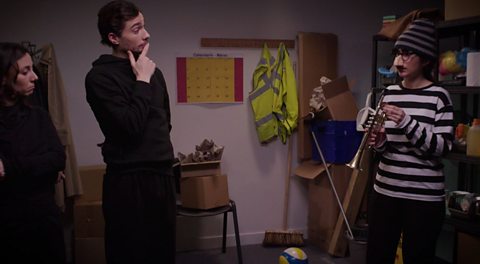
Spanish KS3: Interrogation - 'El Interrogatorio - El Gato' - (part 10/10) video
A forensic study of Spanish grammar as the police investigate a missing cat.
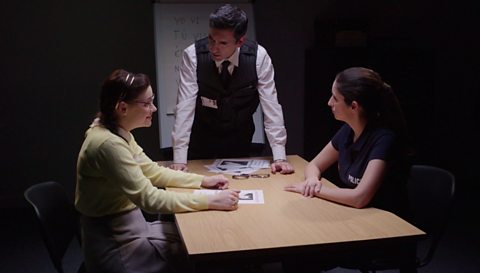
Spanish KS3: The heist - 'Planeando El Atraco' (part 2/10) video
Understanding infinitives and tenses are key to making sense of the criminals' heist plans.
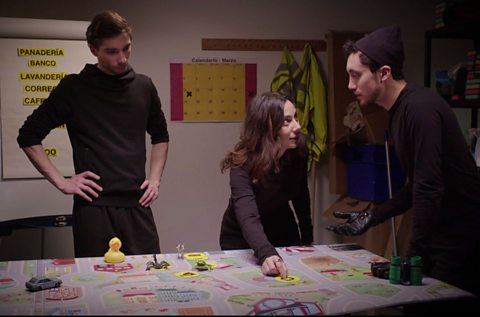
Spanish KS3: The search begins - 'Se Buscan' (part 1/10) video
Explore greetings, vocabulary, adjectives, colours and clothing as the police try to make sense of the evidence.

Spanish KS3: The getaway - "Planeando la fuga" (Part 4/10) video
Explore Spanish grammar and vocabulary around planning directions as the criminals plan their escape.
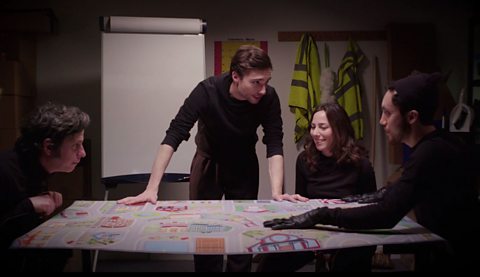
Spanish KS3: Identity parade - 'La Rueda De Identificacion' (part 8/10) video
Consolidate knowledge around the body and identity in this Spanish comedy identity parade sketch.